This article has multiple issues. Please help improve it or discuss these issues on the talk page. (Learn how and when to remove these messages)
This article may contain original research. Please improve it by verifying the claims made and adding inline citations. Statements consisting only of original research should be removed.(February 2017) (Learn how and when to remove this message)
This article needs additional citations for verification. Please help improve this article by adding citations to reliable sources. Unsourced material may be challenged and removed. Find sources:"List of Indigenous peoples" – news·newspapers·books·scholar·JSTOR(February 2017) (Learn how and when to remove this message)
(Learn how and when to remove this message)
These paragraphs are an excerpt from Indigenous peoples.[edit]
There is no generally accepted definition of Indigenous peoples,[a][1][2][3] although in the 21st century the focus has been on self-identification, cultural difference from other groups in a state, a special relationship with their traditional territory, and an experience of subjugation and discrimination under a dominant cultural model.[4]
Estimates of the population of Indigenous peoples range from 250 million to 600 million.[5] There are some 5,000 distinct Indigenous peoples spread across every inhabited climate zone and inhabited continent of the world.[6][7] Most Indigenous peoples are in a minority in the state or traditional territory they inhabit and have experienced domination by other groups, especially non-Indigenous peoples.[8][9] Although many Indigenous peoples have experienced colonization by settlers from European nations,[10] Indigenous identity is not determined by Western colonization.[4]
The rights of Indigenous peoples are outlined in national legislation, treaties and international law. The 1989 International Labour Organization (ILO) Convention on Indigenous and Tribal Peoples protects Indigenous peoples from discrimination and specifies their rights to development, customary laws, lands, territories and resources, employment, education and health.[11] In 2007, the United Nations (UN) adopted a Declaration on the Rights of Indigenous Peoples including their rights to self-determination and to protect their cultures, identities, languages, ceremonies, and access to employment, health, education and natural resources.[12]
Indigenous peoples continue to face threats to their sovereignty, economic well-being, languages, cultural heritage, and access to the resources on which their cultures depend.[13] In the 21st century, Indigenous groups and advocates for Indigenous peoples have highlighted numerous apparent violations of the rights of Indigenous peoples.
Definition
Main article: Indigenous peoples § Definitions
Painting of Bimbache of El Hierro by Leonardo Torriani, 1592
The San are the oldest inhabitants of Southern Africa
Indigenous communities, peoples, and nations are those which have a historical continuity with pre-invasion and pre-colonial societies that developed on their territories, and may consider themselves distinct from other sectors of the societies now prevailing on those territories, or parts of them. They form at present non-dominant sectors of society and are determined to preserve, develop and transmit to future generations their ancestral territories, and their ethnic identity, as the basis of their continued existence as peoples, in accordance with their own cultural patterns, social institutions and legal system.[14]
This historical continuity may consist of the continuation, for an extended period reaching into the present of one or more of the following factors:
Occupation of ancestral lands, or at least of part of them
Common ancestry with the original occupants of these lands
Culture in general, or in specific manifestations (such as religion, living under a tribal system, membership in an Indigenous community, dress, means of livelihood, lifestyle, etc.)
Language (whether used as the only language, as mother-tongue, as the habitual means of communication at home or in the family, or as the main, preferred, habitual, general or normal language)
Residence in certain parts of the country, or in certain regions of the world
Other relevant factors.
On an individual basis, an Indigenous person is one who belongs to these Indigenous populations through self-identification as Indigenous (group consciousness) and is recognized and accepted by these populations as one of its members (acceptance by the group). This preserves for these communities the sovereign right and power to decide who belongs to them, without external interference.[15]
Africa
Main article: Indigenous peoples of Africa
Hadza people, who are indigenous to the African Great Lakes
A Maasai traditional dance
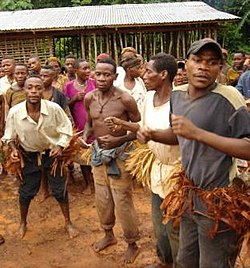
Baka pygmy dancers in the East Province of Cameroon
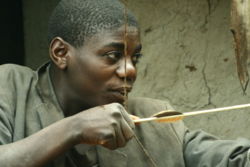
BatwaPygmy with traditional bow and arrow
Somali women in hijab
Tigrayan women in traditional attire
Wolayta chief
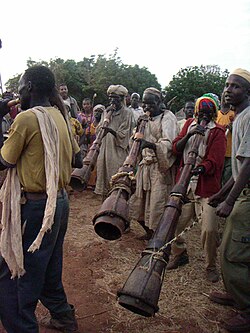
Berta people playing trumpets during a wedding ceremony
Nilotic men in Kapoeta, South Sudan
19th century Zulu man wearing a warrior's garb
Sotho women wearing the traditional Seana Marena blanket
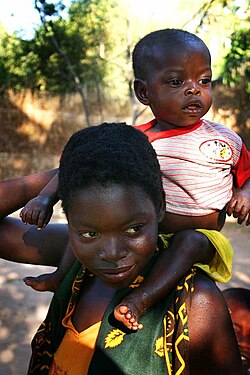
Makua mother and child
Damara man wearing the ǃgūb, a traditional attire
African Great Lakes
This section needs additional citations for verification. Please help improve this article by adding citations to reliable sources in this section. Unsourced material may be challenged and removed.(February 2022) (Learn how and when to remove this message)
This section does not cite any sources. Please help improve this section by adding citations to reliable sources. Unsourced material may be challenged and removed.(December 2021) (Learn how and when to remove this message)
Pygmy peoples:
Bedzan: Northern Central Cameroon
Mbenga:
Aka (Bayaka)
Baka (Bebayaka): Cameroon, Congo (Brazzaville), Gabon, and Central African Republic
Bongo (Babongo):
Gyele (Bagyele):
Kola (Bakola):
Mbuti (Bambuti):
Asua: Democratic Republic of the Congo
Efé: Democratic Republic of the Congo
Kango/Sua:
Mbuti:
Wochua:
Twa
Angola Twa: Northeastern, Eastern and Southern Angola
Kasai Twa (Kuba Twa): Central Democratic Republic of Congo
Mbote Twa: Southeastern Democratic Republic of Congo, Northwest of Lake Tanganyika
Mongo Twa (Ntomba Twa): Western Democratic Republic of Congo, Lake Tumba, Lake Mai-Ndombe
Upemba Twa (Luba Twa): Southeastern Democratic Republic of Congo, Upemba Depression
Laal peoples
Horn of Africa
Afar people (Qafár/'Afár): the Afar Triangle of Djibouti, Eritrea, Ethiopia[32][33]
Wolayta: Southwestern Ethiopia, Southern Nations, Nationalities, and Peoples Region (SNNPR)[65][66]
Yem: Southwestern Ethiopia, Southern Nations, Nationalities, and Peoples Region (SNNPR)[50][67]
Sudan
This section does not cite any sources. Please help improve this section by adding citations to reliable sources. Unsourced material may be challenged and removed.(December 2021) (Learn how and when to remove this message)
Nuba peoples: Sudan, Nuba Hills
Nubians: Far Northern North Sudan and Far Southern Egypt, along middle Nile river valley banks
Dinka (Jieng): mainly in Lakes, Warrap and Unity States, Upper Nile river course, Central and North South Sudan.
Nuer (Naadh): mainly in Jonglei State, East of Upper Nile river course, East Central South Sudan.
Anuak (Anywaa): mainly East Jonglei State, East South Sudan, and also mainly in Gambela Region, Lowlands of Far Southwest Ethiopia (border areas between South Sudan and Ethiopia).
Shilluk (Chollo/Cøllø): mainly in North South Sudan, west of the Upper Nile river course, Upper Nile State, South Sudan (Kodok or Kothok, formerly known as Fashoda is in their territory).
Fur (Fòòrà): Darfur, Western Sudan
Masalit: Darfur, Western Sudan
Kadu peoples: Sudan, Nuba Hills
Southern Africa
This section does not cite any sources. Please help improve this section by adding citations to reliable sources. Unsourced material may be challenged and removed.(December 2021) (Learn how and when to remove this message)
Bantu languages-speaking peoples of Southern Africa: South Africa, Lesotho, Eswatini, Botswana, Mozambique, Zimbabwe, Namibia, southern Angola.
Nguni people
Xhosa
Zulu
Ndebele
Northern Ndebele people (Zimbabwe)
Southern Ndebele people (South Africa)
South Ndebele
Sumayela Ndebele
Swati
Phuthi
Lala
Bhaca
Hlubi
Nhlangwini
Sotho–Tswana people
Tswana
Bobirwa
Tswapong
Kgalagadi
Sotho
Northern Sotho
East Sotho (Pulana, Khutswe and Pai)
Lozi
Makua people
Makhuwa
Koti
Sakati (Nathembo)
Lomwe
Chuwabu
Moniga
Tswa–Ronga languages people
Tsonga
Ronga
Tswa
Venda people
Shona/Shonic people - speaking peoples: Zimbabwe, Mozambique, Botswana m
Zezuru
Korekore
Manyika
Barwe
Karanga
Kalanga people
Ndau
Chopi people
Chopi
Guitonga
Chewa people
Yeyi people
Kavango languages-speaking peoples
Ovambo people
Herero people
Himba people
Kavango people
Southern Khoekhoe languages-speaking peoples: Angola, Namibia, Botswana, Kalahari Desert, Zimbabwe, west and southwestern South Africa.
Khoekhoe
Nama (Namaqua)
Damara
Haiǁom
Gǀu and Gǁana
Naro
Tsoa/Tshwa/Kua
Southern San languages-speaking peoples: Angola, Namibia, Botswana, Kalahari Desert, west and southwestern South Africa.
Kxʼa/Ju–ǂHoan
ǃKung/Juu
ǂʼAmkoe
ǂKxʼao-ǁʼae (Auen)
Tuu
ǃKwi (!Ui)
ǀXam
ǂKhomani (Nǀu)
Khwe (Khoi, Kxoe)
Taa
ǃXooŋake/Nǀumde
West Africa
A Dogon hunter with a flintlock musket, 2010
Serer cultural vigil in Senegal
Dogon people: Mali, and small population in Burkina Faso.[68][69]
Jola people: Guinea-Bissau, The Gambia, and Senegal[70]
Serer people: Senegal, The Gambia, Guinea-Bissau, Mauritania, and formally North Africa.[71][72]
Mandinka people: Guinea, Mali, Senegal, The Gambia, Guinea Bissau, Ghana, Liberia, and Sierra Leone.
Soninke people: Mali, Senegal, and The Gambia.
Wolof people: Senegal, The Gambia, and Mauritania.
Mossi people: Burkina Faso, Côte d'Ivoire, and Ghana.
Yoruba people: Nigeria, Benin, Ghana, Togo, Côte d'Ivoire, Niger, Sierra Leone, and The Gambia.[76]
Fula people: Nigeria, Senegal, Sierra Leone, Guinea, Mali, Burkina Faso, Niger, Benin, Mauritania, Guinea Bissau, The Gambia, Togo, Ghana, and Côte d'Ivoire.
Igbo people: Nigeria
North Africa
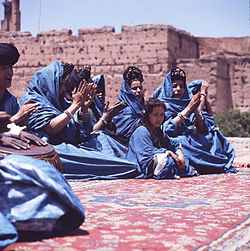
ShilhaBerbers in MoroccoSanhajaBerber traditional dancers
This section does not cite any sources. Please help improve this section by adding citations to reliable sources. Unsourced material may be challenged and removed.(December 2021) (Learn how and when to remove this message)
Afroasiatic languages
Berbers (Imazighen): Morocco, Tunisia, Algeria, Libya, Egypt, Mauritania, Mediterranean Coast, Atlas Mountains (Idurar n Waṭlas), North and Western Sahara
Eastern Berbers
Nafusa people: Nafusa Mountains (Drar n infusen), Tripolitania, northwestern Libya
Zuwara Berbers: Zuwara, coast of western Tripolitania in northwestern Libya.
Matmata Berbers: Matmâta, southern Tunisia
Djerba Berbers: Djerba Island, southern Tunisia coast
Sokna Berbers: Sokna Oasis (Isuknan), Fezzan, north central Libya, Sahara
Sanhaja (Iẓnagen/Iẓnajen) peoples: regions in Middle West Atlas Mountains and Eastern Morocco
Masmuda peoples: regions in Northern and Western Morocco
Ghomara: Far West Rif Mountains (Arrif), Northern Morocco
Shilha (Shlḥi): West Atlas Mountains, Western Morocco
Haratin: Indigenous population of the Maghreb and Sahara of uncertain origin; members now speak either Berber languages or Arabic; inhabit Morocco, Mauritania, Western Sahara, Algeria.
Serer - current habit Senega, Gambia, Guinea-Bissau and Mauritania[71][72]
Toubou: Chad
Copts (Rem en Khēmi/Rem en Kēme): Egypt, the majority of Egypt's population descended from Ancient Egyptians
Beja: Northeastern Sudan, between Red Sea coast and almost to the Nile River (White Nile and Blue Nile) eastern banks, Far Northwest Eritrea, SaharaEastern Desert, Far Southeast Egypt
Guanches: Canary Islands, Spain
West and Central Asia
West Asia
An Assyrian woman wearing traditional clothing in ZakhoSamaritans on Mount GerizimMarsh Arabs/Ma'dan poling a mashoof in the Mesopotamian Marshes
Soqotran men
Semitic
Assyrians (Āṯūrāyē/Sūrāyē/Sūryāyē): Originally speakers of Akkadian, an East Semitic language, Assyrians adopted Aramaic, a Northwest Semitic language, from Aramaeans by the end of the 1st millennium BC as an official language of the Assyrian Empire and in present times speak Assyrian Neo-Aramaic. The Assyrians are a Christian, Neo-Aramaic-speaking people indigenous to Assyria, which is located in what is now northern Iraq, southeastern Turkey, northeastern Syria and northwestern Iran in Upper Mesopotamia. There is a testified historical continuity between ancient Assyrians and modern Assyrians, for the majority of Assyrians in the same land that they have lived in since antiquity: (Assyria, Athura, Roman Assyria, & Asoristan), before the Arabization of Upper Mesopotamia, that corresponds with old Assyria. However, not all Assyrians identify as Assyrian, and several are from peoples that adopted an Assyrian ethnic identity
(see Terms for Syriac Christians).[77]
Central Semitic
Northwest Semitic
Arameans (Āramayē): Central and Western Syria, ancient land of the Aramaeans (Aram) in the Levant, an Aramaic-speaking people that descends from ancient Aramaeans.[citation needed] In recent years, there has been an attempt to revive Western Aramaic among Aramean Christians living in the Israeli village of Jish.[citation needed]
Mandaeans[citation needed]
Canaanites[citation needed]
Samaritans (Samerim): of Samaria. An ethno-religious group of the Levant, closely related genetically and culturally to the Jewish diaspora and are understood to have branched off from the latter around the time of the Assyrian exile. The Samaritans are adherents of Samaritanism, an Abrahamic religion closely related to Judaism. Their sole norm of religious observance is the Samaritan Pentateuch.[78][79]
Jews:[80] along with Samaritans, descend from the Israelites of the southern Levant, who are believed by archaeologists and historians to have branched out of the Canaanite peoples and culture through the development of a distinct monolatrous—and later monotheistic—religion centered on El/Yahweh,[81][82][83] one of the Ancient Canaanite deities. A Jewish diaspora existed for several centuries before the fall of the Second Temple, and their dwelling in other countries for the most part was not a result of compulsory dislocation.[84] Following the RomanSiege of Jerusalem, destruction of Herod's Temple, and failed Jewish revolts, some Jews were either expelled, taken as slaves to Rome, or massacred,[85] while other Jews continued to live in the region over the centuries, despite the conversion of many Jews to Christianity and Islam as well as persecution by the various conquerors of the region, including the Romans, Arabs, Ottomans, and the British. Additionally, a substantial number of diaspora Jews immigrated to Palestine during the 19th and 20th centuries (mainly under the Zionist movement), as well as after the modern State of Israel was established in 1948. This was coupled with the revival of Hebrew, the only Canaanite language still spoken today. Genetic studies of Jews show that many major diaspora Jewish communities derive a substantial portion of their ancestry from ancient Israelites.[86][87][88][89]
Due to changes in the demographic history of Palestine, there are competing claims that Jews and Palestinian Arabs are indigenous.[90][91][92] The argument entered the Israeli–Palestinian conflict in the 1990s, with Jews claiming indigeneity based on historic ties to the region.[93][94] Palestinians claim Indigenous status as a pre-existing population displaced by Jewish settlement, and currently constituting a minority in the State of Israel.[95] In 2007, the Negev Bedouin were officially "recognized as an indigenous people of Israel" by the United Nations.[96] This has been criticized both by scholars associated with the Israeli state, who dispute the Bedouin's claim to indigeneity,[97] and those who argue that recognising just one group of Palestinians as Indigenous risks undermining others' claims and "fetishising" nomadic cultures.[98]
Arab
Bedouin (Badawī) of the interior deserts of Arabia and Syria.[citation needed]
Druze (Al-Muwaḥḥidūn/Al-Muwaḥḥidīn/Ahl al-Tawḥīd): of Jabal al-Druze, Syria, Lebanon, Jordan and Israel. The faith of the Druze is a blend of Islam's Ismailism, Judaism, Christianity, Neoplatonism, Pythagoreanism, Gnosticism and Greek philosophy.[citation needed] The foundational text of the faith is the Epistles of Wisdom. Even though they have been a minority for their entire history, they have played a significant role in shaping the history of the Levant. Although the faith originally developed out of Ismaili Islam, Druze are usually not considered Muslims. The oldest and most densely populated Druze communities exist in Mount Lebanon and in the south of Syria around Jabal al-Druze (literally the "Mountain of the Druze").[citation needed]
Marsh Dwellers/Marsh Arabs (Ma'dan/ʻArab al-Ahwār): An Arabic-speaking people living in the marshes of southern Iraq or on the Iranian side of the Shatt al-Arab.[99]
South Semitic peoples
Bathari people: Dhofar, Southern Oman. Descendants from the original people of Dhofar before Arabization.[citation needed]
Harasis: Jiddat al-Harasis, Central Oman. Descendants from the original people of South Arabia before Arabization.[citation needed]
Hobyót people: Dhofar, Southern Oman, Far Eastern Yemen. Descendants from the original people of Dhofar before Arabization.[citation needed]
Mahris: Al-Mahra, Eastern Yemen, Dhofar, Southern Oman. Descendants from the original people of Dhofar before Arabization.[citation needed]
Shehri people/Jibbali people: Dhofar, Southern Oman. Descendants from the original people of Dhofar before Arabization.[citation needed]
Soqotrans: Soqotra island and group of islands, southeast of mainland Yemen, Indian Ocean. Descendants from the original natives of South Arabia before Arabization.[citation needed]
Kurds wearing traditional clothingYazidi festival at LalishBaloch of Nimruz Province, Afghanistan
Iranian peoples
East Iranian peoples
Northeast Iranian peoples
Ossetians (Iræттæ): South Ossetia, Georgia, Southern Caucasus Mountains[citation needed]
West Iranian peoples
Caspian/South Caspian peoples
Gilaks: Gilan, North Iran, South Caspian Sea coast and Elburz Mountains[citation needed]
Mazanderanis/Mazanis/Tabaris: Mazanderan, Tabaristan, Northern Iran, South Caspian Sea coast and Elburz Mountains[citation needed]
Northwest Iranian peoples
Northwestern I
Kurds (Kurd/Kurmandzh): Kurdistan, Northwestern and Western Iran, Northern Iraq, Northeast and Northern Syria, Southeast Turkey, Zagros and East Anatolian Plateau[citation needed]
Tats (Caucasus): Republic of Azerbaijan, Dagestan (Russia)[citation needed]
Caucasus
Main article: Peoples of the Caucasus
This section does not cite any sources. Please help improve this section by adding citations to reliable sources. Unsourced material may be challenged and removed.(December 2021) (Learn how and when to remove this message)
Armenian women in Diyarbakır
Traditional Adyghe clothing.
Indo-European peoples
Armenians (Hayer)
Iranian peoples
East Iranian peoples
Northeast Iranian peoples
Ossetians (Iræттæ): Ossetia (Iryston), North Ossetia (Cægat Iryston), a Republic of Russia, and South Ossetia (Khussar Iryston), a De Jure autonomous region of Georgia (Sakartvelo), self-proclaimed sovereign country, North and South slopes of Central Caucasus Mountains.
West Iranian peoples
Southwest Iranian peoples
Persian peoples
Tats (Caucasus) (Tati/Parsi/Lohijon/Daghli): East Caucasus Mountains, Azerbaijan
Talysh (Caucasus): Caucasus Mountains
Kartvelian peoples
Georgians (Kartvels)
Zan
Mingrelians
Lazs (Lazepe): Southwestern Georgia, Far Northeastern Turkey
Svans
Northeast Caucasian peoples
Avar-Andic peoples
Avar people (Caucasus) (Magharulal/Avaral): Dagestan, European Russia, Northern Caucasus Mountains
Andic peoples
Akhvakh (Ashvado/Atluatii)
Andis (Qhvannal/Khivannal)
Bagvalal (Bagval)
Botlikhs (Buykhal'ida/Buykhalyi)
Chamalals (Chamalaldu)
Godoberis (Giybdiridi)
Karatas (Khkhiridi)
Tindis (Idarab)
Dargins (Darganti): Dagestan, European Russia, Northern Caucasus Mountains
Chechens (Nokhchiy): Chechnya, European Russia, Northern Caucasus Mountains
Ingush (Ghalghay): Ingushetia, European Russia, Northern Caucasus Mountains
Tsezic (Didoic) peoples
Bezhtas
Hinukh (Hinuqes)
Hunzibs (Hunzib)
Khwarshi (Khuani)
Tsez/Dido people
Northwest Caucasian peoples
Abkhaz-Abaza peoples
Abazins (Abaza)
Abkhazians (Aphsua): Abkhazia (Aphsny) - a De Jure autonomous region of Georgia (Sakartvelo), self-proclaimed sovereign country.
Circassian peoples
West Circassian peoples
Adyghe (Adyge): Adyghe Republic, European Russia, Northern Caucasus Mountains
East Circassian peoples
Cherkess (Cherkes): Karachay-Cherkessia, European Russia, Northern Caucasus Mountains
Kabardians (Qeberdeykher): Kabardino-Balkaria, European Russia, Northern Caucasus Mountains
Karachays (Karachai): Karachay-Cherkessia, North Caucasian peoples, Northern Caucasus Mountains[101]
Ubykh (Tʷaχ): were indigenous to the mountains of West Caucasus, Sochi area, Krasnodar Krai, Russia, later migrated to Turkey.
Central Asia
This section does not cite any sources. Please help improve this section by adding citations to reliable sources. Unsourced material may be challenged and removed.(August 2023) (Learn how and when to remove this message)
Pamiri people of Tajikistan
Indo-European peoples
Iranian peoples
East Iranian peoples
Northeast Iranian peoples
Pamiris (Pomir): Badakhshan (Afghanistan, Tajikistan), Pamir Mountains, Tashkurgan (in Xinjiang)
Tajiks: Tajikistan
Yaghnobi (Yaγnōbī́t): Tajikistan
Turkic peoples
Kipchak Turks (Northwestern Common Turkic peoples)
Kazakhs: Kazakhstan, China, Mongolia, Russia
South Asia
Kalash in traditional dress, Pakistan
Kodava men in traditional attire, India
An Indigenous Assamese woman of AssamVeddha Chief Uruwarige Wannila Aththo, leader of the Indigenous people of Sri Lanka
This section does not cite any sources. Please help improve this section by adding citations to reliable sources. Unsourced material may be challenged and removed.(December 2021) (Learn how and when to remove this message)
Pakistan
Burusho: Hunza and Chitral districts, Gilgit-Baltistan, Northern Pakistan
Torwali: Swat District, northern Pakistan
Gawri: Swat and Upper Dir districts, northern Pakistan
India
Adivasis: collective term for many Indigenous peoples in India(see also Scheduled Tribes in India)
Dravidian peoples
Badaga: Tamil Nadu, South India
Gond: Gondwana Land, Central India
Irula: Tamil Nadu, South India
Kisan: Indigenous peoples of the Odisha, East India
Kodava: Kodagu, Karnataka, South India
Kota (Kothar/Kov): Tamil Nadu, South India
Kuruba: Andhra Pradesh, Karnataka, Tamil Nadu, South India
Meitei people: Manipur and neighboring states of India, Bangladesh, Myanmar
Vedda (Wanniyala-Aetto): Sri Lanka
Dhivehi: Maldives
Andaman and Nicobar Islands
Negrito:
Andamanese, in the Andaman Islands, which include:
Great Andamanese: formerly at least 10 distinct groups living throughout Great Andaman, now confined to a single community on Strait Island, Andaman Is.
Jangil (Rutland Jarawa): now extinct, formerly of Rutland Island, Andamans
Jarawa: South Andaman and Middle Andaman
Onge (Önge): Little Andaman, Andaman Islands
Sentinelese (?): North Sentinel Island, Andaman Islands
Austroasiatic peoples
Nicobarese people (Holchu): Nicobar Islands, India
Shompen people (Kalay-Keyet): Nicobar Islands, India
Northeast Asia
Miao (Hmong) girls in China
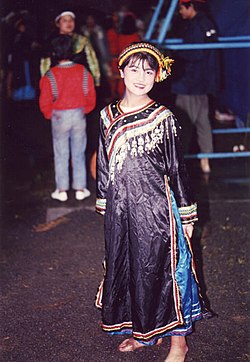
Bunun dancer
This section does not cite any sources. Please help improve this section by adding citations to reliable sources. Unsourced material may be challenged and removed.(December 2021) (Learn how and when to remove this message)
China
Western China
Turkic peoples
Common Turks
Karluks (Southeastern Common Turkic peoples)
Uyghurs (Uyghur): Tarim Basin, Southern Xinjiang, China
Ili Turks: Ili Kazakh Autonomous Prefecture, Northern Xinjiang, China
Äynus: Taklamakan Desert, Southwestern Xinjiang, China
Yugur (Yogïr/Sarïg Yogïr): Sunan Yugur Autonomous County, Gansu province, China
Salar (Salır): Xunhua Salar Autonomous County, Qinghai province, China
Kipchaks (Northwestern Common Turkic peoples)
Kazakhs: Kazakhstan, China, Mongolia, Russia
Kyrgyzs: Kyrgyzstan, China
Tibetan peoples
Mongolic peoples
Oirats (Oirad/Oird) (Dzungars and Torghuts): Dzungaria (Northern Xinjiang), China
North China
Fuyu Kyrgyz: Fuyu County, Heilongjiang
Hui peoples
Tungusic peoples
Northern Tungusic peoples
Nanai (Hezhen/Nanai/Hezhe/Golds/Samagir): Heilongjiang in China, Khabarovsk Krai and Primorsky Krai in Russia
Oroqen: Far Northern China
Southern Tungusic peoples
Manchus (Manju/Manchu people): Manchuria, northeast China
South China
Hmong–Mien peoples
Miao: Southern China (provinces of Guizhou, Yunnan, Sichuan, Hubei, Hunan, Guangxi, Guangdong and Hainan), Myanmar, northern Vietnam, Laos and Thailand
Hmong: Southern China, Vietnam and Laos
Yao (Mien): Southern China (provinces Hunan, Guangdong, Guangxi, Guizhou, and Yunnan)
Ket people: along the middle branch of Yenisey River[138]
Nivkh: Amur River lowlands and Sakhalin Island[139]
Southeast Asia
A Wa woman carrying her child
Mainland Southeast Asia (Indochina Peninsula)
S'gaw Karen girls of Khun Yuam District, Mae Hong Son Province, Thailand
Akha girl in LaosYi/Nuosu women
A Tai Dam lady
This section does not cite any sources. Please help improve this section by adding citations to reliable sources. Unsourced material may be challenged and removed.(December 2021) (Learn how and when to remove this message)
Austroasiatic peoples
Aslian peoples
Senoi (Sengoi/Sng'oi) (a people of the ethnic groups called by the generic word Orang Asli - Original People): in Peninsular Malaysia)[140]
Khmer Krom: of Vietnam
Khmuic groups:
Khmu (Kmm̥uʔ/Kmmúʔ): Thailand and Laos
Mlabri: Northern Thailand and Laos
Pray: Thailand and Laos
Palaungic peoples
Wa (Vāx): One of the hill tribes of Myanmar (They are also distributed in Yunnan Province, China in East Asia).
Zomi (Zo Pau): One of the Indigenous peoples in Southeast Asia. The word Zomi is the collective name given to many tribes who traced their descent from a common ancestor. Through history they have been known under various appellation, such as Chin, Kuki and Mizo, but the expression was disliked by them, and they insist that the term was a misnomer given by others and by which they have been recorded in certain documents designate their ancient origins as a separate ethnicity.
Vietic peoples
Muong
Tho
Tuom
Liha
Phong
Thavueng
Ahoe (Phon Sung)
Ahao
Ahlao
Chuet
Rục
Mày
Arem
Mã Liềng
Sách
Salang
Maleng–Pakatan
Bo
Arao
Atel
Atop
Kaleun
Maleng
Pakatan
Themarou
Kri–Phoóng
Krii
Phoóng
Mlengbrou
Austronesian peoples
Malayo-Polynesian peoples
Chamic peoples
Cham (Chams/Urang Campa): of Vietnam and Cambodia
Moken: in Myanmar, and Thailand
Hmong–Mien peoples
Hmong: subgroups of Thailand, Myanmar, Laos and Vietnam (They are also distributed in China in East Asia).
Montagnards (Degar): an umbrella term for several Pre-Vietnamese peoples that dwell in the plateaus and mountains of the southern regions of Vietnam
Austroasiatic peoples
Bahnaric peoples
North Bahnaric peoples
Sedang, Halang and Kayong: Vietnam
H're people: Quảng Ngãi Province, Central Vietnam
Central Bahnaric peoples
Bahnar: Central Highland provinces of Gia Lai and Kon Tum, as well as the coastal provinces of Bình Định and Phú Yên (Vietnam)
Jeh-Tariang people: Kon Tum, Vietnam
Southern Bahnaric peoples
Mạ people: Central Highlands, Vietnam
Mnong: Cambodia and Vietnam
Stieng: Cambodia and Vietnam
Koho: Di Linh Highland of Vietnam
Eastern Bahnaric:
Cor people
Katuic peoples
Katu
Katu: Vietnam and Laos
West
Bru (Bruu): Thailand, Laos, India and Vietnam
Ta Oi people: Laos, Vietnam
Austronesian peoples
Malayo-Polynesian peoples
Chamic peoples
Highlands Chamic peoples
Rade-Jarai
Jarai: Central Highlands of Vietnam, as well as in the Northeast Province of Ratanakiri (Cambodia)
Rhade: Southern Vietnam
Chru–Northern
Northern Cham
Raglai: in Khánh Hòa Province of South Central Coast, and Ninh Thuận Province in the Southeast region of Vietnam
Negrito:
Mani (Maniq): Far Southern Thailand
Semang (a group of several peoples of the ethnic groups called by the generic word Orang Asli - Original People): Peninsular Malaysia
Batek: Peninsular Malaysia
Sino-Tibetan-speaking peoples
Karenic peoples
Karen (Per Ploan Poe/Ploan/Pwa Ka Nyaw/Kanyaw): an alliance of hill tribes of Myanmar and Thailand
Lolo-Burmese peoples
Akha a.k.a. Aini or Aini-Akha: One of the hill tribes of Thailand, Laos and Burma (They are also distributed in Yunnan Province, China in East Asia).
Lahu (Ladhulsi/Kawzhawd): One of the hill tribes of Thailand, Myanmar and Laos (They are also distributed in Yunnan, China).
Lisu: One of the hill tribes of Myanmar and Thailand (They are also distributed in Arunachal Pradesh, India in South Asia and Yunnan and Sichuan, China).
Rakhine (Rəkhàin lùmjó), Kaman and Marma: Arakan in Myanmar
Yi (Nuosu/Nisu/Sani/Axi/Lolo): a group of several related peoples mainly in Yunnan, China.
Tibeto-Burman peoples
Intha: Inle Lake of Myanmar
Tai peoples: Vietnam, Myanmar, Laos and Thailand (They are also distributed in Yunnan, China).
Southwestern Tai peoples
Khün (Thai Khün)
Phu Thai
Tai Dam: Northwest Vietnam, Laos and Thailand (They are also distributed in Yunnan)
Tai Lu: Laos, Northern Thailand, Myanmar, and Lai Châu Province in Vietnam (They are also distributed in Xishuangbanna in Yunnan, China).
Tai Nüa
Maritime Southeast Asia (Malay Archipelago)
A Murut man (a member of one of the Dayak ethnicities) in Monsopiad Cultural Village, Kg. Kuai Kandazon, Penampang, Sabah, Borneo Island
Ati woman, the Philippines, 2007[141] The Negritos were the earliest inhabitants of Southeast Asia.[142]
This section does not cite any sources. Please help improve this section by adding citations to reliable sources. Unsourced material may be challenged and removed.(December 2021) (Learn how and when to remove this message)
Bajau (Sama/Samah/Samal): Borneo and the Sulu Archipelago (Malaysia, Indonesia, Philippines)
Dayak: Borneo, (Malaysia and Indonesia)
Northwest Sumatra–Barrier Islands peoples
Mentawai peoples
Mentawai: Mentawai Islands, Indonesia
Sakuddei: Siberut Island and Mentawai Islands, Indonesia
Malayic peoples
Orang Laut and Orang Seletar: Malaysia and Singapore
Proto-Malay (Melayu asli/Melayu purba): Malaysia
North Bornean peoples
Penan: Sarawak, Malaysia
Lun Bawang: Sarawak, Malaysia
Philippine peoples
Igorot (Ifugao: Ipugao; Benguet: Ibaloi, Kankanaey; Mountain Province: Bontoc; Kalinga: Kiangan; Abra: Itneg; Apayao: Isneg):[143]Cordillera mountains in Luzon in the Philippines
Lumad (Katawhang Lumad): Mindanao in the Philippines
Mangyan: Mindoro in the Philippines
Moro: Mindanao and Sulu archipelago in the Philippines
Tausug (Tausūg/Suluk/Sulug)
Maguindanao
Maranao (Iranon/Iranun)
Tribes of Palawan: Palawan, Philippines
Orang Rimba (Orang Batin Sembilan/Orang Rimba/Anak Dalam/Kubu): Sumatra, Indonesia
Lubu: Sumatra, Indonesia
Negrito:
Aeta: Luzon, Philippines
Ati: Panay, Philippines
Batak: Palawan, Philippines
Pribumi (Native Indonesians): of Indonesia
See also: Indigenous peoples of the Philippines
Europe
Irish Travellers in Cork
Some sources describe the Sámi as the only recognized indigenous peoples in Europe,[144][145][146] with others describing them as the only indigenous people in the European Union.[147][148][149][150] Other groups, particularly in Central, Western and Southern Europe, that might be considered to fit the description of indigenous peoples in the Indigenous and Tribal Peoples Convention, 1989, such as the Sorbs, are generally categorized as national minorities instead.[151]
Irish Travellers of the island of Ireland[155][156]
Americas
Main articles: Indigenous peoples of the Americas and Classification of Indigenous peoples of the Americas
The Americas consist of the supercontinent comprising North and South America, and associated islands.
List of peoples by geographical and ethnolinguistic grouping:
North America
Main articles: List of First Nations peoples, Federally recognized tribes, and Indigenous peoples of Mexico
North America includes all of the continent and islands east of the Bering Strait and north of the Isthmus of Panama; it includes Greenland, Canada, United States, Mexico, Central American and Caribbean countries. However, a distinction can be made between a broader North America and a narrower Northern America and Middle America due to ethnic and cultural characteristics.
Indigenous peoples in North America by Country
Aboriginal peoples in Canada
First Nations
Inuit
Métis
Indigenous peoples in the United States
Alaskan Creoles
Alaska Natives
Indigenous peoples of Mexico
Indigenous peoples in North America by native cultural regions
Arctic
Main article: Indigenous peoples of the North American Arctic
This section does not cite any sources. Please help improve this section by adding citations to reliable sources. Unsourced material may be challenged and removed.(December 2021) (Learn how and when to remove this message)
Two Inuit women in traditional amauti (packing parkas)
Ancient Beringian - Siberia and Alaska
Eskimo–Aleut
Aleut (Unangan/Unangas): Aleutian Islands and Kamchatka Krai
Eskimo/Yupit-Inuit
Yupik: Alaska, United States
Alutiiq (Sugpiat): Alaska, United States
Central Alaskan Yup'ik (Yupiat/Yupiit): Alaska, United States
Cup'ik (Cupiit): Alaska, United States
Cup'ig: Nunivak Island, Alaska, United States
Siberian Yupik of St. Lawrence Island, Alaska, United States.
Inuit: Canadian Arctic - Northwest Territories, Nunavik, Nunatsiavut, Nunavut; Greenland; Alaska, United States
Greenlandic Inuit: Greenland
Inughuit: North Greenland
Kalaallit: West Greenland
Tunumiit: East Greenland
Inupiat: Arctic Alaska, North Slope and boroughs and the Bering Strait
Nunamiut: Interior Alaska.
Inuit: Canadian Arctic
Eastern Canadian Inuit: East Canadian Arctic, East Nunavut, Nunavik, Nunatsiavut
Western Canadian Inuit (Inuvialuit): West Canadian Arctic, Inuvialuit Settlement Region, Arctic coast of Northwest Territories, West Nunavut
Métis: a mixed First Nations (from several peoples) and European (from several peoples) people of Canada.
Subarctic
Main article: Indigenous peoples of the Subarctic
This section does not cite any sources. Please help improve this section by adding citations to reliable sources. Unsourced material may be challenged and removed.(December 2021) (Learn how and when to remove this message)
Na-Dené peoples
Athabaskan peoples
Northern Athabaskan peoples
Dene of Yukon, British Columbia, Manitoba, Northwest Territory, and Alberta, Canada.
Alaskan Athabaskans
Southern Alaskan peoples
Ahtna
Ingalik
Koyukon of Interior Alaska.
Kutchin of Interior Alaska and the Yukon.
Tanana Athabaskans.
Kolchan of Interior Alaska.
Deg Hit'an of Interior Alaska.
Dena'ina of Interior Alaska.
Holikachuk
Hän of Yukon, Canada, and Alaska, United States.
Métis: a mixed First Nations (primarily Cree) and European (primarily French) people of Canada.
Algonquians
Cree of Montana, United States, and Manitoba, Alberta, and Saskatchewan, Canada.
Innu of Northeastern Quebec, and Western Labrador, Canada.
Annishinabe of Quebec, Ontario, and Manitoba, Canada, as well as Kansas, Michigan, Minnesota, Oklahoma, and Wisconsin, United States.
Algonquin of Quebec, and Ontario, Canada.
Beothuk of Newfoundland, Canada.
Pacific Northwest Coast
Main article: Indigenous peoples of the Pacific Northwest Coast
This section does not cite any sources. Please help improve this section by adding citations to reliable sources. Unsourced material may be challenged and removed.(December 2021) (Learn how and when to remove this message)
Makah of Washington, United States.
Quinault of Washington, United States.
Nootka of British Columbia, Canada.
Kwakiutl of British Columbia, Canada.
Eyak of Alaska, United States.
Haida of British Columbia, Canada, and Alaska, United States.
Tlingit of Alaska, United States.
Tshimshian of British Columbia, Canada, and Alaska, United States.
Northwest Plateau-Great Basin-California
This section does not cite any sources. Please help improve this section by adding citations to reliable sources. Unsourced material may be challenged and removed.(December 2021) (Learn how and when to remove this message)
Northwest Plateau
Main article: Indigenous peoples of the Northwest Plateau
Great Basin
Main article: Indigenous peoples of the Great Basin
Ute of Utah, United States.
Shoshone of Colorado, Wyoming, Nevada, and Utah, United States.
Mono of California, United States.
Bannock of Idaho, United States.
Western Shoshone of Nevada, United States.
Timbisha of Nevada, United States.
Washoe of Nevada, United States.
Paiute of Colorado, California, Nevada, and Utah, United States.
Northern Paiute.
Southern Paiute.
Pais of Colorado, Arizona, and New Mexico, United States, as well as Baja California, Mexico.
Hualapai of Arizona, United States.
Walapai of Arizona and Colorado, United States.
California
Main articles: Indigenous peoples of California and Aridoamerica § Aridoamerica cultures
Cocopa (Cocopah/Xawiƚƚ Kwñchawaay): Baja California, Mexico, and Arizona, United States.
Kumeyaay (Ipai-Tipai/MuttTipi): Baja California, Mexico, and California, United States.
Miwok of California, United States.
Maidu of California, United States.
Wintu of California, United States.
Chumash of California, United States.
Tongva of California, United States.
Modoc of California, and Oregon, United States.
Athabaskans
Achumawi of California, and Oregon, United States.
Hupa of California and Oregon, United States.
Cahuilla of California, United States.
Mojave of California, and Nevada, United States.
Uto-Aztecans
Mono of California, and Nevada, United States.
Northern Paiute of California and Nevada, United States.
Ohlone of California, United States.
Karok of California, United States.
Great Plains
Main article: Plains Indians
This section does not cite any sources. Please help improve this section by adding citations to reliable sources. Unsourced material may be challenged and removed.(December 2021) (Learn how and when to remove this message)
White Cloud, Chief of the Iowa, by George Catlin, 1845
Sioux man, 1899
Comanche, Oklahoma, United States
Osage, Oklahoma, United States
Sioux of North Dakota, South Dakota, and Minnesota, United States, as well as Saskatchewan, and Alberta, Canada
Lakota of South Dakota, North Dakota, United States
Dakota people, Minnesota, Nebraska, South Dakota, North Dakota, United States, and Saskatchewan, Canada
Kiowa, Oklahoma
Plains Apache,
(see the Southwest section for another category this tribe belongs to)Oklahoma
Crow, Montana
Omaha, Nebraska
Blackfoot of Montana, United States, Alberta, Canada, and Saskatchewan, Canada.
Eastern Woodlands
Main article: Indigenous peoples of the Eastern Woodlands
Northeastern Woodlands
Main article: Indigenous peoples of the Northeastern Woodlands
This section does not cite any sources. Please help improve this section by adding citations to reliable sources. Unsourced material may be challenged and removed.(December 2021) (Learn how and when to remove this message)
Iroquoian peoples
Haudenosaunee of New York, Wisconsin, and Oklahoma, United States, as well as Quebec and Ontario, Canada.
Mohawk of Quebec, Canada, and New York, United States
Seneca of New York, and Oklahoma, United States, as well as Ontario, Canada
Cayuga of Oklahoma, and New York, United States, as well as Ontario, Canada
Oneida of Wisconsin and New York, United States, as well as Ontario, Canada
Tuscarora of New York, United States, and Ontario, Canada.
Onondaga of New York, United States, and Ontario, Canada
Wyandot of Kansas, Michigan, and Oklahoma, United States, as well as Ontario, Canada
Nation du chat of Upstate New York, Ohio, and Northwest Pennsylvania, United States
Conestoga (Susquehannock) of Pennsylvania, West Virginia, New York, and Maryland (United States)
St. Lawrence Iroquoians: St. Lawrence River, Quebec, Canada, and New York, United States
Monongahela: Pennsylvania, West Virginia, and Ohio, United States
Nottoway of Virginia, United States
Westo of Virginia and South Carolina, United States
Algic peoples
Algonquian peoples
Chowanoke of North Carolina
Carolina Algonquian
Roanoke of North Carolina
Croatan of North Carolina
Powhatan Confederacy of Virginia
Pamunkey of Virginia, United States
Powhatan people of Virginia, United States
Wampanoag of Massachusetts
Wabanaki of Maine, United States, and New Brunswick and Newfoundland, Canada
Abenaki of Maine and Quebec
Penobscot of Maine
Miqmac of Maine, New Brunswick, and Newfoundland
Passamaquoddy of Maine, United States, and New Brunswick, Canada.
Maliseet of New Brunswick and Quebec
Shawnee of the Ohio River Valley, now Oklahoma
Central Algonquian peoples
Kikapú (Kiikaapoa/Kiikaapoi): Indigenous peoples from southeast Michigan, United States, also in Coahuila, Mexico
Peoria (Illiniwek)
Annishinabe
Ojibwe of Minnesota, North Dakota, and Michigan, United States, as well as Ontario, Canada
Potawatomi of Michigan, Indiana, Kansas, Oklahoma, United States, as well as Ontario, Canada
Odawa of Michigan and Oklahoma, United States, as well as Ontario, Canada.
Cree of Alberta, Manitoba, Ontario, Saskatchewan, and the Northwest Territories, Canada, as well as Montana, United States.
Southeastern Woodlands
Main article: Indigenous peoples of the Southeastern Woodlands
This section does not cite any sources. Please help improve this section by adding citations to reliable sources. Unsourced material may be challenged and removed.(December 2021) (Learn how and when to remove this message)
Cherokee of North Carolina and Oklahoma
Natchez of Mississippi and Louisiana, descendants in Oklahoma
Muskogeans
Muscogee of Alabama and Oklahoma
Choctaw of Louisiana, Mississippi, and Oklahoma
Chickasaw of Oklahoma
Indigenous peoples of Florida
Indigenous people of the Everglades region
Calusa of South Florida
Tequesta of South Florida
Timucua of Northern Florida and Southern Georgia.
Apalachee of the Florida Panhandle and Alabama.
Seminole of Oklahoma, and Florida
Siouans
Ho-Chunk of Wisconsin and Michigan
Catawba of South Carolina
Pee Dee of South Carolina
Caddoans
Caddo of Oklahoma
Pawnee of Oklahoma, Nebraska and Kansas, United States.
Southern Plains villagers of Western Oklahoma, Texas, Kansas, and Southeastern Colorado
Arikara of North Dakota, United States
Hidatsa of North Dakota, United States
Wichita of Oklahoma, United States.
Southwest
Main article: Southwest peoples
This section does not cite any sources. Please help improve this section by adding citations to reliable sources. Unsourced material may be challenged and removed.(December 2021) (Learn how and when to remove this message)
Navajo man in Monument Valley, Utah
Hopi dancers in 2017
Uto-Aztecan peoples
Aztecan (Nahuan) peoples
Mexicanero (Mēxihcah): Durango, Mexico
Cáhitan peoples
Yaqui (Hiaki/Yoeme): Sonora, Mexico, and Arizona, United States.
Mayo (Yoreme): Sonora, Mexico
Tarahumaran peoples
Guarijío: Sonora, Mexico
Tarahumara (Rarámuri-Omugí): Chihuahua and Durango, Mexico
Tepiman peoples
Pima Bajo: Chihuahua, Mexico
Tepehuán (O'dam/Audam/Ódami): Chihuahua and Durango, Mexico
Seri (Comcaac): Sonora, Mexico
Puebloan peoples: Colorado, New Mexico, Arizona, Utah, and Texas, United States
Hopi of Arizona, United States.
Zuni of Arizona, United States.
Ancestral Pueblo peoples of Arizona, New Mexico, Colorado, and Utah, United States.
Tiwa of New Mexico, United States.
Mogolon of New Mexico, Arizona, United States, and Sonora, Mexico
Hohokam of Southern Arizona, United States
Southern Athabascans
Apache of Chihuahua, Coahuilla, and Sonora, Mexico, as well as Arizona, New Mexico, Oklahoma, and Texas, United States.
Chiricahua of Southern New Mexico, Northern Mexico, Southeast Arizona, and Oklahoma
Jicarilla Apache of New Mexico
Lipan Apache of New Mexico
Plains Apache of Oklahoma
Mescalero of New Mexico
Western Apache of Western Arizona
Navajo of Ariona]] and New Mexico, the Four Corners region
O'odham of Sonora, Mexico, and Arizona, United States
Akimel O'odham of Arizona, United States
Tohono O'odham of far Northern Sonora, Mexico, and Southern Arizona
Yavapai, Arizona
Mesoamerica
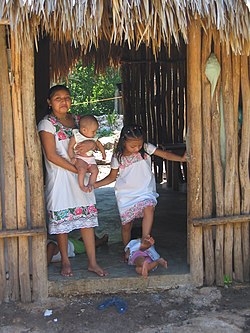
Tzeltal dancers waiting to perform, San CristobalMayan family from YucatánAmuzgos in traditional dress
Mazatec girls performing a dance in Huautla de JimenezHuichol woman and child
This section does not cite any sources. Please help improve this section by adding citations to reliable sources. Unsourced material may be challenged and removed.(December 2021) (Learn how and when to remove this message)
Huave (Ikoots/Kunajts): Oaxaca, Mexico
Maya peoples
Huastec (Téenek/Te' Inik): San Luis Potosí, Mexico
Otomi (Hñähñu/Hñähño/Ñuhu/Ñhato/Ñuhmu): Central Mexico
Pame (Xi'úi): San Luis Potosí, Mexico
Popolocan peoples
Chocho (Ngiwa): Oaxaca, Mexico
Ixcatec: Oaxaca, Mexico
Popoloca: Oaxaca, and Puebla, Mexico
Mazatec (Ha Shuta Enima): Puebla and Oaxaca, Mexico
Tlapanec (Me'phaa): Guerrero, Mexico
Zapotecan peoples
Chatino (Kitse Cha'tño): Oaxaca, Mexico
Zapotec (Be'ena'a/Didxažon): Oaxaca, Mexico
Tarascan (P'urhépecha): Michoacán, Mexico
Tequistlatecan/Chontal de Oaxaca: Oaxaca, Mexico
Totonacan peoples
Totonac (Tutunacu): Veracruz and Puebla, Mexico
Uto-Aztecan peoples
Aztecan peoples
Nahua (Nāhuatlācah): Mexico
Corachol peoples
Cora (Náayarite): Jalisco and Nayarit, Mexico
Huichol (Wixáritari/Wixárita): Jalisco and Nayarit, Mexico
Central America
Central America is generally defined as a subregion in North America located between the Isthmus of Tehuantepec and the Darién Gap.
Indigenous peoples in Central America by country:
Indigenous peoples of Costa Rica
Indigenous peoples of Panama
Mam people
Mesoamerica
This section does not cite any sources. Please help improve this section by adding citations to reliable sources. Unsourced material may be challenged and removed.(December 2021) (Learn how and when to remove this message)
Chorotega (Mangue/Mankeme): Honduras, Nicaragua, and Costa Rica
Xinca (Xinka): Guatemala
Isthmo-Colombian Area
A Guna woman in traditional dress
Umalali featuring the Garifuna Collective on the Peace Corps World Stage at Smithsonian Folklife Festival 2011
This section does not cite any sources. Please help improve this section by adding citations to reliable sources. Unsourced material may be challenged and removed.(December 2021) (Learn how and when to remove this message)
Zambo/Cafuso peoples (mixed West African and Amerindian peoples)
Garífuna: A mixed West African (from several peoples) and Amerindian people (mainly from the Island Caribs - Kalhíphona) that traditionally speaks an Arawakan language in Belize and Honduras.
Miskito Sambu: A mixed West African (from several peoples) and Amerindian people (mainly from the original Miskito) that traditionally speaks Miskito, a Misumalpan language, and also Nicaragua Creole English in Nicaragua and Honduras.
Black Seminoles: Florida, The Bahamas, and Mexico. (Mixed Seminole and African).
South America
Main articles: Indigenous peoples in South America and List of Indigenous peoples of South America
Emberá women
Urarinashaman, 1988
Bororo-Boe man from Mato Grosso at Brazil's Indigenous Games, 2007
Pai Tavytera people in Amambay Department, Paraguay, 2012
Quechua woman and child in the Sacred Valley, Peru
South America generally includes all of the continent and islands south of the Isthmus of Panama.
Indigenous peoples in South America by country:
Indigenous peoples in Argentina
List of indigenous peoples of Brazil
Indigenous peoples in Chile
Indigenous peoples in Colombia
Indigenous peoples in Ecuador
Indigenous peoples in Peru
Indigenous peoples in South America by native cultural regions
Isthmo-Colombian Area
This section does not cite any sources. Please help improve this section by adding citations to reliable sources. Unsourced material may be challenged and removed.(December 2021) (Learn how and when to remove this message)
Arawakan peoples
Northern
Ta-Arawakan
Wayuu: Venezuela/Colombia
Chibchan peoples
Cuna-Colombian
Guna (Dule): Panama
Chibcha–Motilon
Chibcha–Tunebo
U'wa: Colombia
Arwako-Chimila
Arwako
Three Wiwa children near Ciudad Perdida, Colombia, 2021
Wiwa: Colombia
Chocoan peoples
Embera (ɛ̃berá): Colombia/Panama
Warao: Venezuela's Orinoco River delta region.
Amazon
This section does not cite any sources. Please help improve this section by adding citations to reliable sources. Unsourced material may be challenged and removed.(December 2021) (Learn how and when to remove this message)
Arawakan peoples
Southern
Campa
Asháninka: Peru
Barbacoan peoples
Awan
Awá-Kwaiker: Northern Ecuador
Bora-Witoto peoples
Bora: Colombia/Peru
Cahuapanan peoples
Chayahuita: Loreto, Peru
Jivaroan (Shuar): Loreto and San Martín, Peru
Nukak: Colombia
Panoan peoples
Mainline Panoan
Nawa
Chama
Shipibo-Conibo people: Ucayali, Peru
Shipibo: Ucayali, Peru
Headwaters
Yora: Amazon rainforest, southeast Peru
Mayoruna
Mayo
Korubu (Dslala): Brazil
Matis: Brazil/Peru
Matsés: Brazil/Peru
Pirahã: Brazil
Ticuna-Yuri peoples
Ticuna (Tikuna): Brazil/Peru/Colombia
Tucanoan peoples
Eastern
North
Tukano: Colombia
Western
Napo
Siona–Secoya
Secoya: Loreto, Peru/Ecuador
Tupian peoples
Tupí-Guaraní
Tupi: Paraguay, Brazil, Bolivia, Peru and Argentina
This section does not cite any sources. Please help improve this section by adding citations to reliable sources. Unsourced material may be challenged and removed.(December 2021) (Learn how and when to remove this message)
Cariban peoples
Galibi/Kalina (Mainland Caribs): Guianas, Venezuela (northern coast of South America)
This section does not cite any sources. Please help improve this section by adding citations to reliable sources. Unsourced material may be challenged and removed.(December 2021) (Learn how and when to remove this message)
Charruan peoples
Charrúa: Uruguay, Brazil and Argentina
Macro-Gê peoples
Bororoan
Bororo: Mato Grosso, Brazil
Ofaie
Karajá/Iny: Brazil
Tupian peoples
Tupí-Guaraní
Guaraní (I)
Ache: Paraguay
Pai Tavytera: Paraguay
Guaraní
Guaraní (Abá/Avá): Paraguay, Uruguay, Brazil, Bolivia and Argentina
Tupi: Paraguay, Brazil, Bolivia, Peru and Argentina
Cocama-Omagua
Cocama-Cocamilla (Kokáma): Loreto, Peru
Tapirape: Brazil
Wayampí
Guajá
Awá-Guajá: eastern Amazonian rainforest, Brazil
Chaco
This section does not cite any sources. Please help improve this section by adding citations to reliable sources. Unsourced material may be challenged and removed.(December 2021) (Learn how and when to remove this message)
Mascoian peoples
Enxet: Paraguay
Matacoan peoples
Wichí: the Chaco, Argentina/Bolivia
Zamucoan peoples
Ayoreo: the Chaco, Paraguay/Bolivia
Central Andes
This section does not cite any sources. Please help improve this section by adding citations to reliable sources. Unsourced material may be challenged and removed.(December 2021) (Learn how and when to remove this message)
Atacama people: Chile, Argentina, and Bolivia
Aymaran peoples
Aymara: Peru/Bolivia/Chile
Diaguita: Chile/Argentina
Maina people: Peru
Nasa: Colombia
Quechuan peoples
Quechua (Nunakuna/Runakuna/Kichwa/Inga)
Uru people: Lake Titicaca, Peru and Bolivia
Southern Cone
This section does not cite any sources. Please help improve this section by adding citations to reliable sources. Unsourced material may be challenged and removed.(December 2021) (Learn how and when to remove this message)
Araucania
Araucanian peoples
Mapuche (Araucanians): Chile/Argentina
Picunche: Chile
Pehuenche: Chile/Argentina
Huilliche: Chile
Pampas
Puelche: Argentina
Charrúa: Uruguay
Guenoa: Argentina, Uruguay and Brazil
Patagonia
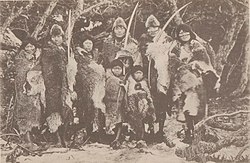
The Selkʼnam of Tierra del Fuego, c. 1915
Chono: Chiloé, Guaitecas and Chonos, Chile
Tehuelche: Southern Chile/Argentina
Alacalufe (Kawésqar): Tierra del Fuego, Chile
Selkʼnam (Ona): Tierra del Fuego, Argentina and Chile
Yaghan (Yámana): Tierra del Fuego, Chile
Haush (Manek'enk): Tierra del Fuego, Argentina
Caribbean
Main article: Indigenous peoples of the Caribbean
This section does not cite any sources. Please help improve this section by adding citations to reliable sources. Unsourced material may be challenged and removed.(December 2021) (Learn how and when to remove this message)
Portrait of the Kali'na exhibited at the Jardin d'Acclimatation in Paris in 1892
The West Indies, or the Caribbean, generally includes the island chains of the Caribbean Sea, namely the Lucayan Archipelago, the Greater Antilles, and the Lesser Antilles.
Arawakan peoples
Northern
Circum-Caribbean/Ta-Arawakan peoples
Eyeri/Igneri: Lesser Antilles. An Arawak people, may have been the Kalinago/Island Caribs before Caribbeanization. (The Island Caribs had the tradition that the Igneri were the older people of Lesser Antilles but they could have been ancestors of the majority of Island Caribs).
Island Caribs (Carib/Kalinago/Kalhíphona): Lesser Antilles. Often called "Island Caribs" (but may have been an older arawak people with a carib conquering warrior elite or influenced by Mainland Caribs. Apparently, the majority of the people spoke an arawakan language and not a carib one.)
Taíno: Amerindians who originally inhabited the Greater Antilles of the Caribbean, they are of Arawakan descent.
Neo-Taíno nations Some scholars distinguish between the Taíno and Neo-Taíno groups. Neo-Taíno groups were also native to the Antilles islands, but had distinctive languages and cultural practices that differed from the High Taíno.[157] These groups include:
Ciboney: a term preferred in Cuban historical texts for the neo-Taino-Siboney nations of the island of Cuba.
Lucayans: Based in the Bahamas
Ciguayo: Eastern Hispaniola
Macorix: Hispaniola
Guanahatabey: Western Cuba
Oceania
Main articles: Indigenous Australians and Pacific Islander
Oceania includes most islands of the Pacific Ocean, New Guinea, New Zealand and the continent of Australia.
List of peoples by geographical and ethnolinguistic grouping:
Australia
A group of Aboriginal men in possum-skin cloaks (c. 1858) in Victoria
Aboriginal farmers in Victoria, Australia, 1858
Aboriginal men in Northern Territory, circa 1905
Indigenous Australians include Aboriginal Australians on the mainland and Tiwi Islands as well as Torres Strait Islander peoples from the Torres Strait Islands.
Aboriginal Australians include hundreds of groupings of people, defined by various overlapping characteristics such as language, culture and geography, which may include sub-groups. The Indigenous peoples of the island state of Tasmania and the Tiwi people (of the Tiwi Islands off the Northern Territory) are also Aboriginal peoples, who are genetically and culturally distinct from Torres Strait Islander peoples.
Torres Strait Islander peoples are culturally and linguistically Papuo-Austronesian, and the various peoples of the islands are of predominantly Melanesian descent. The Torres Strait Islands are part of the state of Queensland.
Western Desert
This section does not cite any sources. Please help improve this section by adding citations to reliable sources. Unsourced material may be challenged and removed.(December 2021) (Learn how and when to remove this message)
Pama-Nyungan peoples
Kunapa: Northern Territory, Australia
Pini: Western Australia, Australia
Spinifex: Western Australia, Australia
Wangkatha: Western Australia, Australia
Warumungu: Northern Territory, Australia
Wati peoples
Antakirinja: South Australia, Australia
Kokatha: South Australia, Australia
Luritja: Northern Territory, Australia
Madoidja: Western Australia, Australia
Maduwongga: Western Australia, Australia
Martu peoples
Kartudjara: Western Australia, Australia
Keiadjara: Western Australia, Australia
Mandjildjara: Western Australia, Australia
Putidjara: Western Australia, Australia
Wanman: Western Australia, Australia
Marrngu peoples
Karajarri: Great Sandy Desert, Western Australia, Australia
Mangarla: Great Sandy Desert, Western Australia, Australia
Nyangumarta: Great Sandy Desert, Western Australia, Australia
Ngaanyatjarra: Northern Territory, Australia
Ngaatjatjarra: Western Australia, Australia
Pintupi: Western Australia, Australia
Pitjantjatjara: Northern Territory, Australia
Wangkatjunga: Western Australia, Australia
Yankunytjatjara: South Australia, Australia
Yulparija: Western Australia, Australia
Yumu: Northern Territory, Australia
Yankuntjatjarra: South Australia, Australia
Mirndi peoples
Ngurlun peoples
Ngarnka: Northern Territory, Australia
Wambaya: Northern Territory, Australia
Kimberley
This section does not cite any sources. Please help improve this section by adding citations to reliable sources. Unsourced material may be challenged and removed.(December 2021) (Learn how and when to remove this message)
Bunuban peoples
Bunuba: Fitzroy Crossing, Western Australia, Australia
Gooniyandi: Fitzroy Crossing, Western Australia, Australia
Jarrakan peoples
Gija: Halls Creek and Kununurra, Western Australia, Australia
Miriwoongic peoples
Miriwoong: Kununurra, Western Australia, Australia
Gajirrawoong: Eastern Kimberley and Northern Territory, Australia
Nyulnyulan peoples
Nyulnyulic peoples
Bardi: Dampier Peninsula, Western Australia, Australia
Jabirr Jabirr: Dampier Peninsula, Western Australia, Australia
Jawi: Dampier Peninsula, Western Australia, Australia
Nimanburru: Dampier Peninsula, Western Australia, Australia
Nyulnyul: Dampier Peninsula, Western Australia, Australia
Dyukun peoples
Jugun: Dampier Peninsula, Western Australia, Australia
Ngombal: Dampier Peninsula, Western Australia, Australia
Nyigina: Dampier Peninsula, Western Australia, Australia
Warrwa: Dampier Peninsula, Western Australia, Australia
Yawuru: Dampier Peninsula, Western Australia, Australia
Worrorran peoples
Ngarinyin: Western Australia, Australia
Worrorra: Western Australia, Australia
Wunambal: Western Australia, Australia
Northwest
This section does not cite any sources. Please help improve this section by adding citations to reliable sources. Unsourced material may be challenged and removed.(December 2021) (Learn how and when to remove this message)
Pama-Nyungan peoples
Ngayarda peoples
Bailgu: Pilbara region, Western Australia, Australia
Inawongga: Pilbara region, Western Australia, Australia
Jadira: Pilbara region, Western Australia, Australia
Kurrama: Pilbara region, Western Australia, Australia
Mardudunera: Pilbara region, Western Australia, Australia
Ngarla: Pilbara region, Western Australia, Australia
Ngarluma: Pilbara region, Western Australia, Australia
Niabali: Pilbara region, Western Australia, Australia
Nhuwala: Pilbara region, Western Australia, Australia
Nyamal: Pilbara region, Western Australia, Australia
Panyjima: Pilbara region, Western Australia, Australia
Tjuroro: Pilbara region, Western Australia, Australia
Kanyara-Mantharta peoples
Kanyara peoples
Baiyungu: Gascoyne region, Western Australia, Australia
Binigura: Pilbara region, Western Australia, Australia
Buruna: Mid West region, Western Australia, Australia
Thalanyji: Pilbara region, Western Australia, Australia
Yinikutira: Exmouth, Western Australia, Australia
Mantharta peoples
Djiwali: Pilbara region, Western Australia, Australia
Tharrkari: Gascoyne region, Western Australia, Australia
Tenma: Pilbara region, Western Australia, Australia
Warriyangga: Gascoyne region, Western Australia, Australia
Kartu peoples
Badimaya: Mid West region, Western Australia, Australia
Maia: Mid West region, Western Australia, Australia
Malgana: Mid West region, Western Australia, Australia
Nanda: Mid West region, Western Australia, Australia
Nokaan: Mid West region, Western Australia, Australia
Wajarri: Mid West region, Western Australia, Australia
Widi: Mid West region, Western Australia, Australia
Yingkarta: Gascoyne region, Western Australia, Australia
Southwest
This section does not cite any sources. Please help improve this section by adding citations to reliable sources. Unsourced material may be challenged and removed.(December 2021) (Learn how and when to remove this message)
Pama-Nyungan peoples
Nyungic peoples
Noongar peoples
Amangu: Geraldton Sandplains, Western Australia, Australia
Ballardong: Avon Wheatbelt, Western Australia, Australia
Yued: Swan Coastal Plain, Western Australia, Australia
Kaneang: Jarrah Forest, Western Australia, Australia
Koreng: Mallee, Western Australia, Australia
Mineng: Warren, Western Australia, Australia
Njakinjaki: Avon Wheatbelt, Western Australia, Australia
Njunga: Esperance Plains, Western Australia, Australia
Bibulman: Warren, Western Australia, Australia
Pindjarup: Jarrah Forest, Western Australia, Australia
Wardandi: Swan Coastal Plain, Western Australia, Australia
Whadjuk: Jarrah Forest, Western Australia, Australia
Wiilman: Western Australia, Australia
Wudjari: Mallee, Western Australia, Australia
Kalaako: Goldfields–Esperance region, Western Australia, Australia
Kalamaia: Western Australia, Australia
Mirning peoples
Mirning: Western Australia and South Australia, Australia
Ngadjumaya: Goldfields–Esperance region, Western Australia, Australia
Yingkarta: Gascoyne region, Western Australia, Australia
Fitzmaurice Basin
This section does not cite any sources. Please help improve this section by adding citations to reliable sources. Unsourced material may be challenged and removed.(December 2021) (Learn how and when to remove this message)
Yirram peoples
Nungali: Northern Territory, Australia
Jaminjung: Northern Territory, Australia
Macro-Gunwinyguan peoples
Kungarakany: Northern Territory, Australia
Warrayic peoples
Awarai: Northern Territory, Australia
Awinmul: Northern Territory, Australia
Wulwulam: Northern Territory, Australia
Daly peoples
Wagaydic peoples
Wadjiginy: Anson Bay, Northern Territory, Australia
Mulluk-Mulluk: Northern Territory, Australia
Western Daly peoples
Emmiyangal: Anson Bay, Northern Territory, Australia
Marranunggu: Daly River, Northern Territory, Australia
Menthe: Northern Territory, Australia
Marrithiyal: Daly River, Northern Territory, Australia
Maramanindji: Northern Territory, Australia
Marridan: Northern Territory, Australia
Marri Amu: Northern Territory, Australia
Marri Tjevin: Northern Territory, Australia
Marijedi: Northern Territory, Australia
Marri Ngarr: Moyle River, Northern Territory, Australia
Mati Ke: Wadeye, Northern Territory, Australia
Eastern Daly peoples
Madngela: Northern Territory, Australia
Yunggor: Northern Territory, Australia
Southern Daly peoples
Murrinh-Patha: Wadeye, Northern Territory, Australia
Muringura people: Fitzmaurice River, Northern Territory, Australia
Ngan'gimerri: Daly River, Northern Territory, Australia
Arnhem Land
This section does not cite any sources. Please help improve this section by adding citations to reliable sources. Unsourced material may be challenged and removed.(December 2021) (Learn how and when to remove this message)
Pama-Nyungan peoples
Yolngu: Northern Territory, Australia
Macro-Gunwinyguan peoples
Maningrida peoples
Burarra: Maningrida, Northern Territory, Australia
Gadjalivia: Blyth River, Northern Territory, Australia
Gunavidji: Maningrida, Northern Territory, Australia
Gurr-Goni: Maningrida, Northern Territory, Australia
Nagara: Blyth River, Northern Territory, Australia
East Arnhem peoples
Anindilyakwa: Northern Territory, Australia
Ngandi: Northern Territory, Australia
Nunggubuyu: Northern Territory, Australia
Marran peoples
Alawa: Northern Territory, Australia
Mangarayi: Northern Territory, Australia
Marra: Northern Territory, Australia
Warndarrang: Northern Territory, Australia
Yukul: Northern Territory, Australia
Gaagudju: Northern Territory, Australia
Gunwinyguan peoples
Gunwinggic peoples
Bininj: Northern Territory, Australia
Gambalang: Northern Territory, Australia
Dalabon: Northern Territory, Australia
Jawoyn: Nitmiluk National Park, Northern Territory, Australia
Jala peoples
Ngalakgan: Northern Territory, Australia
Rembarrnga: Northern Territory, Australia
Iwaidjan peoples
Amurdak: Cobourg Peninsula, Northern Territory, Australia
Iwaidjic peoples
Maung: Goulburn Islands, Northern Territory, Australia
Warrkbi
Gaari: Cobourg Peninsula, Northern Territory, Australia
Iwaidja: Cobourg Peninsula, Northern Territory, Australia
Marrku-Wurrugu peoples
Wurango: Cobourg Peninsula, Northern Territory, Australia
Yaako: Croker Island, Northern Territory, Australia
Top End
This section does not cite any sources. Please help improve this section by adding citations to reliable sources. Unsourced material may be challenged and removed.(December 2021) (Learn how and when to remove this message)
Tiwi: Tiwi Islands, Northern Territory, Australia
Darwin Region peoples
Larrakia: Darwin, Northern Territory, Australia
Limilngan
Puneitja: Northern Territory, Australia
Beriguruk: Northern Territory, Australia
Djerimanga: Northern Territory, Australia
Umbugarlic peoples
Ngomburr: Alligator Rivers, Northern Territory, Australia
Giimbiyu: Alligator Rivers, Northern Territory, Australia
Gulf Country
This section does not cite any sources. Please help improve this section by adding citations to reliable sources. Unsourced material may be challenged and removed.(December 2021) (Learn how and when to remove this message)
Pama-Nyungan peoples
Mayabic peoples
Mayi-Kutuna: Queensland, Australia
Marrago: Queensland, Australia
Maikulan: Queensland, Australia
Maithakari: Queensland, Australia
Maijabi: Queensland, Australia
Ngaun: Queensland, Australia
Wanamara: Queensland, Australia
Paman peoples
Southwestern Paman peoples
Agwamin: Queensland, Australia
Kok-Nar: Queensland, Australia
Mbara: Queensland, Australia
Yanga: Queensland, Australia
Tankgkic peoples
Lardil: Mornington Island, Wellesley Islands, Queensland, Australia
Kaiadilt: Wellesley Islands, Queensland, Australia
Yukulta: Queensland, Australia
Nguburinji: Queensland, Australia
Mingin: Queensland, Australia
Garawan peoples
Garrwa: Northern Territory and Queensland, Australia
Waanyi: Queensland, Australia
Cape York
West Cape
This section does not cite any sources. Please help improve this section by adding citations to reliable sources. Unsourced material may be challenged and removed.(December 2021) (Learn how and when to remove this message)
Pama-Nyungan peoples
Paman peoples
North Cape York Paman peoples
Djagaraga: Cape York Peninsula, Queensland, Australia
Tjungundji: Cape York Peninsula, Queensland, Australia
Injinoo: Cape York Peninsula, Queensland, Australia
Luthigh: Cape York Peninsula, Queensland, Australia
Mbewum: Cape York Peninsula, Queensland, Australia
Tjungundji: Cape York Peninsula, Queensland, Australia
Totj: Cape York Peninsula, Queensland, Australia
Unduyamo: Cape York Peninsula, Queensland, Australia
Wik peoples
Wik-Mungkan: Cape York Peninsula, Queensland, Australia
Kugu Nganhcara: Cape York Peninsula, Queensland, Australia
Wiknatanja: Cape York Peninsula, Queensland, Australia
Wik Me'anh: Cape York Peninsula, Queensland, Australia
Wik Epa: Cape York Peninsula, Queensland, Australia
Wik Elken: Cape York Peninsula, Queensland, Australia
Wik Paach: Cape York Peninsula, Queensland, Australia
Wik Ompom: Cape York Peninsula, Queensland, Australia
Wimaranga: Cape York Peninsula, Queensland, Australia
Winduwinda: Cape York Peninsula, Queensland, Australia
Thaypan peoples
Tagalag: Cape York Peninsula, Queensland, Australia
East Cape
This section does not cite any sources. Please help improve this section by adding citations to reliable sources. Unsourced material may be challenged and removed.(December 2021) (Learn how and when to remove this message)
Pama-Nyungan peoples
Paman peoples
North Cape York Paman peoples
Yadhaykenu: Cape York Peninsula, Queensland, Australia
Wuthathi: Cape York Peninsula, Queensland, Australia
Kaantju, Coen, Queensland, Australia
Pakadji: Cape York Peninsula, Queensland, Australia
Uutaalnganu: Cape York Peninsula, Queensland, Australia
Lamalamic peoples
Lama Lama: Cape York Peninsula, Queensland, Australia
Northeast Paman peoples
Umpila: Cape York Peninsula, Queensland, Australia
Daintree Rainforest
This section does not cite any sources. Please help improve this section by adding citations to reliable sources. Unsourced material may be challenged and removed.(December 2021) (Learn how and when to remove this message)
Pama-Nyungan peoples
Paman peoples
Djabugay: Queensland, Australia
Yidiny: Queensland, Australia
Mbabaram: Atherton Tableland, Queensland, Australia
Dyirbalic peoples
Dyirbal: Atherton Tableland, Queensland, Australia
Warrgamay: Queensland, Australia
Nyawigi: Halifax Bay, Queensland, Australia
Lake Eyre Basin
This section does not cite any sources. Please help improve this section by adding citations to reliable sources. Unsourced material may be challenged and removed.(December 2021) (Learn how and when to remove this message)
Pama-Nyungan peoples
Kalkatungic peoples
Kalkatungu: Queensland, Australia
Yalarnnga: Queensland, Australia
Karnic peoples
Arabana: South Australia, Australia
Wangkangurru: Simpson Desert, South Australia, Australia
Pitapita: Queensland, Australia
Yandruwandha: South Australia, Australia
Yawarrawarrka: South Australia, Australia
Mitaka: Queensland, Australia
Wanggumara: Queensland, Australia
Yarli peoples
Karenggapa: New South Wales, Australia
Spencer Gulf
This section does not cite any sources. Please help improve this section by adding citations to reliable sources. Unsourced material may be challenged and removed.(December 2021) (Learn how and when to remove this message)
Pama-Nyungan peoples
Thura-Yura peoples
Wirangu: South Australia, Australia
Nauo: Eyre Peninsula, South Australia, Australia
Barngarla: Eyre Peninsula, South Australia, Australia
Kuyani: South Australia, Australia
Adnyamathanha: Flinders Ranges, South Australia, Australia
Malyangapa: New South Wales, Australia
Ngadjuri: South Australia, Australia
Nukunu: South Australia, Australia
Narungga: Yorke Peninsula, South Australia, Australia
Kaurna: Adelaide Plains, South Australia, Australia
Peramangk: Adelaide Plains, South Australia, Australia
Murray-Darling Basin
This section does not cite any sources. Please help improve this section by adding citations to reliable sources. Unsourced material may be challenged and removed.(December 2021) (Learn how and when to remove this message)
Pama-Nyungan peoples
Yotayotic peoples
Yorta Yorta: New South Wales and Victoria, Australia
Ngarrimouro: New South Wales and Victoria, Australia
Lower Murray peoples
Ngarrindjeri: South Australia, Australia
Ngaiawang: South Australia, Australia
Yuyu peoples
Ngawait: Murray River, South Australia, Australia
Erawirung: Riverland, South Australia, Australia
Ngintait: South Australia and Victoria, Australia
Ngarkat: South Australia, Australia
Kureinji: New South Wales, Australia
Jitajita: New South Wales, Australia
Tatitati: Murray River, Victoria, Australia
Wiradhuric peoples
Gamilaraay: New South Wales and Queensland, Australia
Wiradjuri: New South Wales, Australia
Ngiyampaa: New South Wales, Australia
Muruwari: New South Wales and Queensland, Australia
Northeast
This section does not cite any sources. Please help improve this section by adding citations to reliable sources. Unsourced material may be challenged and removed.(December 2021) (Learn how and when to remove this message)
Pama-Nyungan peoples
Lower Burdekin peoples
Juru: Queensland, Australia
Bindal: Queensland, Australia
Maric peoples
Biri peoples
Gugu-Badhun: Burdekin River, Queensland, Australia
Yilba: Mackay, Queensland, Australia
Gia: Queensland, Australia
Biria: Queensland, Australia
Yambina: Queensland, Australia
Garaynbal: Queensland, Australia
Yangga: Queensland, Australia
Baranha: Queensland, Australia
Miyan: Queensland, Australia
Yuwibara: Queensland, Australia
Kingkel peoples
Darumbal: Queensland, Australia
Guwinmal: Queensland, Australia
Waka-Kabic peoples
Goreng Goreng: Queensland, Australia
Wulli Wulli: Queensland, Australia
Wakka Wakka: Queensland, Australia
Baruŋgam: Queensland, Australia
Gubbi Gubbi: Queensland, Australia
Butchulla: Fraser Island, Queensland, Australia
Jagera: Queensland, Australia
Southeast
This section does not cite any sources. Please help improve this section by adding citations to reliable sources. Unsourced material may be challenged and removed.(December 2021) (Learn how and when to remove this message)
Pama-Nyungan peoples
Yugambeh-Bundjalung peoples
Bundjalung: New South Wales, Australia
Ngarbal: New South Wales, Australia
Gumbaynggiric peoples
Gumbaynggirr: Mid North Coast, New South Wales, Australia
Yaygirr: Coffs Harbour, New South Wales, Australia
Anēwan: Northern Tablelands, New South Wales, Australia
Yuin-Kuric peoples
Djangadi: Macleay Valley, New South Wales, Australia
Geawegal: Hunter Valley, New South Wales, Australia
Worimi: New South Wales, Australia
Wonnarua: New South Wales, Australia
Awabakal: New South Wales, Australia
Eora: New South Wales, Australia
Darug: New South Wales, Australia
Gandangara: New South Wales, Australia
Tharawal: Sydney, New South Wales, Australia
Ngarigo: New South Wales and Victoria, Australia
Koori: New South Wales and Victoria, Australia
Gippsland peoples
Gunai: Gippsland, Victoria, Australia
Bidawal: Gippsland, Victoria, Australia
Dhudhuroa: Victoria, Australia
Kulinic peoples
Kulin peoples
Wurundjeri: Yarra River, Victoria, Australia
Boonwurrung: Werribee River, Victoria, Australia
Wathaurong: Victoria, Australia
Taungurung: Victoria, Australia
Djadjawurrung: Victoria, Australia
Drual peoples
Bungandidj: Mount Gambier, South Australia, Australia
Gunditjmara: Victoria, Australia
Gulidjan: Lake Colac, Victoria, Australia
Tasmania
This section does not cite any sources. Please help improve this section by adding citations to reliable sources. Unsourced material may be challenged and removed.(December 2021) (Learn how and when to remove this message)
Palawa peoples
Western Tasmanian peoples
Peerapper: Circular Head and Robbins Island, Tasmania, Australia
Toogee: Macquarie Harbour, Tasmania, Australia
Northern Tasmanian peoples
Tommeginne: Northern Tasmania, Australia
Northeastern Tasmanian peoples
Pyemmairre: Northeastern Tasmania, Australia
Tyerrernotepanner: Northern Midlands and Ben Lomond, Tasmania, Australia
Eastern Tasmanian peoples
Paredarerme: Oyster Bay, Tasmania, Australia
Lairmairrener: Big River, Tasmania, Australia
Nuennone: Bruny Island, Tasmania, Australia
Torres Strait Islands
This section does not cite any sources. Please help improve this section by adding citations to reliable sources. Unsourced material may be challenged and removed.(December 2021) (Learn how and when to remove this message)
Torres Strait Islanders
Badu: Badu Island, Torres Strait Islands, Queensland, Australia
Kaurareg: Central Torres Strait Islands, Queensland, Australia
Mabuiag: Torres Strait Islands, Queensland, Australia
Meriam: Eastern Torres Strait Islands, Queensland, Australia
Melanesia
This section does not cite any sources. Please help improve this section by adding citations to reliable sources. Unsourced material may be challenged and removed.(December 2021) (Learn how and when to remove this message)
Fijians
Men wearing traditional nambas during a N'gol ceremony on Pentecost Island, Vanuatu
Melanesia generally includes New Guinea and other (far-)western Pacific islands from the Arafura Sea out to Fiji. The region is mostly inhabited by the Melanesian peoples.
Melanesians
Austronesian-speaking Melanesians
Fijians (iTaukei): Fiji
Kanak: New-Caledonia
Malaitan people: Malaita, Solomon Islands
Ni-Vanuatu: Vanuatu
Papuan-speaking Melanesians
BainingDani people in New Guinea
Papuans: more than 250 distinct tribes or clans, each with their own language and culture. The main island of New Guinea and surrounding islands (territory forming independent state of Papua New Guinea (PNG) and the Indonesian provinces of West Papua and Papua). Considered "Indigenous" these people are a subject to many debates.
Angu: Southwestern Morobe Province, Papua New Guinea.
Bosavi
Kaluli-Kasua
Kaluli: Great Papuan Plateau, PNG
Ok
Mountain Ok
Wopkaimin: western PNG, Star Mountains.
West Trans New-Guinean peoples
Dani: Papua, Indonesia
Korowai: West Papua, close to the Papua New Guinea border.
Asmat: Asmat Regency, West Papua.
Micronesia
This section does not cite any sources. Please help improve this section by adding citations to reliable sources. Unsourced material may be challenged and removed.(December 2021) (Learn how and when to remove this message)
Micronesia generally includes the various small island chains of the western and central Pacific. The region is mostly inhabited by the Micronesian peoples.
This article needs additional citations for verification. Please help improve this article by adding citations to reliable sources. Unsourced material may be challenged and removed. Find sources:"List of Indigenous peoples" – news·newspapers·books·scholar·JSTOR(December 2021) (Learn how and when to remove this message)
Māori man wearing a korowai and piupiuSamoan family
Polynesia includes New Zealand and the islands of Oceania, and has various Indigenous populations.[158]
United Nations Permanent Forum on Indigenous Issues
World Council of Indigenous Peoples
Working Group on Indigenous Populations
List of contemporary ethnic groups
Lists of people by nationality
List of indigenous rights organizations
See all pages that start withindigenous peopleorindigenous
References
Notes
^Also known as First peoples, First nations, Aboriginal peoples, Native peoples, Indigenous Natives, or Autochthonous peoples. Since 2020, most style guides have recommend capitalization of "Indigenous" when referring to specific Indigenous peoples as ethnic groups, nations, and the citizens or members of these groups.[162][163][164][165][166]
^The Indigenous people of Vanuatu make up more than 95 percent of a country of just under a quarter of a million people (who speak more than 111 different languages), recognized by the United Nations as simultaneously having Least Developed status and having the world's greatest cultural and linguistic diversity.[160]
^
Muckle, Robert J. (2012). Indigenous Peoples of North America: A Concise Anthropological Overview. University of Toronto Press. p. 18. ISBN978-1-4426-0416-2.
^Acharya, Deepak and Shrivastava Anshu (2008): Indigenous Herbal Medicines: Tribal Formulations and Traditional Herbal Practices, Aavishkar Publishers Distributor, Jaipur, India.
ISBN978-81-7910-252-7. p. 440
^
Taylor Saito, Natsu (2020). "Unsettling Narratives". Settler Colonialism, Race, and the Law: Why Structural Racism Persist(eBook). NYU Press. ISBN978-0-8147-0802-6. Archived from the original on 15 March 2023. Retrieved 21 December 2020. ...several thousand nations have been arbitrarly (and generally involuntarily) incorporated into approximately two hundred political constructs we call independent states...
^
Miller, Robert J.; Ruru, Jacinta; Behrendt, Larissa; Lindberg, Tracey (2010). Discovering Indigenous Lands: The Doctrine of Discovery in the English Colonies. Oxford University Press. pp. 9–13. ISBN978-0-19-957981-5.
^
Hakansson, N. Thomas (1994). "The Detachability of Women: Gender and Kinship in Processes of Socioeconomic Change among the Gusii of Kenya". American Ethnologist. 21 (3): 516–538. doi:10.1525/ae.1994.21.3.02a00040. JSTOR645919.
^
Maxon, R.M. (1976). "Gusii Oral Texts and the Gusii Experience under British Rule". The International Journal of African Historical Studies. 9 (1): 74–80. doi:10.2307/217392. JSTOR217392.
^
Snyder, Katherine A. (2006). "Mothers on the March: Iraqw Women Negotiating the Public Sphere in Tanzania". Africa Today. 53 (1): 79–99. doi:10.1353/at.2006.0064. JSTOR4187757. S2CID144707308.
^
Boone, Catherine; Nyeme, Lydia (2015). "Land Institutions and Political Ethnicity in Africa: Evidence from Tanzania". Comparative Politics. 48 (1): 67–86. doi:10.5129/001041515816075123. JSTOR43664170.
^
Jungerius, P. D. (1998). "Indigenous knowledge of landscape-ecological zones among traditional herbalists: a case study in Keiyo District, Kenya". GeoJournal. 44 (1): 51–60. doi:10.1023/A:1006851813051. JSTOR41147169. S2CID128857738.
^
Castro, Alfonso Peter (1991). "Indigenous Kikuyu Agroforestry: A Case Study of Kirinyaga, Kenya". Human Ecology. 19 (1): 1–18. doi:10.1007/BF00888974. JSTOR4602996. S2CID154663699.
^
Kubow, Patricia K. (2007). "Teachers' Constructions of Democracy: Intersections of Western and Indigenous Knowledge in South Africa and Kenya". Comparative Education Review. 51 (3): 307–328. doi:10.1086/518479. JSTOR10.1086/518479. S2CID145758842.
^
Crowley, Eve L.; Carter, Simon E. (2000). "Agrarian Change and the Changing Relationships between Toil and Soil in Maragoli, Western Kenya (1900-1994)". Human Ecology. 28 (3): 383–414. doi:10.1023/A:1007005514841. JSTOR4603359. S2CID146217282.
^
Hodgson, Dorothy (2011). Being Maasai, Becoming Indigenous: Postcolonial Politics in a Neoliberal World. Indiana University Press. ISBN978-0-253-22305-0.
^
Shani, Serah (2022). Indigenous Elites in Africa: The Case of Kenya's Maasai. Routledge, Taylor & Francis. ISBN978-1-032-02576-6.
^"The indigenous Maasai wanted to secure plots for farming in their home villages" (p. 29).
Ibrahim, Barbara; Ibrahim, Fouad N. (1995). "Pastoralists in Transition - A Case Study from Lengijape, Maasai Steppe". GeoJournal. 36 (1): 27–48. doi:10.1007/BF00812524. JSTOR41146468. S2CID154884572.
^
Sifuna, Daniel (1984). "Indigenous Education in Nomadic Communities: A Survey of The Samburu, Rendille, Gabra and Boran of Northern Kenya". Présence Africaine Nouvelle. 131 (3e): 66–88. doi:10.3917/presa.131.0066. JSTOR24350929.
^
Campbell, John R. (2004). "Ethnic minorities and development: A prospective look at the situation of African pastoralists and hunter-gatherers". Ethnicities. 4 (1): 5–26. doi:10.1177/1468796804040326. JSTOR23890130. S2CID145416864.
^
Holtzman, Jon D. (2003). "In a Cup of Tea: Commodities and History among Samburu Pastoralists in Northern Kenya". American Ethnologist. 30 (1): 136–155. doi:10.1525/ae.2003.30.1.136. JSTOR3805213.
^
Young, John (1999). "Along Ethiopia's Western Frontier: Gambella and Benishangul in Transition". The Journal of Modern African Studies. 37 (2): 321–346. doi:10.1017/S0022278X9900302X. JSTOR161849. S2CID155057210.
^ ab
Donham, Donald L. (1992). "Revolution and Modernity in Maale: Ethiopia, 1974 to 1987". Comparative Studies in Society and History. 34 (1): 28–57. doi:10.1017/S0010417500017424. JSTOR178984. S2CID143440554.
^
Lydall, Jean (2000). "The Threat of the HIV/AIDS Epidemic in South Omo Zone, Southern Ethiopia". Northeast African Studies. Special Issue: HIV/AIDS in Ethiopia, Part I: Risk and Preventive Behavior, Sexuality, and Opportunistic Infections. 7 (1): 41–61. doi:10.1353/nas.2004.0007. JSTOR41931329. S2CID143405452.
^
Azeze, Fekade (2001). "The State of Oral Literature Research in Ethiopia: Retrospect and Prospect". Journal of Ethiopian Studies. 34 (1): 43–85. JSTOR41966115.
^
Jedrej, M. C. (1975). "Ingessana Throwing Knives (Sudan)". Anthropos. Bd. 70, H. 1./2. 70 (1/2): 42–48. JSTOR40458698.
^
Jedrej, M. C. (2004). "The Southern Funj of the Sudan as a Frontier Society, 1820-1980". Comparative Studies in Society and History. 46 (4): 709–729. doi:10.1017/S0010417504000337. JSTOR3879507. S2CID145732712.
^
Amborn, Hermann; Schubert, Ruth (2006). "The Contemporary Significance of What Has Been. Three Approaches to Remembering the past: Lineage, Gada, and Oral Tradition". History in Africa. 33: 53–84. doi:10.1353/hia.2006.0004. JSTOR20065765. S2CID162724953.
^
Merid, Takele (2019). "Indigenous Ecological Knowledge and the Changing Livelihood Strategies of the Gedeo People". Journal of Ethiopian Studies. 52: 139–166. JSTOR48619998.
^
Donovan, Dolores A.; Assefa, Getachew (2003). "Homicide in Ethiopia: Human Rights, Federalism, and Legal Pluralism". The American Journal of Comparative Law. 51 (3): 505–552. doi:10.2307/3649118. JSTOR3649118.
^
Meckelburg, Alexander (2015). "Slavery, Emancipation, and Memory: Exploratory Notes on Western Ethiopia". The International Journal of African Historical Studies. Special Issue: Exploring Post-Slavery in Contemporary Africa. 48 (2): 345–362. JSTOR44723364.
^ abc
Fratkin, Elliot (2014). "Ethiopia's Pastoralist Policies: Development, Displacement and Resettlement". Nomadic Peoples. Special issue: The Emerging World of Pastoralists and Nomads. 18 (1): 94–114. doi:10.3197/np.2014.180107. JSTOR43124163. S2CID147312991.
^
Strecker, Ivo (2007). "A Hamar Spokesman on German Television and Radio: lessons on cultural difference and similarity". Journal of Ethiopian Studies. 40 (1/2): 181–201. JSTOR41988226.
^ ab
Pankhurst, Alula (2002). "Research on Ethiopian societies and cultures during the second half of the twentieth century". Journal of Ethiopian Studies. 35 (2): 1–60. JSTOR41966134.
^ ab
Jalata, Asafa (2017). "The Oromo Movement: The Effects of State Terrorism and Globalization in Oromia and Ethiopia". Social Justice. 44 (4): 83–106. JSTOR26538396.
^ ab
Naty, Alexander (2002). "Environment, Society and the State in Western Eritrea". Africa: Journal of the International African Institute. 72 (4): 569–597. doi:10.3366/afr.2002.72.4.569. JSTOR3556702. S2CID142770729.
^ ab
Woldemikael, Tekle M. (2003). "Language, Education, and Public Policy in Eritrea". African Studies Review. 46 (1): 117–136. doi:10.2307/1514983. JSTOR1514983. S2CID143172927.
^
Donham, Donald L. (2000). "On Being "First": Making History by Two's in Southern Ethiopia". Northeast African Studies. Special Issue: Cultural Variation and Social Change in Southern Ethiopia: Comparative Approaches. 7 (3): 21–33. doi:10.1353/nas.2005.0005. JSTOR41931255. S2CID144593095.
^
Turton, David (1992). ""We Must Teach Them to Be Peaceful": Mursi views on being human and being Mursi". Nomadic Peoples. 31 (31): 19–33. JSTOR43123371.
^
Weldehaimanot, Simon M; Mekonnen, Daniel R (2012). "Favourable Awards to Trans-Boundary Indigenous Peoples". Australian Indigenous Law Review. 16 (1): 60–76. JSTOR26423239.
^
Tewolde, Azeb (2018). "The Archives of Eritrea as a Primary Source of Information for the Eritrean Cultural Heritage: Its Nature and Accessibility". Rassegna di Studi Etiopici. 3a Serie. 2 (49): 11–22. JSTOR48564342.
^
Bender, M. L. (1971). "The Languages of Ethiopia: A New Lexicostatistic Classification and Some Problems of Diffusion". Anthropological Linguistics. 13 (5): 165–288. JSTOR30029540.
^
Hamer, John H. (2002). "The Religious Conversion Process among the Sidāma of North-East Africa". Africa: Journal of the International African Institute. 72 (4): 598–627. doi:10.3366/afr.2002.72.4.598. JSTOR3556703. S2CID143489496.
^ ab
Abbink, J. (2000). "Violence and the Crisis of Conciliation: Suri, Dizi and the State in South-West Ethiopia". Africa: Journal of the International African Institute. 70 (4): 527–550. doi:10.3366/afr.2000.70.4.527. hdl:1887/9482. JSTOR1161471. S2CID145471725.
^
Rahmato, Dessalegn (1995). "Resilience and Vulnerability: Enset Agriculture in Southern Ethiopia". Journal of Ethiopian Studies. 28 (1): 23–51. JSTOR41966054.
^
"V. Contested Multi-Ethnic Politics". Ethiopia: Ethnic Federalism and Its Discontents. International Crisis Group. 2009-09-04. pp. 22–28. JSTORresrep38375.8.
^
Habtu, Alem (2005). "Multiethnic Federalism in Ethiopia: A Study of the Secession Clause in the Constitution". Publius. 35 (5): 313–335. doi:10.1093/publius/pji016. JSTOR4624714.
^ abPierret, Paul, "Dictionnaire d'archéologie égyptienne", Imprimerie nationale 1875, p. 198-199 [in] Diop, Cheikh Anta, "Precolonial Black Africa", (trans: Harold Salemson), Chicago Review Press (1988), p. 65
^
Muraina, Luqman Ọpẹ́yẹmí; Ajímátanraẹjẹ, Abdulkareem J. (2023-06-05). "Gender relations in Indigenous Yorùbá culture: questioning current feminist actions and advocacies". Third World Quarterly. 44 (9).
^Unrepresented Nations and People Organization | UNPO, Assyrians the Indigenous People of Iraq[1]
^The UN Refugee Agency | UNHCR, World Directory of Minorities and Indigenous Peoples[2]
^ Department of Evolutionary Biology at University of Tartu Estonian Biocentre | Reconstruction of Patrilineages and Matrilineages of Samaritans and Other Israeli Populations From Y-Chromosome and Mitochondrial DNA Sequence Variation, Molecular Anthropology Group[3]
^Mark Smith, in The Early History of God: Yahweh and Other Deities of Ancient Israel, states "Despite the long regnant model that the Canaanites and Israelites were people of fundamentally different culture, archaeological data now casts doubt on this view. The material culture of the region exhibits numerous common points between Palestinians and Canaanites in the Iron I period (c. 1200–1000 BC). The record would suggest that the Israelite culture largely overlapped with and derived from Canaanite culture. ... In short, Israelite culture was largely Canaanite in nature. Given the information available, one cannot maintain a radical cultural separation between Canaanites and Palestinians for the Iron I period." (pp. 6–7). Smith, Mark (2002) The Early History of God: Yahweh and Other Deities of Ancient Israel (Eerdman's)
^Rendsberg, Gary (2008). "Israel without the Bible". In Frederick E. Greenspahn. The Hebrew Bible: New Insights and Scholarship. NYU Press, pp. 3–5
^Erich S. Gruen, Diaspora: Jews Amidst Greeks and RomansHarvard University Press, 2009 pp. 3–4, 233–34: 'Compulsory dislocation, .…cannot have accounted for more than a fraction of the diaspora. … The vast bulk of Jews who dwelled abroad in the Second Temple Period did so voluntarily.' (2)' .Diaspora did not await the fall of Jerusalem to Roman power and destructiveness. The scattering of Jews had begun long before-occasionally through forced expulsion, much more frequently through voluntary migration.'
^
Szczśniak, Andrew L. (1963). "A Brief Index of Indigenous Peoples and Languages of Asiatic Russia". Anthropological Linguistics. 5 (6): 1–29. ISSN0003-5483. JSTOR30022425.
^
Udayon, Misra (1987). "Immigration and Identity Transformation in Assam". Economic and Political Weekly. 34 (21): 1266. JSTOR4407987. Census official C S Mullan's observations in the 1931 Census Report where he predicted that if the immigrations went on unchecked, the indigenous Assamese would be outnumbered in all but one or two Upper Assam districts, brought to the fore the threat to the Assamese identity.
^
Baruah, Sanjib (1986). "Immigration, Ethnic Conflict, and Political Turmoil--Assam, 1979-1985". Asian Survey. 26 (11): 1187–88. doi:10.2307/2644315. JSTOR2644315. Even without immigration, Assam's indigenous population is extremely diverse in cultural, linguistic, and religious terms. [...] Of the languages that appear in Table 2, Assamese is an indigenous language.
^
Hanihara, T (1992). "Negritos, Australian Aborigines, and the proto-sundadont dental pattern: The basic populations in East Asia". American Journal of Physical Anthropology. 88 (2): 183–96. doi:10.1002/ajpa.1330880206. PMID1605316.
^
Agpaoa, Joshua C. (2013). Design Motifs of the Northern Philippine Textiles.
^
Baer, Lars-Anders (2005). "The Rights of Indigenous Peoples – A Brief Introduction in the Context of the Sámi". International Journal on Minority and Group Rights. 12 (2/3): 245–267. doi:10.1163/157181105774740589. JSTOR24675300.
^
Valkonen, Sanna; Valkonen, Jarno (2017). "The Non-State Sámi". In Wiesner, Claudia; Björk, Anna; Kivistö, Hanna-Mari; Mäkinen, Katja (eds.). Shaping Citizenship: A Political Concept in Theory, Debate and Practice. Routledge. pp. 138–152. doi:10.4324/9781315186214-11. ISBN978-1-315-18621-4.
^
Grote, Rainer (2006). "On the Fringes of Europe: Europe's Largely Forgotten Indigenous Peoples". American Indian Law Review. 31 (2): 425–443. doi:10.2307/20070794. JSTOR20070794.
^
Gagné, Natacha; Salaün, Marie (2012). "Appeals to indigeneity: insights from Oceania". Social Identities. 18 (4): 381–398. doi:10.1080/13504630.2012.673868. S2CID144491173.
^"APA Style - Racial and Ethnic Identity". Section 5.7 of the APA Publication Manual, Seventh Edition. Associated Press. 2019-11-01. Archived from the original on 15 March 2023. Retrieved 2022-02-03. Racial and ethnic groups are designated by proper nouns and are capitalized. ... capitalize terms such as "Native American," "Hispanic," and so on. Capitalize "Indigenous" and "Aboriginal" whenever they are used. Capitalize "Indigenous People" or "Aboriginal People" when referring to a specific group (e.g., the Indigenous Peoples of Canada), but use lowercase for "people" when describing persons who are Indigenous or Aboriginal (e.g., "the authors were all Indigenous people but belonged to different nations")
^"NAJA AP Style Guide". The Native American Journalists Association. Archived from the original on 18 December 2018. Retrieved 2022-02-02.
^"Editorial Guide". Indian Affairs. US Bureau of Indian Affairs. Archived from the original on 18 January 2023. Retrieved 2023-02-14. The term "indigenous" is a common synonym for the term "American Indian and Alaska Native" and "Native American." But "indigenous" doesn't need to be capitalized unless it's used in context as a proper noun.
^"FAQ Item: Capitalization". The Chicago Manual of Style Online. Archived from the original on 26 November 2022. Retrieved 2023-02-14. We would capitalize "Indigenous" in both contexts: that of Indigenous people and groups, on the one hand, and Indigenous culture and society, on the other.
Sources
Bodley, John H. (2008). Victims of Progress (5th ed.). Plymouth, England: AltaMira Press. ISBN978-0-7591-1148-6.
Kipuri, Naomi (2007). "Kenya". In Sille Stidsen (ed.). The Indigenous World 2007. International Work Group for Indigenous Affairs yearbooks. Copenhagen: IWGIA. pp. 468–476. ISBN978-87-91563-23-2. ISSN1024-0217. OCLC30981676. Archived from the original(PDF) on 2008-10-22.
Minority Rights Group International (1997), World Directory of Minorities, London, UK: Minority Rights Group International, ISBN978-1-873194-36-2