Frederick Wiseman
4ms
Copied!
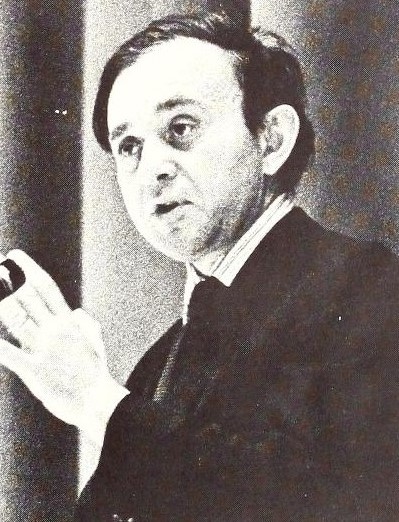 Frederick Wiseman (January 1, 1930 – February 16, 2026) was an American filmmaker, documentarian, theater director, editor and actor. His work primarily explored American institutions. His most notable documentaries include Titicut Follies (1967), Hospital (1970), Welfare (1975), and In Jackson Heights (2015). His films were noted for their ability to possess dramatic structure despite appearing to eschew narrative devices, along with tackling social and economic issues in the United States.
Some of his other documentarian credits include High School (1968), Law and Order (1969), Model (1981), Missile (1988), Ballet (1995), State Legislature (2007), La Danse (2009), Boxing Gym (2010), National Gallery (2014), Ex Libris: The New York Public Library (2017), Monrovia, Indiana (2018), City Hall (2020), and Menus-Plaisirs – Les Troisgros (2023). During his career, he only directed two narrative films: La Dernière Lettre (2002) and A Couple (2022). Aside from filmmaking, he also directed several stage productions and appeared in films such as in The Summer House (2018), Other People's Children (2022), Eephus (2024) and A Private Life (2025).
In 2016, Wiseman received an Academy Honorary Award from the Academy of Motion Picture Arts and Sciences. In 2017, The New York Times called him "one of the most important and original filmmakers working today". That same year, he won the Critics' Choice Documentary Award for Best Director for directing Ex Libris: The New York Public Library. Wiseman announced his retirement in 2025.
== Early life ==
Wiseman was born to a Jewish family in Boston, on January 1, 1930, the son of Gertrude Leah (née Kotzen) and Jacob Leo Wiseman. He earned a Bachelor of Arts from Williams College in 1951, and a Bachelor of Laws from Yale Law School in 1954.
Wiseman spent 1954 to 1956 serving in the U.S. Army after being drafted. Wiseman spent the following two years in Paris, France before returning to the United States, where he took a job teaching law at the Boston University Institute of Law and Medicine. He then started documentary filmmaking, and won numerous film awards as well as Guggenheim and MacArthur fellowships.
== Career ==
=== Filmmaking ===
The first feature-length film Wiseman produced was The Cool World (1963), which was about African-American life in the Royal Pythons, a youth gang in Harlem. The film was selected for preservation in the United States National Film Registry. This was followed by Titicut Follies (1967), which he produced and directed. Titicut Follies ended up being one of Wiseman's best known works and was selected for preservation in the United States National Film Registry by the Library of Congress as being "culturally, historically, or aesthetically significant" in 2022. He would then directed two more documentaries High School (1968) and Law and Order (1969), the latter of which earned Wiseman the Emmy Award for Outstanding Achievement in News Documentary Programming.
In 1970, Wiseman directed Hospital, a documentary that explored the daily activities of the people at Metropolitan Hospital Center in New York City. The film won two Emmy Awards for Outstanding Achievement in News Documentary Programming – Individuals and Outstanding Achievement in News Documentary Programming – Programs. In 1994, it was selected for preservation in the United States National Film Registry. The film was also selected for screening as part of the Cannes Classics section at the 2016 Cannes Film Festival. In 1971, he founded Zipporah Films, a film distribution company. After making several short documentaries, in 1975, Wiseman directed Welfare, a documentary about the welfare system in the United States, from the viewpoint of both officials and claimants. Critics considered Welfare to be Wiseman's masterpiece. In 1976, he directed Meat, which focused on the meatpacking industry in Colorado.
In the 1980s, Wiseman directed several documentaries, most notably Model (1981) and Missile (1988). Model focused on the Zoli modeling agency, and Missile was focused on the U.S. military training and operations surrounding ICBM. In the 1990s, Wiseman directed Central Park (1990), Ballet (1995), Public Housing (1997), and Belfast, Maine (1999).
Wiseman later directed Domestic Violence (2000), which premiered at the 58th Venice International Film Festival. In 2007, he produced State Legislature for PBS, which focused on the workings of the Idaho Legislature. In 2009, he later made a documentary titled La Danse (2009), which focused on the ballet productions of Paris Opera Ballet.
Wiseman found renewed success in his documentarian career in the 2010s. His 2010 documentary, Boxing Gym, premiered at the 63rd Cannes Film Festival. In 2011, he made a documentary about Crazy Horse, a cabaret in Paris known for its stage shows performed by nude female dancers. In 2014, his documentary National Gallery about London's National Gallery premiered at the 67th Cannes Film Festival and later participated in other festivals such as the New York Film Festival and Toronto International Film Festival. His 2015 documentary In Jackson Heights is regarded to be one of Wiseman's best known works. The film documented events in Jackson Heights such as diverse communities, local politics and activist organizations in the New York City neighborhood. It won the New York Film Critics Circle Award for Best Non-Fiction Film in 2015. It was named the thirteenth "Best Film of the 21st Century So Far" by The New York Times. He later directed Ex Libris: The New York Public Library (2017) and Monrovia, Indiana (2018). Ex Libris: The New York Public Library screened in the main competition section of the 74th Venice International Film Festival, where it won the FIPRESCI Award. Wiseman also won the Critics' Choice Documentary Award for Best Director for Ex Libris in 2017.
In the 2020s, his career started to slow down as he only produced two documentaries. In 2020, he produced City Hall for PBS, which focused on the government of Boston. Cahiers du Cinéma named it the best film of 2020. In 2022, Wiseman directed a feature length film titled A Couple, which was his second narrative film after La Dernière Lettre (2002). Then in 2023, he produced his final documentary, Menus-Plaisirs – Les Troisgros, which focused on the daily activities of the French restaurant Le Bois sans feuilles.
Wiseman's films are often described as in the observational mode, which has its roots in direct cinema, but Wiseman disliked the term:
What I try to do is edit the films so that they will have a dramatic structure. That is why I object to some extent to the term "observational cinema" or cinéma vérité, because observational cinema, to me at least, connotes just hanging around with one thing being as valuable as another, and that is not true. At least, that is not true for me, and cinéma vérité is just a pompous French term that has absolutely no meaning as far as I'm concerned.
All his films have aired on PBS, one of his primary funders. Wiseman was known to call his films "Reality Fictions". His films were also described as chiefly studies of social institutions, such as hospitals, schools, or police departments.
==== Process and style ====
Wiseman worked four to six weeks in the institutions he portrayed, with almost no preparation. He spent the bulk of the production period editing the material, trying to find a rhythm to make a film.
Every Wiseman film has a dramatic structure, though not necessarily a narrative arc; his films rarely have what could be considered a distinct climax and conclusion. He liked to base his sequence structure with no particular thesis or point of view in mind. Any suspense is on a per-scene level, not constructed from plot points, and there are no characters with whom the viewer is expected to identify. Nevertheless, Wiseman felt that drama is a crucial element for his films to "work as movies" (Poppy). The "rhythm and structure" (Wiseman) of Wiseman's films pull the viewer into the position and perspective of the subject (human or otherwise). The viewer feels the dramatic tension of the situations portrayed, as various environmental forces create complicated situations and conflicting values for the subject.
Wiseman openly admitted to manipulating his source material to create dramatic structure, and indeed insisted that it is necessary to "make a movie":
I'm trying to make a movie. A movie has to have dramatic sequence and structure. I don't have a very precise definition about what constitutes drama, but I'm gambling that I'm going to get dramatic episodes. Otherwise, it becomes Empire. ... I am looking for drama, though I'm not necessarily looking for people beating each other up, shooting each other. There's a lot of drama in ordinary experiences. In Public Housing, there was drama in that old man being evicted from his apartment by the police. There was a lot of drama in that old woman at her kitchen table peeling a cabbage.
Wiseman said that the structure of his films is important to the overall message:
Well, it's the structural aspect that interests me most, and the issue there is developing a theory that will relate these isolated, nonrelated sequences to each other. That is partially, I think, related to figuring out how it either contradicts or adds to or explains in some way some other sequence in the film. Then you try to determine the effect of a particular sequence on that point of view of the film.
A distinctive aspect of Wiseman's style is the complete lack of exposition (narration), interaction (interviews), and reflection (revealing any of the filmmaking process). Wiseman once said that he did not "feel any need to document [his] experience" and that he felt that such reflexive elements in films are vain.
While producing a film, Wiseman often acquired more than 100 hours of raw footage. His ability to create an engaging and interesting feature-length film without the use of voice-over, title cards, or motion graphics, while still being "fair", had been described as the reason Wiseman is seen as a true master of documentary film.
This great glop of material which represents the externally recorded memory of my experience of making the film is of necessity incomplete. The memories not preserved on film float somewhat in my mind as fragments available for recall, unavailable for inclusion but of great importance in the mining and shifting process known as editing. This editorial process ... is sometimes deductive, sometimes associational, sometimes non-logical and sometimes a failure... The crucial element for me is to try and think through my own relationship to the material by whatever combination of means is compatible. This involves a need to conduct a four-way conversation between myself, the sequence being worked on, my memory, and general values and experience.
==== Philosophy ====
Wiseman's films are, in his view, elaborations of a personal experience and not ideologically objective portraits of his subjects.
In interviews, Wiseman emphasized that his films are not and cannot be unbiased. In spite of the inescapable bias that is introduced in the process of "making a movie", he still felt he had certain ethical obligations as to how he portrayed events:
[My films are] based on unstaged, un-manipulated actions... The editing is highly manipulative and the shooting is highly manipulative... What you choose to shoot, the way you shoot it, the way you edit it and the way you structure it... all of those things... represent subjective choices that you have to make. In [Belfast, Maine] I had 110 hours of material ... I only used 4 hours – near nothing. The compression within a sequence represents choice and then the way the sequences are arranged in relationship to the other represents choice.
All aspects of documentary filmmaking involve choice and are therefore manipulative. But the ethical ... aspect of it is that you have to ... try to make [a film that] is true to the spirit of your sense of what was going on. ... My view is that these films are biased, prejudiced, condensed, compressed but fair. I think what I do is make movies that are not accurate in any objective sense, but accurate in the sense that I think they're a fair account of the experience I've had in making the movie.
I think I have an obligation to the people who have consented to be in the film, ... to cut it so that it fairly represents what I felt was going on at the time in the original event.
=== Acting and theatre works ===
In 2017, Wiseman played a minor role as a CNC Member in Valeria Bruni Tedeschi's film The Summer House. In the 2020s, Wiseman began taking acting roles, including in the films Other People's Children, A Private Life (both by Rebecca Zlotowski), and as an acclaimed poet in Jane Austen Wrecked My Life. Wiseman also had a voice role as a radio host in the 2024 film, Eephus. In addition to his better-known film work, Wiseman also directed and was involved in theater in the United States and France. He directed Tonight We Improvise (1986–1987), Hate (1991), The Last Letter (2001–2003), and Oh les beaux jours (2006– 2007). He also wrote and directed Welfare: The Opera which ran from 1987 until 1997. Wiseman also directed Emily Dickinson, La Belle d'Amherst which ran in Paris in 2012.
=== Retirement ===
In a 2025 interview, Wiseman said he was retiring because he did not "have the energy" for a new production.
== Personal life and death ==
Wiseman was married to Zipporah Batshaw from 1955 until her death in 2021. They had two sons: David and Eric. He lived in Cambridge, Massachusetts and owned a summer home in Northport, Maine. He also owned a home in Paris, France.
Wiseman died at his home in Cambridge, Massachusetts, on February 16, 2026, at the age of 96.
== Legacy ==
In 1969, critic Pauline Kael wrote that Wiseman was "probably the most sophisticated intelligence to enter the documentary field in years." In 2013, critic Roger Ebert wrote that Wiseman was "also master of 'Look ma, no self-awareness' documentaries that analyze themselves without seeming to" and included scenes that felt like "meta-commentaries", but without being complex or overused. Penn State University Professors Thomas W. Benson and Carolyn Anderson called Wiseman one of the "most original, consequential, and productive documentary filmmakers of the past century".
His works were said to have inspired a generation of filmmakers. Some documentarians and directors who were inspired by Wiseman include Alice Diop, Lance Oppenheim, Ryusuke Hamaguchi and Errol Morris. Diop credited Wiseman for being her inspiration in becoming a filmmaker. Morris, on the other hand, saw Wiseman as a mentor and credited him for saving his life. Hamaguchi said that he was inspired by Wiseman's films, often incorporating elements from his documentaries onto Hamaguchi's own work. Wiseman was recognized for influencing generations of documentary filmmakers who eschew voiceover and interviews for immersive observation.
Following his death, The New York Times noted that Wiseman's "penetrating documentaries" helped "expose" abuses in vulnerable communities. In their obituary of him, they called Wiseman a "director whose rigorously objective explorations of social and cultural institutions constitute one of the more revered bodies of work in American documentary filmmaking". The Rolling Stone hailed Wiseman as a "titan" of documentary filmmaking. The British Film Institute called Wiseman a "towering figure of American documentary filmmaking" and that his films created a "uniquely austere, quietly radical form of documentary cinema".
While presenting Wiseman with the Academy Honorary Award in 2016, actor Ben Kingsley said that his documentaries were made to offer "pure information" and deliver powerful emotional moments to his audience.
His works were also said to have affected American institutions and attempted to hold the United States accountable in regards to moral and ethical situations. He was noted as one of the most admired and influential filmmakers by the Associated Press. Wiseman is also credited for his editing style which were seen as an act of interpretation and a kind of moral accounting. The Guardian called Wiseman's films "monuments to human suffering and human challenge and human potential".
== Credits ==
=== As director ===
=== As actor ===
=== Other credits ===
The Cool World (1963) (producer only)
=== Theatre ===
Tonight We Improvise by Luigi Pirandello. American Repertory Theatre, Cambridge. Director of video sequences and actor in role of documentary filmmaker, November 1986 – February 1987
Hate by Joshua Goldstein. American Repertory Theatre, Cambridge. Director, January 1991
Welfare: The Opera, story by Frederick Wiseman and David Slavitt, libretto by David Slavitt, music by Lenny Pickett.
The Last Letter an adaptation from the novel Life and Fate by Vasily Grossman
Oh les beaux jours by Samuel Beckett. La Comédie Française, Paris. Director, November – January 2006; Director and actor, January–March 2007.
Emily Dickinson, La Belle d'Amherst (The Belle of Amherst) by William Luce. Le Théâtre Noir, Paris, Director, May–July 2012
== Accolades ==
In 2003, Wiseman received the Dan David Prize for his films. In 2006, he received the George Polk Career Award, given annually by Long Island University to honor contributions to journalistic integrity and investigative reporting. In spring 2012, Wiseman actively took part in the three-month exposition of the Whitney Biennial. In 2014, he was awarded the Golden Lion for Lifetime Achievement at the 71st Venice International Film Festival.
In 2016, Wiseman received an Academy Honorary Award from the Academy of Motion Picture Arts and Sciences. In 2017, he won the Critics' Choice Documentary Award for Best Director for Ex Libris: The New York Public Library alongside Evgeny Afineevsky for Cries from Syria as the two were tied.
== References ==
== Further reading ==
Benson, Thomas W.; Carolyn Anderson, Reality Fictions: The Films of Frederick Wiseman, 2nd edition (Carbondale: Southern Illinois University Press, 2002). (Comprehensive history and criticism of the films.)
Bergman, Barry, "43 years after Titicut Follies, it's Berkeley, the movie" Archived September 23, 2010, at the Wayback Machine, UC Berkeley News, September 14, 2010.
Grant, Barry Keith, Voyages of Discovery: The Cinema of Frederick Wiseman, University of Illinois Press, 1992. (Wiseman's oeuvre: 1963–1990)
Mamber, Stephen, Cinema Verité in America: Studies in Uncontrolled Documentary, Cambridge and London, MIT Press, 1974.
Saunders, Dave, Direct Cinema: Observational Documentary and the Politics of the Sixties, London: Wallflower Press, 2007. (Contains a lengthy section on Wiseman's first five films)
Siegel Joshua; de Navacelle Marie-Christine, "Frederick Wiseman", The Museum of Modern Art, New York, 2010. ISBN 978-0-87070-791-9
Vachani, Nilita, "Frederick Wiseman's ESSENE (1972): The Duality of Mary and Martha", Journal of Religion and Film, October 1, 2021.
Vachani, Nilita, "Revisiting Fred Wiseman's Law and Order in the Era of Black Lives Matter", Film International, October 14, 2020.
== External links ==
Frederick Wiseman at IMDb
Zipporah Films Official distributor of Wiseman's work
Frederick Wiseman discography at Discogs
Frederick Wiseman on Reality and film – Statement at La clé des langues
A Discussion with Frederick Wiseman and Robert Kramer – Documentary Box
Interview with Frederick Wiseman for Slant Magazine by Budd Wilkins
Interview with Wiseman at Not Coming to a Theater Near You
Home
Languages
Frederick Wiseman (January 1, 1930 – February 16, 2026) was an American filmmaker, documentarian, theater director, editor and actor. His work primarily explored American institutions. His most notable documentaries include Titicut Follies (1967), Hospital (1970), Welfare (1975), and In Jackson Heights (2015). His films were noted for their ability to possess dramatic structure despite appearing to eschew narrative devices, along with tackling social and economic issues in the United States.
Some of his other documentarian credits include High School (1968), Law and Order (1969), Model (1981), Missile (1988), Ballet (1995), State Legislature (2007), La Danse (2009), Boxing Gym (2010), National Gallery (2014), Ex Libris: The New York Public Library (2017), Monrovia, Indiana (2018), City Hall (2020), and Menus-Plaisirs – Les Troisgros (2023). During his career, he only directed two narrative films: La Dernière Lettre (2002) and A Couple (2022). Aside from filmmaking, he also directed several stage productions and appeared in films such as in The Summer House (2018), Other People's Children (2022), Eephus (2024) and A Private Life (2025).
In 2016, Wiseman received an Academy Honorary Award from the Academy of Motion Picture Arts and Sciences. In 2017, The New York Times called him "one of the most important and original filmmakers working today". That same year, he won the Critics' Choice Documentary Award for Best Director for directing Ex Libris: The New York Public Library. Wiseman announced his retirement in 2025.
== Early life ==
Wiseman was born to a Jewish family in Boston, on January 1, 1930, the son of Gertrude Leah (née Kotzen) and Jacob Leo Wiseman. He earned a Bachelor of Arts from Williams College in 1951, and a Bachelor of Laws from Yale Law School in 1954.
Wiseman spent 1954 to 1956 serving in the U.S. Army after being drafted. Wiseman spent the following two years in Paris, France before returning to the United States, where he took a job teaching law at the Boston University Institute of Law and Medicine. He then started documentary filmmaking, and won numerous film awards as well as Guggenheim and MacArthur fellowships.
== Career ==
=== Filmmaking ===
The first feature-length film Wiseman produced was The Cool World (1963), which was about African-American life in the Royal Pythons, a youth gang in Harlem. The film was selected for preservation in the United States National Film Registry. This was followed by Titicut Follies (1967), which he produced and directed. Titicut Follies ended up being one of Wiseman's best known works and was selected for preservation in the United States National Film Registry by the Library of Congress as being "culturally, historically, or aesthetically significant" in 2022. He would then directed two more documentaries High School (1968) and Law and Order (1969), the latter of which earned Wiseman the Emmy Award for Outstanding Achievement in News Documentary Programming.
In 1970, Wiseman directed Hospital, a documentary that explored the daily activities of the people at Metropolitan Hospital Center in New York City. The film won two Emmy Awards for Outstanding Achievement in News Documentary Programming – Individuals and Outstanding Achievement in News Documentary Programming – Programs. In 1994, it was selected for preservation in the United States National Film Registry. The film was also selected for screening as part of the Cannes Classics section at the 2016 Cannes Film Festival. In 1971, he founded Zipporah Films, a film distribution company. After making several short documentaries, in 1975, Wiseman directed Welfare, a documentary about the welfare system in the United States, from the viewpoint of both officials and claimants. Critics considered Welfare to be Wiseman's masterpiece. In 1976, he directed Meat, which focused on the meatpacking industry in Colorado.
In the 1980s, Wiseman directed several documentaries, most notably Model (1981) and Missile (1988). Model focused on the Zoli modeling agency, and Missile was focused on the U.S. military training and operations surrounding ICBM. In the 1990s, Wiseman directed Central Park (1990), Ballet (1995), Public Housing (1997), and Belfast, Maine (1999).
Wiseman later directed Domestic Violence (2000), which premiered at the 58th Venice International Film Festival. In 2007, he produced State Legislature for PBS, which focused on the workings of the Idaho Legislature. In 2009, he later made a documentary titled La Danse (2009), which focused on the ballet productions of Paris Opera Ballet.
Wiseman found renewed success in his documentarian career in the 2010s. His 2010 documentary, Boxing Gym, premiered at the 63rd Cannes Film Festival. In 2011, he made a documentary about Crazy Horse, a cabaret in Paris known for its stage shows performed by nude female dancers. In 2014, his documentary National Gallery about London's National Gallery premiered at the 67th Cannes Film Festival and later participated in other festivals such as the New York Film Festival and Toronto International Film Festival. His 2015 documentary In Jackson Heights is regarded to be one of Wiseman's best known works. The film documented events in Jackson Heights such as diverse communities, local politics and activist organizations in the New York City neighborhood. It won the New York Film Critics Circle Award for Best Non-Fiction Film in 2015. It was named the thirteenth "Best Film of the 21st Century So Far" by The New York Times. He later directed Ex Libris: The New York Public Library (2017) and Monrovia, Indiana (2018). Ex Libris: The New York Public Library screened in the main competition section of the 74th Venice International Film Festival, where it won the FIPRESCI Award. Wiseman also won the Critics' Choice Documentary Award for Best Director for Ex Libris in 2017.
In the 2020s, his career started to slow down as he only produced two documentaries. In 2020, he produced City Hall for PBS, which focused on the government of Boston. Cahiers du Cinéma named it the best film of 2020. In 2022, Wiseman directed a feature length film titled A Couple, which was his second narrative film after La Dernière Lettre (2002). Then in 2023, he produced his final documentary, Menus-Plaisirs – Les Troisgros, which focused on the daily activities of the French restaurant Le Bois sans feuilles.
Wiseman's films are often described as in the observational mode, which has its roots in direct cinema, but Wiseman disliked the term:
What I try to do is edit the films so that they will have a dramatic structure. That is why I object to some extent to the term "observational cinema" or cinéma vérité, because observational cinema, to me at least, connotes just hanging around with one thing being as valuable as another, and that is not true. At least, that is not true for me, and cinéma vérité is just a pompous French term that has absolutely no meaning as far as I'm concerned.
All his films have aired on PBS, one of his primary funders. Wiseman was known to call his films "Reality Fictions". His films were also described as chiefly studies of social institutions, such as hospitals, schools, or police departments.
==== Process and style ====
Wiseman worked four to six weeks in the institutions he portrayed, with almost no preparation. He spent the bulk of the production period editing the material, trying to find a rhythm to make a film.
Every Wiseman film has a dramatic structure, though not necessarily a narrative arc; his films rarely have what could be considered a distinct climax and conclusion. He liked to base his sequence structure with no particular thesis or point of view in mind. Any suspense is on a per-scene level, not constructed from plot points, and there are no characters with whom the viewer is expected to identify. Nevertheless, Wiseman felt that drama is a crucial element for his films to "work as movies" (Poppy). The "rhythm and structure" (Wiseman) of Wiseman's films pull the viewer into the position and perspective of the subject (human or otherwise). The viewer feels the dramatic tension of the situations portrayed, as various environmental forces create complicated situations and conflicting values for the subject.
Wiseman openly admitted to manipulating his source material to create dramatic structure, and indeed insisted that it is necessary to "make a movie":
I'm trying to make a movie. A movie has to have dramatic sequence and structure. I don't have a very precise definition about what constitutes drama, but I'm gambling that I'm going to get dramatic episodes. Otherwise, it becomes Empire. ... I am looking for drama, though I'm not necessarily looking for people beating each other up, shooting each other. There's a lot of drama in ordinary experiences. In Public Housing, there was drama in that old man being evicted from his apartment by the police. There was a lot of drama in that old woman at her kitchen table peeling a cabbage.
Wiseman said that the structure of his films is important to the overall message:
Well, it's the structural aspect that interests me most, and the issue there is developing a theory that will relate these isolated, nonrelated sequences to each other. That is partially, I think, related to figuring out how it either contradicts or adds to or explains in some way some other sequence in the film. Then you try to determine the effect of a particular sequence on that point of view of the film.
A distinctive aspect of Wiseman's style is the complete lack of exposition (narration), interaction (interviews), and reflection (revealing any of the filmmaking process). Wiseman once said that he did not "feel any need to document [his] experience" and that he felt that such reflexive elements in films are vain.
While producing a film, Wiseman often acquired more than 100 hours of raw footage. His ability to create an engaging and interesting feature-length film without the use of voice-over, title cards, or motion graphics, while still being "fair", had been described as the reason Wiseman is seen as a true master of documentary film.
This great glop of material which represents the externally recorded memory of my experience of making the film is of necessity incomplete. The memories not preserved on film float somewhat in my mind as fragments available for recall, unavailable for inclusion but of great importance in the mining and shifting process known as editing. This editorial process ... is sometimes deductive, sometimes associational, sometimes non-logical and sometimes a failure... The crucial element for me is to try and think through my own relationship to the material by whatever combination of means is compatible. This involves a need to conduct a four-way conversation between myself, the sequence being worked on, my memory, and general values and experience.
==== Philosophy ====
Wiseman's films are, in his view, elaborations of a personal experience and not ideologically objective portraits of his subjects.
In interviews, Wiseman emphasized that his films are not and cannot be unbiased. In spite of the inescapable bias that is introduced in the process of "making a movie", he still felt he had certain ethical obligations as to how he portrayed events:
[My films are] based on unstaged, un-manipulated actions... The editing is highly manipulative and the shooting is highly manipulative... What you choose to shoot, the way you shoot it, the way you edit it and the way you structure it... all of those things... represent subjective choices that you have to make. In [Belfast, Maine] I had 110 hours of material ... I only used 4 hours – near nothing. The compression within a sequence represents choice and then the way the sequences are arranged in relationship to the other represents choice.
All aspects of documentary filmmaking involve choice and are therefore manipulative. But the ethical ... aspect of it is that you have to ... try to make [a film that] is true to the spirit of your sense of what was going on. ... My view is that these films are biased, prejudiced, condensed, compressed but fair. I think what I do is make movies that are not accurate in any objective sense, but accurate in the sense that I think they're a fair account of the experience I've had in making the movie.
I think I have an obligation to the people who have consented to be in the film, ... to cut it so that it fairly represents what I felt was going on at the time in the original event.
=== Acting and theatre works ===
In 2017, Wiseman played a minor role as a CNC Member in Valeria Bruni Tedeschi's film The Summer House. In the 2020s, Wiseman began taking acting roles, including in the films Other People's Children, A Private Life (both by Rebecca Zlotowski), and as an acclaimed poet in Jane Austen Wrecked My Life. Wiseman also had a voice role as a radio host in the 2024 film, Eephus. In addition to his better-known film work, Wiseman also directed and was involved in theater in the United States and France. He directed Tonight We Improvise (1986–1987), Hate (1991), The Last Letter (2001–2003), and Oh les beaux jours (2006– 2007). He also wrote and directed Welfare: The Opera which ran from 1987 until 1997. Wiseman also directed Emily Dickinson, La Belle d'Amherst which ran in Paris in 2012.
=== Retirement ===
In a 2025 interview, Wiseman said he was retiring because he did not "have the energy" for a new production.
== Personal life and death ==
Wiseman was married to Zipporah Batshaw from 1955 until her death in 2021. They had two sons: David and Eric. He lived in Cambridge, Massachusetts and owned a summer home in Northport, Maine. He also owned a home in Paris, France.
Wiseman died at his home in Cambridge, Massachusetts, on February 16, 2026, at the age of 96.
== Legacy ==
In 1969, critic Pauline Kael wrote that Wiseman was "probably the most sophisticated intelligence to enter the documentary field in years." In 2013, critic Roger Ebert wrote that Wiseman was "also master of 'Look ma, no self-awareness' documentaries that analyze themselves without seeming to" and included scenes that felt like "meta-commentaries", but without being complex or overused. Penn State University Professors Thomas W. Benson and Carolyn Anderson called Wiseman one of the "most original, consequential, and productive documentary filmmakers of the past century".
His works were said to have inspired a generation of filmmakers. Some documentarians and directors who were inspired by Wiseman include Alice Diop, Lance Oppenheim, Ryusuke Hamaguchi and Errol Morris. Diop credited Wiseman for being her inspiration in becoming a filmmaker. Morris, on the other hand, saw Wiseman as a mentor and credited him for saving his life. Hamaguchi said that he was inspired by Wiseman's films, often incorporating elements from his documentaries onto Hamaguchi's own work. Wiseman was recognized for influencing generations of documentary filmmakers who eschew voiceover and interviews for immersive observation.
Following his death, The New York Times noted that Wiseman's "penetrating documentaries" helped "expose" abuses in vulnerable communities. In their obituary of him, they called Wiseman a "director whose rigorously objective explorations of social and cultural institutions constitute one of the more revered bodies of work in American documentary filmmaking". The Rolling Stone hailed Wiseman as a "titan" of documentary filmmaking. The British Film Institute called Wiseman a "towering figure of American documentary filmmaking" and that his films created a "uniquely austere, quietly radical form of documentary cinema".
While presenting Wiseman with the Academy Honorary Award in 2016, actor Ben Kingsley said that his documentaries were made to offer "pure information" and deliver powerful emotional moments to his audience.
His works were also said to have affected American institutions and attempted to hold the United States accountable in regards to moral and ethical situations. He was noted as one of the most admired and influential filmmakers by the Associated Press. Wiseman is also credited for his editing style which were seen as an act of interpretation and a kind of moral accounting. The Guardian called Wiseman's films "monuments to human suffering and human challenge and human potential".
== Credits ==
=== As director ===
=== As actor ===
=== Other credits ===
The Cool World (1963) (producer only)
=== Theatre ===
Tonight We Improvise by Luigi Pirandello. American Repertory Theatre, Cambridge. Director of video sequences and actor in role of documentary filmmaker, November 1986 – February 1987
Hate by Joshua Goldstein. American Repertory Theatre, Cambridge. Director, January 1991
Welfare: The Opera, story by Frederick Wiseman and David Slavitt, libretto by David Slavitt, music by Lenny Pickett.
The Last Letter an adaptation from the novel Life and Fate by Vasily Grossman
Oh les beaux jours by Samuel Beckett. La Comédie Française, Paris. Director, November – January 2006; Director and actor, January–March 2007.
Emily Dickinson, La Belle d'Amherst (The Belle of Amherst) by William Luce. Le Théâtre Noir, Paris, Director, May–July 2012
== Accolades ==
In 2003, Wiseman received the Dan David Prize for his films. In 2006, he received the George Polk Career Award, given annually by Long Island University to honor contributions to journalistic integrity and investigative reporting. In spring 2012, Wiseman actively took part in the three-month exposition of the Whitney Biennial. In 2014, he was awarded the Golden Lion for Lifetime Achievement at the 71st Venice International Film Festival.
In 2016, Wiseman received an Academy Honorary Award from the Academy of Motion Picture Arts and Sciences. In 2017, he won the Critics' Choice Documentary Award for Best Director for Ex Libris: The New York Public Library alongside Evgeny Afineevsky for Cries from Syria as the two were tied.
== References ==
== Further reading ==
Benson, Thomas W.; Carolyn Anderson, Reality Fictions: The Films of Frederick Wiseman, 2nd edition (Carbondale: Southern Illinois University Press, 2002). (Comprehensive history and criticism of the films.)
Bergman, Barry, "43 years after Titicut Follies, it's Berkeley, the movie" Archived September 23, 2010, at the Wayback Machine, UC Berkeley News, September 14, 2010.
Grant, Barry Keith, Voyages of Discovery: The Cinema of Frederick Wiseman, University of Illinois Press, 1992. (Wiseman's oeuvre: 1963–1990)
Mamber, Stephen, Cinema Verité in America: Studies in Uncontrolled Documentary, Cambridge and London, MIT Press, 1974.
Saunders, Dave, Direct Cinema: Observational Documentary and the Politics of the Sixties, London: Wallflower Press, 2007. (Contains a lengthy section on Wiseman's first five films)
Siegel Joshua; de Navacelle Marie-Christine, "Frederick Wiseman", The Museum of Modern Art, New York, 2010. ISBN 978-0-87070-791-9
Vachani, Nilita, "Frederick Wiseman's ESSENE (1972): The Duality of Mary and Martha", Journal of Religion and Film, October 1, 2021.
Vachani, Nilita, "Revisiting Fred Wiseman's Law and Order in the Era of Black Lives Matter", Film International, October 14, 2020.
== External links ==
Frederick Wiseman at IMDb
Zipporah Films Official distributor of Wiseman's work
Frederick Wiseman discography at Discogs
Frederick Wiseman on Reality and film – Statement at La clé des langues
A Discussion with Frederick Wiseman and Robert Kramer – Documentary Box
Interview with Frederick Wiseman for Slant Magazine by Budd Wilkins
Interview with Wiseman at Not Coming to a Theater Near You
Home
Languages