The examples and perspective in this article deal primarily with the United States and do not represent a worldwide view of the subject. You may improve this article, discuss the issue on the talk page, or create a new article, as appropriate.(December 2022) (Learn how and when to remove this message)
From top left, clockwise: A famous gunfight erupts at the O.K. Corral in Tombstone, Arizona in 1881; a long-distance passenger train called the Orient Express begins running between Paris and Constantinople in 1883; U.S. Congress bans Chinese immigrants from entering the U.S. for ten years, starting in 1882; South Fork Dam fails after heavy rainfall and floods the town of Johnstown, Pennsylvania, killing over two thousand people; George Eastman introduces the Kodak No 1 and the camera becomes an enormous success; Chicago's Haymarket Square is the scene of a bombing that kills at least seven police officers and four civilians during a massive protest from a labor rally and is generally considered the origin of modern May Day protests; settlers try to claim land during the Oklahoma Land Rush of 1889; combined groups of British and Sudanese forces on opposing sides fight during a nationalist uprising against the Khedive Tewfik Pasha.
The 1880s (pronounced "eighteen-eighties") was the decade that began on January 1, 1880, and ended on December 31, 1889.
The period was characterized in general by economic growth and prosperity in many parts of the world, especially Europe and the Americas, with the emergence of modern cities signified by the foundation of many long-lived corporations, franchises, and brands and the introduction of the skyscraper. The decade was a part of the Gilded Age (1874–1907) in the United States, the Victorian Era in the British Empire and the Belle Époque in France. It also occurred at the height of the Second Industrial Revolution and saw numerous developments in science and a sudden proliferation of electrical technologies, particularly in mass transit and telecommunications.
The last living person from this decade, María Capovilla, died in 2006.
For a more comprehensive list, see List of wars: 1880–1889.
Aceh War (1873–1904)
War of the Pacific (1879–1884)
First Boer War (1880–1881)
Mahdist War (1881–1899)
1882 Anglo-Egyptian War (1882)
13 September 1882 — British troops occupy Cairo, and Egypt becomes a British protectorate.
Sino-French War (1884–1885)
Serbo-Bulgarian War (1885)
Internal conflicts
American Indian Wars (Intermittently from 1622 to 1918)
20 July 1881 — Sioux chief Sitting Bull leads the last of his fugitive people in surrender to United States troops at Fort Buford in Montana.
Frequent lynchings of African Americans in Southern United States during the years 1880–1890
Urabi Revolt (1879-1882)
Colonization
France colonizes Indochina (1883)
German colonization (1887)
Increasing colonial interest and conquest in Africa leads representatives from Britain, France, Portugal, Germany, Belgium, Italy and Spain to divide Africa into regions of colonial influence at the Berlin Conference. This would be followed over the next few decades by conquest of almost the entirety of the remaining uncolonised parts of the continent, broadly along the lines determined. (1889)
Prominent political events
3 August 1881: The Pretoria Convention peace treaty is signed, officially ending the war between the Boers and Britain.
3 May 1882: The Chinese Exclusion Act was signed into law by President Chester A. Arthur.
20 May 1882: Germany, Austria-Hungary, and Italy form The Triple Alliance as a defensive military alliance[1]
1884: International Meridian Conference in Washington D.C., held to determine the Prime Meridian of the world.
1884–1885: Berlin Conference, when the western powers divided Africa.
The United States had five Presidents during the decade, the most since the 1840s. They were Rutherford B. Hayes, James A. Garfield, Chester A. Arthur, Grover Cleveland and Benjamin Harrison.
20-22 June 1887: The Golden Jubilee of Queen Victoria was celebrated marking Queen Victoria's 50 year reign.
13 May 1888: Brazil abolishes slavery, the last country in the western hemisphere to do so.[2]
Disasters
May to August, 1883: Krakatoa, a volcano in Indonesia, erupted cataclysmically; 36,000 people were killed, the majority being killed by the resulting tsunami.
September 1887: The Yellow river flooded and killed about 900,000 people.
11 March to 14 March, 1888: The Great Blizzard of 1888 kills 400 in the eastern United States.[3]
May 1889: The Johnstown Flood occurred after the failure of the dam due to excessive rainfall in Pennsylvania. Nurse Clara Barton notably helped in the relief effort.[4][5]
Prominent assassinations, targeted killings, and assassination attempts include:
Year
Date
Name
Position
Culprits
Country
Description
Image
1881
13 March
Alexander II of Russia
Tsar of theRussian Empire
Pervomartovtsy and Narodnaya Volya
Russian Empire
Five Cossacks killed the Tsar by throwing a bomb at his carriage.
1881
19 September
James A. Garfield
President of the United States
Charles J. Guiteau
United States
Garfield was leaving Washington for his summer vacation and was about to board a train at the Baltimore and Potomac Railroad Station when Guiteau appeared and shot Garfield twice.
1882
2 March
Queen Victoria
Queen of the British Empire
Roderick Maclean
England
Maclean was offended when Victoria refused to accept one of his poems and so decided to shoot at the Queen as her carriage left Windsor railway station.
1882
3 April
Jesse James
outlaw
Bob Ford
United States
While Jesse James was dusting a picture, Ford grabbed James' pistol and shooting him in the back.
1882
6 May
Lord Frederick Cavendish
Chief Secretary for Ireland
members of Irish National Invincibles.
Ireland
While walking in the Phoenix Park in company with Thomas Henry Burke, he was assassinated Irish National Invincibles.
1882
4 December
William Henry Haywood Tison
39th speaker of the Mississippi House of Representatives
J. Edward Sanders
United States
On December 4, 1882, J. Edward Sanders shot him in Baldwyn, Mississippi.
1882
20 December
Franz Joseph
Emperor of Austria
Guglielmo Oberdan
Austria-Hungary
Oberdan and Istrian pharmacist Donato Ragosa plotted an assassination attempt on the emperor. Oberdan's attempt failed, as he was arrested in Ronchi shortly after crossing the border into Austrian territory.
1882 - Guglielmo Oberdan fails to assassinate Austria-Hungarian Emperor Franz Joseph and is executed[6]
Science and technology
Technology
1880: Oliver Heaviside of Camden Town, London, England receives a patent for the coaxial cable.[7] In 1887, Heaviside introduced the concept of loading coils. In the 1890s, Mihajlo Idvorski Pupin would both create the loading coils and receive a patent of them, failing to credit Heaviside's work.[8]
1880–1882: Development and commercial production of electric lighting was underway. Thomas Edison of Milan, Ohio, established Edison Illuminating Company on December 17, 1880. Based at New York City, it was the pioneer company of the electrical power industry. Edison's system was based on creating a central power plant equipped with electrical generators. Copperelectrical wires would then connect the station with other buildings, allowing for electric power distribution.[9]Pearl Street Station was the first central power plant in the United States. It was located at 255–257 Pearl Street in Manhattan on a site measuring 50 by 100 feet,[10] just south of Fulton Street. It began with one direct currentgenerator, and it started generating electricity on September 4, 1882, serving an initial load of 400 lamps at 85 customers. By 1884, Pearl Street Station was serving 508 customers with 10,164 lamps.[10]
1880–1886: Charles F. Brush of Euclid, Ohio, and Brush Electric Light Company installed carbon arc lights along Broadway, New York City. A small generating station was established at Manhattan's 25th Street. The electric arc lights went into regular service on December 20, 1880. The new Brooklyn Bridge of 1883 had seventy arc lamps installed in it. By 1886, there was a reported number of 1,500 arc lights installed in Manhattan.[9]
1880–1883: James Wimshurst of Poplar, London, England invents the Wimshurst Machine.
1881–1885: Stefan Drzewiecki of Podolia, Russian Empire finishes his submarine-building project (which had begun in 1879). The crafts were constructed at Nevskiy Shipbuilding and Machinery works at Saint Petersburg. Altogether, 50 units were delivered to the Ministry of War. They were reportedly deployed as part of the defense of Kronstadt and Sevastopol. In 1885, the submarines were transferred to the Imperial Russian Navy. They were soon declared "ineffective" and discarded. By 1887, Drzewiecki was designing submarines for the French Third Republic.[11]
1881–1883: John Philip Holland of Liscannor, County Clare, Ireland[12] builds the Fenian Ram submarine for the Fenian Brotherhood. During extensive trials, Holland made numerous dives and test-fired the gun using dummy projectiles. However, due to funding disputes within the Irish Republican Brotherhood and disagreement over payments from the IRB to Holland, the IRB stole Fenian Ram and the Holland III prototype in November 1883.[13]
1882: William Edward Ayrton of London, England and John Perry of Garvagh, County Londonderry, Ireland build an electric tricycle. It reportedly had a range of 10 to 25 miles, powered by a lead acid battery. A significant innovation of the vehicle was its use of electric lights, here playing the role of headlamps.[8][14]
1882: James Atkinson of Hampstead, London, England invented the Atkinson cycleengine. By use of variable engine strokes from a complex crankshaft, Atkinson was able to increase the efficiency of his engine, at the cost of some power, over traditional Otto-cycle engines.[15]
1882: Schuyler Wheeler of Massachusetts invented the two-blade electric fan. Henry W. Seely of New York invented the electric safety iron. Both were arguably among the earliest small domestic electrical appliances to appear.[8]
1882–1883: John Hopkinson of Manchester, England patents the three-phase electric power system in 1882. In 1883 Hopkinson showed mathematically that it was possible to connect two alternating current dynamos in parallel — a problem that had long bedeviled electrical engineers.[16][17]
1883: Charles Fritts, an American inventor, creates the first working solar cell. The energy conversion efficiency of these early devices was less than 1%. Denounced as a fraud in the US for "generating power without consuming matter, thus violating the laws of physics".[8][18]
1883–1885: Josiah H. L. Tuck, an American inventor, works in his own submarine designs. His 1883 model was created in Delameter Iron Works. It was 30-feet long, "all-electric and had vertical and horizontal propellers clutched to the same shaft, with a 20-feet breathing pipe and an airlock for a diver." His 1885 model, called the "Peacemaker", was larger. It used "a caustic soda patent boiler to power a 14-HP Westinghouse steam engine". She managed a number of short trips within the New York Harbor area.[19][20] The Peacemaker had a submerged endurance of 5 hours. Tuck did not benefit from his achievement. His family feared that the inventor was squandering his fortune on the Peacemaker. They had him committed to an insane asylum by the end of the decade.[21]
1883–1886: John Joseph Montgomery of Yuba City, California, starts his attempts at early flight. In 1884, using a glider designed and built in 1883, Montgomery made the "first heavier-than-air human-carrying aircraft to achieve controlled piloted flight" in the Western Hemisphere. This glider had a curved parabolic wing surface. He reportedly made a glide of "considerable length" from Otay Mesa, San Diego, California, his first successful flight and arguably the first successful one in the United States. In 1884–1885, Montgomery tested a second monoplane glider with flat wings. The innovation in design was "hinged surfaces at the rear of the wings to maintain lateral balance". These were early forms of Aileron. After experimentation with a water tank and smoke chamber to understand the nature of flow over surfaces, in 1886, Montgomery designed a third glider with fully rotating wings as pitcherons. He then turned to theoretic research towards the development of a manuscript "Soaring Flight" in 1896.[22][23][24]
1884–1885: On August 9, 1884, La France, a French Armyairship, makes its maiden flight. Launched by Charles Renard and Arthur Constantin Krebs. Krebs piloted the first fully controlled free-flight with the La France. The 170-foot (52 m) long, 66,000 cubic feet (1,900 m3) airship, electric-powered with a 435 kg battery[25] completed a flight that covered 8 km (5.0 mi) in 23 minutes. It was the first full round trip flight[26] with a landing on the starting point. On its seven flights in 1884 and 1885[27] the La France dirigible returned five times to its starting point. "La France was the first airship that could return to its starting point in a light wind. It was 165 feet (50 meters) long, its maximum diameter was 27 feet (8.2 meters), and it had a capacity of 66,000 cubic feet (1,869 cubic meters)." Its battery-powered motor "produced 7.5 horsepower (5.6 kilowatts). This motor was later replaced with one that produced 8.5 horsepower (6.3 kilowatts)."[28]
1884: Paul Gottlieb Nipkow of Lębork, Kingdom of Prussia, German Empire invents the Nipkow disk, an image scanning device. It was the basis of his patent method of translating visual images to electronic impulses, transmit said impulses to another device and successfully reassemble the impulses to visual images. Nipkow used a seleniumphotoelectric cell.[29] Nipkow proposed and patented the first "near-practicable" electromechanicaltelevision system in 1884. Although he never built a working model of the system, Nipkow's spinning disk design became a common television image rasterizer used up to 1939.[30]
1884: Alexander Mozhaysky of Kotka, Grand Duchy of Finland, Russian Empire makes the second known "powered, assisted take off of a heavier-than-air craft carrying an operator". His steam-powered monoplane took off at Krasnoye Selo, near Saint Petersburg, making a hop and "covering between 65 and 100 feet". The monoplane had a failed landing, with one of its wings destroyed and serious damages. It was never rebuilt. Later Sovietpropaganda would overstate Mozhaysky's accomplishment while downplaying the failed landing. The Grand Soviet Encyclopedia called this "the first true flight of a heavier-than-air machine in history".[31][32]
1884–1885: Ganz Company engineers Károly Zipernowsky, Ottó Bláthy and Miksa Déri had determined that open-core devices were impracticable, as they were incapable of reliably regulating voltage. In their joint patent application for the "Z.B.D." transformers, they described the design of two with no poles: the "closed-core" and the "shell-core" transformers. In the closed-core type, the primary and secondary windings were wound around a closed iron ring; in the shell type, the windings were passed through the iron core. In both designs, the magnetic flux linking the primary and secondary windings traveled almost entirely within the iron core, with no intentional path through air. When employed in electric distribution systems, this revolutionary design concept would finally make it technically and economically feasible to provide electric power for lighting in homes, businesses and public spaces.[33][34] Bláthy had suggested the use of closed-cores, Zipernowsky the use of shunt connections, and Déri had performed the experiments.[35] Electrical and electronic systems the world over continue to rely on the principles of the original Z.B.D. transformers. The inventors also popularized the word "transformer" to describe a device for altering the EMF of an electric current,[33][36] although the term had already been in use by 1882.[37][38]
1884–1885: John Philip Holland and Edmund Zalinski, having formed the "Nautilus Submarine Boat Company", start working on a new submarine. The so-called "Zalinsky boat" was constructed in Hendrick's Reef (former Fort Lafayette), Bay Ridge in (ray) or (rayacus the 3rd) New York Cityborough of Brooklyn. "The new, cigar-shaped submarine was 50 feet long with a maximum beam of eight feet. To save money, the hull was largely of wood, framed with iron hoops, and again, a Brayton-cycle engine provided motive power." The project was plagued by a "shoestring budget" and Zalinski mostly rejecting Holland's ideas on improvements. The submarine was ready for launching in September, 1885. "During the launching itself, a section of the ways collapsed under the weight of the boat, dashing the hull against some pilings and staving in the bottom. Although the submarine was repaired and eventually carried out several trial runs in lower New York Harbor, by the end of 1886 the Nautilus Submarine Boat Company was no more, and the salvageable remnants of the Zalinski Boat were sold to reimburse the disappointed investors." Holland would not create another submarine to 1893.[39]
1885: Galileo Ferraris of Livorno Piemonte, Kingdom of Italy reaches the concept of a rotating magnetic field. He applied it to a new motor. "Ferraris devised a motor using electromagnets at right angles and powered by alternating currents that were 90° out of phase, thus producing a revolving magnetic field. The motor, the direction of which could be reversed by reversing its polarity, proved the solution to the last remaining problem in alternating-current motors. The principle made possible the development of the asynchronous, self-starting electric motor that is still used today. Believing that the scientific and intellectual values of new developments far outstripped material values, Ferraris deliberately did not patent his invention; on the contrary, he demonstrated it freely in his own laboratory to all comers." He published his findings in 1888. By then, Nikola Tesla had independently reached the same concept and was seeking a patent.[40]
1885: Nikolay Bernardos and Karol Olszewski of Broniszów were granted a patent for their Electrogefest, an "electric arc welder with a carbon electrode". Introducing a method of carbon arc welding, they also became the "inventors of modern welding apparatus".[8][41]
The Linotype machine (introduced in 1886) revolutionized printing, newspapers, and communication.
1884–1886: Ottmar Mergenthaler invents and refines the Linotype composing machine which mechanizes the process of typesetting for printing newspapers and books. This speeds up the composition of text for printing and revolutionizes communication of news and information. The Linotype allows for a daily newspaper, even in small towns.[42] The first Linotype was put into production at the New York Tribune on July 3, 1886 and was used at night to compose the “Tribune Book of Open-Air Sports” which was the first book created with Linotype type.[43]Benz Patent Motorwagen which is widely regarded as the first automobile was first introduced in 1885.
1885–1888: Karl Benz of Karlsruhe, Baden, German Empire introduces the Benz Patent Motorwagen, widely regarded as the first automobile.[44] It featured wire wheels (unlike carriages' wooden ones)[45] with a four-stroke engine of his own design between the rear wheels, with a very advanced coil ignition[46] and evaporative cooling rather than a radiator.[46] The Motorwagen was patented on January 29, 1886, as DRP-37435: "automobile fueled by gas".[47] The 1885 version was difficult to control, leading to a collision with a wall during a public demonstration. The first successful tests on public roads were carried out in the early summer of 1886. The next year Benz created the Motorwagen Model 2 which had several modifications, and in 1887, the definitive Model 3 with wooden wheels was introduced, showing at the Paris Expo the same year.[46] Benz began to sell the vehicle (advertising it as the Benz Patent Motorwagen) in the late summer of 1888, making it the first commercially available automobile in history.[46]
1885–1887: William Stanley, Jr. of Brooklyn, New York, an employee of George Westinghouse, creates an improved transformer. Westinghouse had bought the patents of Lucien Gaulard and John Dixon Gibbs on the subject, and had purchased an option on the designs of Károly Zipernowsky, Ottó Bláthy and Miksa Déri. He entrusted engineer Stanley with the building of a device for commercial use.[48] Stanley's first patented design was for induction coils with single cores of soft iron and adjustable gaps to regulate the EMF present in the secondary winding. This design was first used commercially in 1886.[49] But Westinghouse soon had his team working on a design whose core comprised a stack of thin "E-shaped" iron plates, separated individually or in pairs by thin sheets of paper or other insulating material. Prewound copper coils could then be slid into place, and straight iron plates laid in to create a closed magnetic circuit. Westinghouse applied for a patent for the new design in December 1886; it was granted in July 1887.[50][51]
1885–1889: Claude Goubet, a French inventor, builds two small electric submarines.[52] The first Goubet model was 16-feet long and weighed 2 tons. "She used accumulators (storage batteries which operated an Edison-type dynamo." While among the earliest submarines to successfully make use of electric power, she proved to have a severe flaw. She could not stay at a stable depth, set by the operator. The improved Goubet II was introduced in 1889. This version could transport a 2-man crew and had "an attractive interior". More stable than her predecessor, though still unable to stay at a set depth.[53]
1885–1887: Thorsten Nordenfelt of Örby, Uppsala Municipality, Sweden produces a series of steam powered submarines. The first was the Nordenfelt I, a 56 tonne, 19.5 metre long vessel similar to George Garrett's ill-fated Resurgam (1879), with a range of 240 kilometres and armed with a single torpedo and a 25.4 mm machine gun. It was manufactured by Bolinders in Stockholm in 1884–1885. Like the Resurgam, it operated on the surface using a 100 HP steam engine with a maximum speed of 9 kn, then it shut down its engine to dive. She was purchased by the Hellenic Navy and was delivered to Salamis Naval Base in 1886. Following the acceptance tests, she was never used again by the Hellenic Navy and was scrapped in 1901.[54] Nordenfelt then built the Nordenfelt II (Abdülhamid) in 1886 and Nordenfelt III (Abdülmecid) in 1887, a pair of 30 metre long submarines with twin torpedo tubes, for the Ottoman Navy. Abdülhamid became the first submarine in history to fire a torpedo while submerged under water.[55] The Nordenfelts had several faults. "It took as long as twelve hours to generate enough steam for submerged operations and about thirty minutes to dive. Once underwater, sudden changes in speed or direction triggered—in the words of a U.S. Navy intelligence report—"dangerous and eccentric movements." ...However, good public relations overcame bad design: Nordenfeldt always demonstrated his boats before a stellar crowd of crowned heads, and Nordenfeldt's submarines were regarded as the world standard."[52]
1886–1887: Carl Gassner of Mainz, German Empire receives a patent for a zinc–carbon battery, among the earliest examples of dry cell batteries. Originally patented in the German Empire, Gassner also received patents from Austria-Hungary, Belgium, the French Third Republic, the United Kingdom of Great Britain and Ireland (all in 1886) and the United States (in 1887). Consumer dry cells would first appear in the 1890s.[56] In 1887, Wilhelm Hellesen of Kalundborg, Denmark patented his own zinc–carbon battery. Within the year, Hellesen and V. Ludvigsen founded a factory in Frederiksberg, producing their batteries.[57]
1886: Charles Martin Hall of Thompson Township, Geauga County, Ohio, and Paul Héroult of Thury-Harcourt, Normandy independently discover the same inexpensive method for producing aluminium, which became the first metal to attain widespread use since the prehistoric discovery of iron. The basic invention involves passing an electric current through a bath of alumina dissolved in cryolite, which results in a puddle of aluminum forming in the bottom of the retort. It has come to be known as the Hall-Héroult process.[58] Often overlooked is that Hall did not work alone. His research partner was Julia Brainerd Hall, an older sister. She had studied chemistry at Oberlin College, helped with the experiments, took laboratory notes and gave business advice to Charles.[59]
1886–1890: Herbert Akroyd Stuart of HalifaxYorkshire, England receives his first patent on a prototype of the hot bulb engine. His research culminated in an 1890 patent for a compression ignition engine. Production started in 1891 by Richard Hornsby & Sons of Grantham, Lincolnshire, England under the title Hornsby Akroyd Patent Oil Engine under licence.[60][61] Stuart's oil engine design was simple, reliable and economical. It had a comparatively low compression ratio, so that the temperature of the air compressed in the combustion chamber at the end of the compression stroke was not high enough to initiate combustion. Combustion instead took place in a separated combustion chamber, the "vaporizer" (also called the "hot bulb") mounted on the cylinder head, into which fuel was sprayed. It was connected to the cylinder by a narrow passage and was heated either by the cylinder's coolant or by exhaust gases while running; an external flame such as a blowtorch was used for starting. Self-ignition occurred from contact between the fuel-air mixture and the hot walls of the vaporizer.[62]
1887: William Thomson (later Baron Kelvin) of Belfast, Ireland introduces the multicellular voltmeter. The electrical supply industry needed instruments capable of measuring high voltages. Thomson's voltmeter could measure up to 20,000 volts. It could measure both direct current (DC) and alternating current (AC) flows.[63] They went into production in 1888, being the first electrostatic voltmeters.[64]
1887: Charles Vernon Boys of Wing, Rutland, England[65] introduces a method of using fused quartz fibers to measure "delicate forces". Boys was a physics demonstrator at the Royal College of Science in South Kensington, but was contacting private experiments on the effects of delicate forces on objects. It was already known that hanging an object from a thread could demonstrate the effects of such weak influences. Said thread had to be "thin, strong and elastic". Finding the best fibers available at the time insufficient for his experiments, Boys set out to create a better fiber. He tried making glass from a variety of minerals. The best results came from natural quartz. He created fibers both extremely thin and highly durable. He used them to create the "radiomicrometer", a device sensitive enough to detect the heat of a single candle from a distance of almost 2 miles. By March 26, 1887, Boys was reporting his results to the Physical Society of London.[66]
1887–1888: Augustus Desiré Waller of Paris recorded the human electrocardiogram with surface electrodes. He was employed at the time as a lecturer in physiology at St Mary's Hospital in Paddington, London, England.[67] In May, 1887, Waller demonstrated his method to many physiologists. In 1888, Waller demonstrated that the contraction of the heart started at the apex of the heart and ended at the base of the heart. Willem Einthoven was among those who took interest in the new method. He would end up improving it in the 1900s.[68]
1887–1889: The Serbian-American engineer Nikola Tesla files patents on a rotating magnetic field based alternating currentinduction motor and related polyphase AC transmission systems. The patents are licensed by Westinghouse Electric although technical problems and a shortage of cash at the company meant a complete system would not be rolled out until 1893.[69]
1887–1890: Sebastian Ziani de Ferranti of Liverpool, England is hired by the London Electric Supply Corporation to design the Deptford Power Station. Ferranti designed the building, as well as the electrical systems for both generating and distributing alternating current (AC). Among the innovations included in the Station was "the use of 10,000-volt high-tension cable", successfully tested for safety. On its completion in October 1890 it was the first truly modern power station, supplying high-voltage AC power.[70] "Ferranti pioneered the use of Alternating Current for the distribution of electrical power in Europe authoring 176 patents on the alternator, high-tension cables, insulation, circuit breakers, transformers and turbines."[8]
1888: Heinrich Hertz of Hamburg, a city-state of the German Empire, successfully transmits and receives radio waves. He was employed at the time by the Karlsruhe Institute of Technology. Attempting to experimentally prove James Clerk Maxwell' "A dynamical theory of the electromagnetic field" (1864), Hertz "generated electric waves using an electric circuit". Then he detected said waves "with another similar circuit some distance away". Hertz succeeded in proving the existence of electromagnetic waves. But in doing so, he had built basic transmitter and receiver devices. Hertz took this work no further, did not exploit it commercially, and famously did not consider it useful. But it was an important step in the invention of radio.[8][71]
1888–1890: Isaac Peral of Cartagena, Spain launches his pioneering submarine on September 8, 1888. Created for the Spanish Navy, el Peral was "roughly 71 feet long, with a 9-foot beam and a height of almost 9 feet amidships, with one horizontal and two small vertical propellers, Peral's "cigar," as the workers called it, ... had a periscope, a chemical system to oxygenate the air for a crew of six, a speedometer, spotlights, and a launcher at the bow capable of firing three torpedoes. Its two 30-horsepower electrical motors, powered by 613 batteries, gave it a theoretical range of 396 nautical miles and a maximum speed of 10.9 knots an hour at the surface." It underwent a series of trials in 1889 and 1890, all in the Bay of Cádiz. On June 7, 1890, it "successfully spent an hour submerged at a depth of 10 meters, following a set course of three and a half miles". He was celebrated by the public and honored by Maria Christina of Austria, Queen Regent of Spain. But Navy officials ultimately declared the submarine a "useless curiosity", scrapping the project.[72]
1888–1890: Gustave Zédé and Arthur Constantin Krebs launch the Gymnote, a 60-foot submarine for the French Navy. "It was driven by a 55 horse power electric motor, originally powered by 564 Lalande-Chaperon alkaline cells by Coumelin, Desmazures et Baillache with a total capacity of 400 Amphours weighing 11 tons and delivering a maximum current of 166 Amps."[8] She was launched on 24 September 1888 and would stay in service to 1908.[73] The Gymnote underwent various trials to 1890, successful enough for the Navy to start building two "real fighting submarines", considerably larger. Several of the trials were intended to established tactical methods of using submarines in warfare. Several weapons were tested until it was decided that the Whitehead torpedoes were ideal for the job. The Gymnote proved effective in breaking blockades and surface ships had trouble spotting it. She was able to withstand explosions of up to 220 pounds of guncotton in a distance of 75 yards from its body. Shells of quick-firing guns, fired at short range, would explode in the water before hitting it. At long-range everything fired at the submarine, ended up ricocheting. The submarine proved "blind" when submerged, establishing the need of a periscope.[74]
1889–1891: Almon Brown Strowger of Penfield, New York, files a patent for the stepping switch on March 12, 1889. Issued on March 10, 1891, it enabled automatic telephone exchanges.[75] Since 1878, telephone communications were handled by telephone switchboards, staffed by telephone operators. Operators were not only responsible for connecting, monitoring and disconnecting calls. They were expected to provide "emotional support, emergency information, local news and gossip, business tips", etc.[76] Strowger had reportedly felt the negative side of this development, while working as an undertaker in Kansas City. The local operator happened to be the wife of a rival undertaker. Whenever someone asked to be put through to an undertaker, the operator would connect them to her husband. Strowger was frustrated at losing customers to this unfair competition. He created his device explicitly to bypass the need of an operator. His system "required users to tap out the number they wanted on three keys to call other users directly. The system worked with reasonable accuracy when the subscribers operated their push buttons correctly and remembered to press the release button after a conversation was finished, but there was no provision against a subscriber being connected to a busy line."[8][75] Strowger would found the Strowger Automatic Telephone Exchange in 1891.[75]
1889: Elihu Thomson of Manchester, England, United Kingdom of Great Britain and Ireland creates a motor-driven Wattmeter.[77]
1889: Mikhail Dolivo-Dobrovolsky of Gatchina, Russian Empire created the first squirrel-cageinduction motor. He was at the time working for AEG.[8]
Development and commercial production of gasoline-powered automobiles were undertaken by Karl Benz, Gottlieb Daimler and Maybach
The first commercial production and sales of phonographs and phonograph recordings occurred.
Steel frame construction of "sky-scrapers" happened for the first time.
February 16, 1880: The American Society of Mechanical Engineers was founded in New York City.
Construction began on the Panama Canal by the French. This was the first attempt to build the Canal; it would end in failure.
Lewis Ticehurst invented the drinking straw.
1884: Smokeless powder was brought[where?] from France.
1885: Thomas Edison invents the first ever movie in Menlo Park, New Jersey.
1886: Earliest commercial automobile is invented.
1887: As the Prohibition movement gained nationwide prevalence, a "liquor-free" drink was brewed, known now as Coca-Cola.
1888: Infrastructure reform movements begin when many cities are devastated by the Great Blizzard of '88.
Science
Heinrich Hertz discovered the photoelectric effect.
The Michelson–Morley experiment was undertaken, which suggested that the speed of light is invariant.
The James–Lange theory of emotion was produced.
William James publishes numerous articles on human thought, leading to the 1890 publication of his The Principles of Psychology.
The Romantic style, most prominent in Europe, emphasised strong melodies, beautiful harmony, and the unique vision of the artist. Loud, extreme contrasts in dynamics and accentuated rhythmic patterns were featured in the music of the time. The influence of Ludwig van Beethoven was strong, especially in the German-language area. Many of the artists involved in the Romantic music movement were disappointed with the effects of the Industrial Revolution and urbanisation, and drew influence from nature, the countryside, commoners, and old myths and legends. Nevertheless, music was seen as separate from politics, an ethereal sphere dominated by sublime expressions of the artists' deepest, primal sentiments. It was seen as something almost divine, with a unique ability to portray passionate emotions like love directly to the listener. Romantic orchestral pieces tended to be quite long and required more players than before, with symphonies regularly taking a whole hour to perform completely.
Within the Russian Empire, the influence of the Five, or "the Mighty Handful" and Pyotr Ilyich Tchaikovsky had been crucial in developing a new national understanding of music.
January 1 – Vajiravudh, Rama VI, King of Siam (d. 1925)
January 2 – Louis Charles Breguet, French aircraft designer, builder and aviation pioneer (d. 1955)
January 3 – Francis Browne, Irish Jesuit priest, famous for his last photos of the RMS Titanic (d. 1960)
January 6 – Tom Mix, American Western film actor (d. 1940)
January 10
Manuel Azaña, 2nd President of the Spanish Second Republic, 55th Prime Minister of Spain (d. 1940)
Grock (Charles Adrien Wettach), Swiss-born clown (d. 1959)
January 11 – Rudolph Palm, Curaçao-born composer (d. 1950)
January 17 – Mack Sennett, Canadian-born comedy film director, producer (d. 1960)
January 18 – Paul Ehrenfest, Austrian-Dutch physicist (d. 1933)
January 19 – Henryk Minkiewicz, Polish general and politician (d. 1940)
January 26 – Douglas MacArthur, American general (d. 1964)
January 29 – W. C. Fields, American actor, comedian (d. 1946)
February 5 – Gabriel Voisin, French aviation pioneer (d. 1973)
February 8 – Franz Marc, German artist (d. 1916)
February 12 – George Preca, Maltese saint (d. 1962)
February 14 – Frederick J. Horne, American four-star admiral (d. 1959)
February 19 – Álvaro Obregón, 39th President of Mexico (d. 1928)
February 21 – Waldemar Bonsels, German writer (d. 1952)
February 22
Eric Lemming, Swedish athlete (d. 1930)
Frigyes Riesz, Hungarian mathematician (d. 1956)
February 26 – Lionel Logue, Australian speech and language therapist (d. 1953)
Kuniaki Koiso
March 1 – Lytton Strachey, English critic and biographer (d. 1932)[83]
March 2 – René Vallon, French aviator (d. 1911)[84]
March 15 – Montagu Love, English actor (d. 1943)
March 17 – Lawrence Oates, British army officer and Antarctic explorer (d. 1912)
March 18 – Kalle Hakala, Finnish politician (d. 1947)[85]
March 21 – Broncho Billy Anderson, American actor (d. 1971)
March 22 – Kuniaki Koiso, Prime Minister of Japan (d. 1950)
March 23 – Heikki Ritavuori, Finnish Minister of the Interior (d. 1922)
March 27 – Ruth Hanna McCormick, American politician, activist and publisher (d. 1944)
March 28 – Louis Wolheim, American character actor (d. 1931)
March 30 – Seán O'Casey, Irish writer (d. 1964)[86]
April 15 – Max Wertheimer, Austrian-born psychologist, father of Gestalt Theory (d. 1943)
April 18 – Sam Crawford, American Baseball Hall of Famer (d. 1968)
Ernst Ludwig KirchnerHelen Keller
May 5 – Adrian Carton de Wiart, Belgian-born British general (d. 1963)
May 6
Edmund Ironside, 1st Baron Ironside, British field marshal (d. 1959)
Ernst Ludwig Kirchner, German painter (d. 1938)
William Joseph Simmons, American founder of the second Ku Klux Klan (d. 1945)
May 14
B. C. Forbes, Scottish-born financial publisher (d. 1954)
Wilhelm List, German field marshal (d. 1971)
May 21 – Tudor Arghezi, Romanian writer (d. 1967)
May 25 – Alf Common, English footballer (d. 1946)
May 29 – Oswald Spengler, German philosopher (d. 1936)
June 6 – W. T. Cosgrave, Irish politician (d. 1965)
June 15 – Osami Nagano, Japanese admiral (d. 1947)
June 17 – Carl Van Vechten, American writer and photographer (d. 1964)[87]
June 24 – João Cândido, Brazilian sailor (d. 1969)
June 27 – Helen Keller, American spokeswoman for the deaf and blind, writer and lecturer (d. 1968)[88]
June 29 – Ludwig Beck, German general, Chief of the General Staff (d. 1944)
Milan Rastislav ŠtefánikSir Earle Page
Queen Wilhelmina of the Netherlands
July 5 – Jan Kubelík, Czech violinist (d. 1940)
July 12 – Tod Browning, American motion picture director, horror film pioneer (d. 1962)
July 15 – Alessandro Guidoni, Italian air force general (d. 1928)
July 21 – Milan Rastislav Štefánik, Slovak general, politician and astronomer (d. 1919)
July 24 – Ernest Bloch, Swiss-born American composer (d. 1959)
July 28 – Volodymyr Vynnychenko, 1st Prime Minister of Ukraine (d. 1951)
August 4 – Werner von Fritsch, German general (d. 1939)
August 8 – Sir Earle Page, 11th Prime Minister of Australia (d. 1961)
August 12 – Christy Mathewson, American baseball player (d.1925)
August 19 – Jean Patou, French fashion designer (d. 1936)
August 22 – George Herriman, American cartoonist (d. 1944)
August 26 – Guillaume Apollinaire, French poet and dramatist (d. 1918)[89]
August 29 – Marie-Louise Meilleur, Canadian supercentenarian, oldest Canadian ever (d. 1998)
August 30 – Nikolai Astrup, Norwegian painter (d. 1928)
August 31 – Queen Wilhelmina of the Netherlands (d. 1962)
Kullervo Manner
September 12 – H. L. Mencken, American journalist (d. 1956)[90]
September 14 – Archie Hahn, American athlete (d. 1955)
September 15 – Chujiro Hayashi, Japanese Reiki master (d. 1940)
September 16
Alfred Noyes, English poet (d. 1958)
Clara Ayres, American nurse (d. 1917)
September 20 – Ugo Cavallero, Italian field marshal (d. 1943)
September 22 – Christabel Pankhurst, English suffragette (d. 1958)
September 23 – John Boyd Orr, Scottish physician and biologist, recipient of the Nobel Peace Prize (d. 1971)
September 24 – Sarah Knauss, American supercentenarian, oldest American ever, last surviving person born in 1880 (d. 1999)
September 27 – Pier Ruggero Piccio, Italian World War I fighter ace, air force general (d. 1965)
September 29 – Liberato Pinto, 78th Prime Minister of Portugal (d. 1949)
October 2 – Nicolae M. Condiescu, Romanian novelist and general (d. 1939)
October 3 – Ganga Singh, Maharaja of Bikaner (d. 1943)
October 4 – Damon Runyon, American writer (d. 1946)[91]
October 7 – Paul Hausser, German general (d. 1972)
October 12
Marcel-Bruno Gensoul, French admiral (d. 1973)
Kullervo Manner, Finnish Speaker of the Parliament, the Prime Minister of the FSWR and the Supreme Commander of the Red Guards (d. 1939)[92]
October 17 – Ze'ev Jabotinsky, Russian Zionist philosopher, intellectual (d. 1940)
October 23
Hong Yi, born Li Shutong, Chinese Buddhist artist, art teacher (d. 1942)
Una O'Connor, Irish actress (d. 1959)
October 24 – Antonina De Angelis, Italian Roman Catholic religious professed and blessed (d. 1962)
Alfred WegenerGeorge Marshall
November 1 – Alfred Wegener, German scientist, meteorologist (d. 1930)
November 2 – John Foulds, English classical music composer (d. 1939)
November 3 – Avra Theodoropoulou, Greek suffragist (d. 1963)
November 5 – Richard Oswald, Austrian film director (d. 1963)
November 6 – Robert Musil, Austrian novelist (d. 1942)
November 9 – Giles Gilbert Scott, British architect (d. 1960)
November 10 – Jacob Epstein, American-born sculptor (d. 1959)
November 12 – Harold Rainsford Stark, American admiral (d. 1972)
November 22 – Charles Forbes, British admiral (d. 1960)
November 25
John Flynn, Australian medical services pioneer (d. 1951)
Elsie J. Oxenham, English children's novelist (d. 1960)
November 29 – Sara Allgood, Irish-American actress (d. 1950)
December 1 – Joseph Trumpeldor, Russian Zionist (d. 1920)
December 3 – Fedor von Bock, German field marshal (d. 1945)
December 8 – Sin Ch'aeho, Korean independence activist (d. 1936)
December 11 – Frank Tarrant, Australian cricketer (d. 1951)
December 17 – Austin Hobart Clark, American zoologist (d. 1954)
December 31 – George C. Marshall, United States Secretary of State, recipient of the Nobel Peace Prize (d. 1959)
1881
Anna PavlovaHermann Staudinger
January 9
Lascelles Abercrombie, English poet, critic (d. 1938)
Giovanni Papini, Italian essayist, poet and novelist (d. 1956)
January 13 – Essington Lewis, Australian industrialist (d. 1961)
January 15 – John Rodgers, American naval officer, naval aviation pioneer (d. 1926)
January 23 – Luisa Casati, Italian heiress, artistic muse and patron of the arts (d. 1957)
January 26 – Henry Wadsworth Longfellow Dana, American academic and activist (d. 1950)
January 30 – Whitford Kane, Irish-born American actor (d. 1956)
January 31 – Irving Langmuir, American chemist, Nobel Prize laureate (d. 1957)
Kliment Voroshilov
February 2 – Gustav Herglotz, German mathematician (d. 1953)
February 4
Eulalio Gutiérrez, President of Mexico (d. 1939)
Fernand Léger, French artist (d. 1955)
Kliment Voroshilov, Russian military officer, politician (d. 1969)
February 11 – Carlo Carrà, Italian painter (d. 1966)
February 12 – Anna Pavlova, Russian ballerina (d. 1931)
February 13 – Eleanor Farjeon, English children's writer, poet (d. 1965)
February 17 – Bess Streeter Aldrich, American fiction writer (d. 1954)
February 21 – Kenneth J. Alford, British soldier, composer (d. 1945)
February 25 – Alexei Rykov, Premier of Russia and Premier of the Soviet Union (d. 1938)
February 27 – Sveinn Björnsson, 1st president of Iceland (d. 1952)
February 28 – Otto Dowling, United States NavyCaptain, 25th Governor of American Samoa (d. 1946)
Mary Webb
March 4
T. S. Stribling, American novelist (d. 1965)
Richard C. Tolman, American mathematical physicist (d. 1948)
March 9 – Ernest Bevin, British labour leader, politician and statesman (d. 1951)
March 10 – Thomas Quinlan, English operatic impresario (d. 1951)
March 17 – Walter Rudolf Hess, Swiss physiologist, Nobel Prize laureate (d. 1973)
March 22 – Hans Wilsdorf, German-Swiss watchmaker, founder of Rolex (d. 1960)
March 23
Roger Martin du Gard, French writer, Nobel Prize laureate (d. 1958)
Hermann Staudinger, German chemist, Nobel Prize laureate (d. 1965)
March 25
Béla Bartók, Hungarian composer (d. 1945)
Mary Webb, English novelist (d. 1927)
March 26 – Guccio Gucci, Italian fashion designer, founder of Gucci (d. 1953)
April 1 – Octavian Goga, 37th prime minister of Romania (d. 1938)
April 3 – Alcide De Gasperi, Italian statesman, politician, 30th prime minister of Italy (d. 1954)
April 12 – Rudolf Ramek, 5th Chancellor of Austria (d. 1941)
April 14 – Husain Salaahuddin, Maldivian writer (d. 1948)
April 16 – Edward Wood, 1st Earl of Halifax, British politician (d. 1959)
April 24 – Harald Giersing, Danish painter (d. 1927)
April 26 – Friedrich Johannes Hugo von Engelken, Director of the United States Mint from 1916 to 1917 (d. 1930)
April 27 – Móric Esterházy, 18th prime minister of Hungary (d. 1960)
May 1 – Mary MacLane, Canadian writer (d. 1929)
May 2 – Harry J. Capehart, American lawyer, politician, and businessperson (d. 1955)[93]
May 4 – Alexander Kerensky, Russian politician (d. 1970)
May 13 – Lima Barreto, Brazilian writer (d. 1922)
May 14 – George Murray Hulbert, American politician (d. 1950)
May 19 – Mustafa Kemal Atatürk, founder of the Republic of Turkiye and the first President of Turkey, Turkish field marshal and statesman (official birthday; d. 1938)
May 20 – Władysław Sikorski, Polish general, politician (d. 1943)
May 26 – Adolfo de la Huerta, 38th President of Mexico (d. 1955)
May 30 – Georg von Küchler, German field marshal (d. 1968)
Maggie Gripenberg
June 3 – Juliusz Rómmel, Polish general (d. 1967)
June 9 – Marion Leonard, American silent film actress (d. 1956)
June 11 – Maggie Gripenberg, Finnish dancer and choreographer (d. 1976)[94]
June 17 – Tommy Burns, Canadian boxer (d. 1955)
Hans FischerCecil B. DeMille
July 3 – Leon Errol, Australian actor and comedian (d. 1951)
July 4 – Ulysses S. Grant III, American soldier, planner (d. 1968)
July 6 – Leo Bagrow, Russian-born historian of cartography (d. 1957)
July 22 – Kenneth Whiting, United States Navy officer, submarine and naval aviation pioneer (d. 1943)
July 27 – Hans Fischer, German chemist, Nobel Prize laureate (d. 1945)
July 28 – Günther Quandt, German industrialist, founder of the industrial empire that in modern times includes BMW and Altana (d. 1954)
July 30 – Smedley Butler, United States Marine Corps general (d. 1940)
August 6 – Sir Alexander Fleming, Scottish biomedical researcher, recipient of the Nobel Prize in Physiology or Medicine (d. 1955)[95]
August 7 – François Darlan, French admiral and 81st prime minister of France from 1941 to 1942 (d. 1942)
August 8 – Paul Ludwig Ewald von Kleist, German field marshal (b. 1954)
August 12 – Cecil B. DeMille, American film director, producer (d. 1959)
August 19 – George Enescu, Romanian composer (d. 1955)
August 20 – Edgar A. Guest, English poet (d. 1959)
August 25 – Émile Aubrun French aviator (d. 1967
September 5
Otto Bauer, Austrian Social Democratic politician (d. 1938)
Henry Maitland Wilson, British field marshal (d. 1964)
September 8
Harry Hillman, American track athlete (d. 1945)
Refik Saydam, 4th prime minister of Turkey (d. 1942)
September 11 – Asta Nielsen, Danish silent film star (d. 1972)
September 12 – Daniel Jones, British phonetician (d. 1967)
September 15 – Ettore Bugatti, Italian car designer, founder of Bugatti (d. 1947)
September 16 – Clive Bell, English art critic (d. 1964)
September 17 – Aubrey Faulkner, South African cricketer (d. 1930)
September 25
Tullo Morgagni, Italian journalist, sports race organizer, and aviation enthusiast (d. 1919)[96]
Lu Xun, leading figure of modern Chinese literature (d. 1936)
September 26 – Hiram Wesley Evans, American Ku Klux Klan Imperial Wizard (d. 1966)
September 29 – Ludwig von Mises, Austrian economist (d. 1973)
Pablo Picasso
October 1
William E. Boeing, American engineer, airplane manufacturer (d. 1956)
October 2 – Pannalal Bose, Indian educationist, first Education Minister of West Bengal,translated Rabindranath Tagore's ক্ষুধিত পাষাণ (Khudto Pashan) into The Hungry Stone (d. 1956)
October 4 – Walther von Brauchitsch, German field marshal (d. 1948)
October 6 – Kiyoshi Katsuki, Japanese general (d. 1950)[98]
October 11 – Hans Kelsen, Austrian legal theorist (d. 1973)
October 15
William Temple, English Archbishop of Canterbury (d. 1944)
P. G. Wodehouse, English-born comic writer (d. 1975)
October 22 – Clinton Davisson, American physicist, Nobel Prize laureate (d. 1958)
October 25 – Pablo Picasso, Spanish painter (d. 1973)
October 26 – Margaret Wycherly, English stage, film actress (d. 1956)
Pope John XXIII
November 4 – Gaby Deslys, French dancer, actress (d. 1920)
November 5 – George A. Malcolm, American lawyer, Associate Justice of the Supreme Court of the Philippines and educator (d. 1961)
November 8 – Robert Esnault-Pelterie, French aircraft designer, pioneer rocket theorist (d. 1957)
November 12 – Maximilian von Weichs, German field marshal (d. 1954)
November 14 – Nicholas Schenck, Russian-born American film studio executive (d. 1969)
November 15 – Franklin P. Adams, American columnist, poet (d. 1960)
November 24
Al Christie, Canadian-born director, producer (d. 1951)
Ye Gongchuo, Chinese politician, poet, and calligrapher (d. 1968)[99]
November 25
Jacob Fichman, Romanian-born Israeli poet, essayist (d. 1958)
Pope John XXIII (b. Angelo Roncalli), Italian pontiff (1958–1963) (d. 1963)
November 28 – Stefan Zweig, Austrian writer (d. 1942)
December 2 – Heinrich Barkhausen, German physicist (d. 1956)
December 3 – Henry Fillmore, American composer, bandleader (d. 1956)
December 8 – Tuomas Bryggari, Finnish politician (d. 1964)[100]
December 16 – Henri Dentz, French general (d. 1945)
December 23 – Juan Ramón Jiménez, Spanish writer, Nobel Prize laureate (d. 1958)
December 25 – John Dill, British Army field marshal (d. 1944)[101]
December 30 – Wiktor Thommée, Polish general (d. 1962)
1882
Virginia WoolfFranklin D. Roosevelt
January 5 – Edwin Barclay, 18th president of Liberia (d. 1955)[102]
January 6
Fan Noli, Albanian poet, political figure (d. 1965)
Ferdinand Pecora, Sicilian-born American lawyer (d. 1971)
Sam Rayburn, Speaker of the United States House of Representatives (d. 1961)
January 9 – Otto Ruge, Norwegian general (d. 1961)[103]
January 12 – Milton Sills, American actor (d. 1930)
January 17
Arnold Rothstein, American gangster (d. 1928)
Noah Beery, American actor (d. 1946)
January 18 – A. A. Milne, British author (d. 1956)[104]
January 20 – Johnny Torrio, Italian-born American gangster (d. 1957)
January 22 – Theodore Kosloff, Russian-born actor (d. 1956)
January 23 – Anna Abrikosova, Soviet Roman Catholic religious sister and servant of God (d. 1936)
January 25 – Virginia Woolf, English writer (d. 1941)[105]
January 28
Mary Boland, American actress (d. 1965)
Gengo Hyakutake, Japanese admiral (d. 1976)
Pascual Orozco, Mexican revolutionary (d. 1915)
January 30 – Franklin D. Roosevelt, 32nd President of the United States (d. 1945)[106]
January 31 – Fritz Leiber, American stage, screen actor (d. 1949)
Louis St. LaurentJames Joyce
February 1
Vladimir Dimitrov, Bulgarian artist (d. 1960)[107]
Louis St. Laurent, 12th Prime Minister of Canada (d. 1973)
Marthe Camille Bachasson, Count of Montalivet, French statesman (b. 1801)
January 8 – Joshua A. Norton, self-anointed Emperor Norton I of the United States of America (b. 1811)
January 12 – Ellen Lewis Herndon Arthur, wife of Chester A. Arthur (b. 1837)
January 14 – Frederick VIII, Duke of Schleswig-Holstein (b. 1829)
January 20 – Captain Moonlite, Australian bushranger (hanged) (b. 1842)
January 31 – Adolphe Granier de Cassagnac, French politician (b. 1806)
February 18 – Nikolay Zinin, Russian organic chemist (b. 1812)
February 29 – Sir James Milne Wilson, Premier of Tasmania (b. 1812)
March 14 – Pagan Min, King of Ava (b. 1811)
March 31 – Henryk Wieniawski, Polish composer (b. 1835)
April 23 – Raden Saleh, Indonesian painter (b. 1807)
April 27 – Joseph Vinoy, French general (b. 1803)
May 2
Eberhard Anheuser, German-American brewer, co-founder of Anheuser-Busch (b. 1806)[199]
Eunice Hale Waite Cobb, American public speaker (b. 1803)
Tom Wills, Australian cricketer, pioneer of Australian rules football (b. 1835)
May 4 – Edward Clark, Confederate Governor of Texas (b. 1815)
May 8 – Gustave Flaubert, French novelist (b. 1821)[200]
May 20 – Ana Néri, Brazilian nurse (b. 1814)
June 8 – Maria Alexandrovna (Marie of Hesse), Empress Consort of CzarAlexander II of Russia (b. 1824)
June 28 – Texas Jack Omohundro, American frontier scout, actor, and cowboy (b. 1846)
Jacques Offenbach
July 9 – Paul Broca, French physician and anthropologist (b. 1824)
July 17 – Tomasz Chołodecki, Polish political activist (b. 1813)
July 21 – Hiram Walden, American politician (b. 1800)
August 9 – William Bigler, American politician (b. 1814)
August 15 – Adelaide Neilson, English actress (b. 1848)
August 16 – Herschel Vespasian Johnson, American politician (b. 1812)
August 17 – Ole Bull, Norwegian violinist (b. 1810)
August 24 – Chief Ouray, Native American leader (b. c. 1833)
September 21 – Manuel Montt, 5th President of Chile (b. 1809)
September 25 – John Tarleton, British admiral (b. 1811)
October 5 – Jacques Offenbach, German-born French composer (b. 1819)
October 14 – Victorio, Chiricahua Apache chief (b. c. 1825)
October 22 – Alphonse Pénaud, French aviation pioneer (b. 1850)
October 23 – Bettino Ricasoli, Italian statesman (b. 1809)
November 11
Ned Kelly, Australian bush ranger (hanged) (b. c. 1855)
Lucretia Mott, American social activist (b. 1793)
November 13 – August Karl von Goeben, Prussian general (b. 1816)
November 23 – Sir Redmond Barry, Australian judge, sentenced Ned Kelly to death (b. 1813)
November 28 – Aires de Ornelas e Vasconcelos, (Portuguese) Archbishop of Goa (b. 1837)
November 30 – Jeanette Threlfall, English hymnwriter (b. 1821)
December 7 – Maria Giuseppa Rossello, Italian Roman Catholic religious sister and blessed (b. 1811)
December 20 – Gaspar Tochman, Polish-American soldier (b. 1797)
December 22 – George Eliot, English writer (b. 1819)[201]
Manolache Costache Epureanu, 2-time prime minister of Romania (b. 1823)
Ng Akew, Chinese businesswoman
1881
Fyodor DostoyevskyAnna McNeill WhistlerAlexander II of RussiaModest MussorgskyBenjamin DisraeliJules Armand Dufaure
January 1 – Louis Auguste Blanqui, French socialist, political activist (b. 1805)
January 3 – Anna McNeill Whistler, James Whistler's mother, subject of his painting (b. 1804)
January 18 – Auguste Mariette, French Egyptologist (b. 1821)
January 21 – Wilhelm Matthias Naeff, member of the Swiss Federal Council (b. 1802)
January 24 – Frances Stackhouse Acton, British botanist, archaeologist, writer and artist (b. 1794)
February 5 – Thomas Carlyle, Scottish writer, historian (b. 1795)
February 6 – Pieter Mijer, Governor-General of the Dutch East Indies (b. 1812)
February 8 – Marie Jules Dupré, French admiral and colonial governor (b. 1813)
February 9 – Fyodor Dostoyevsky, Russian novelist (b. 1821)
February 14 – Fernando Wood, New York City mayor (b. 1812)
February 23 – Robert F. R. Lewis, American naval officer (b. 1826)
March 2 – Sir John Cracroft Wilson, British civil servant, and politician in New Zealand (b. 1808)
March 13 – Emperor Alexander II of Russia (assassinated) (b. 1818)
March 28 – Modest Mussorgsky, Russian composer (b. 1839)
March 31 – Lucy Virginia French, American blank verse poet (b. 1825)
April 19 – Benjamin Disraeli, Prime Minister of the United Kingdom (b. 1804)
April 26 – Ludwig Freiherr von und zu der Tann-Rathsamhausen, Bavarian general (b. 1815)
April 27 – Ludwig von Benedek, Austrian general (b. 1804)
May 14 – Mary Seacole, British nurse (b. 1805)
May 24 – Samuel Palmer, English artist (b. 1805)
May 25 – Giuseppe Maria Giulietti, Italian explorer (b. 1847)
June 6 – Henri Vieuxtemps, Belgian composer (b. 1820)
June 28 – Jules Armand Dufaure, 3-time prime minister of France (b. 1798)
June 30 – Gustav von Alvensleben, Prussian general (b. 1803)
J. V. SnellmanBilly the KidPrince Frederick of the NetherlandsAmbrose BurnsideJames A. Garfield
July 1
Baron Jules Dupotet de Sennevoy, French writer (b. 1796)
Hermann Lotze, German philosopher and logician (b. 1817)
July 4 – J. V. Snellman, Finnish statesman and an influential Fennoman philosopher (b. 1806)[202]
July 14 – Billy the Kid, American gunslinger (b. 1859)
July 17 – Jim Bridger, American explorer and trapper (b. 1804)
August 3 – William Fargo, American expressman and politician, Mayor of Buffalo, New York (b. 1818)
August 11 – Jane Digby, English adventurer (b. 1807)
August 15 – Alexandru G. Golescu, 11th prime minister of Romania (b. 1819)
September 7 – Sidney Lanier, American writer (b. 1842)
September 8 – Prince Frederick of the Netherlands, Dutch noble, general (b. 1797)
September 13 – Ambrose Burnside, American Civil War general, inventor, politician from Rhode Island (b. 1824)
September 18 – Joseph Higginson, British Royal Marine in the Napoleonic Wars (b. 1792)
September 19 – James A. Garfield, 20th President of the United States (b. 1831)
September 22 – Solomon L. Spink, U.S. Congressman from Illinois (b. 1831)
October 3
Orson Pratt, American religious leader (b. 1811)
Princess Sumiko, Japanese princess (b. 1829)
October 31 – George W. De Long, American naval officer, explorer (starvation) (b. 1844)
December 4 – Hugh Judson Kilpatrick, American general, politician, and diplomat (b. 1836)
December 18 – George Edmund Street, British architect (b. 1824)
1882
Theodor SchwannHenry Wadsworth LongfellowCharles DarwinRalph Waldo EmersonGiuseppe Garibaldi
January 6 – Richard Henry Dana Jr., founder of Dana Point, California (b. 1815)
January 7 – Ignacy Łukasiewicz, Polish pharmacist, inventor of the first method of distilling kerosene from seep oil, creator of the first oil lamp (b. 1822)
January 10 – Henri Jules Bataille, French general (b. 1816)
January 11 – Theodor Schwann, German physiologist (b. 1810)
January 13 – Juraj Dobrila, Croatian bishop (b. 1812)
January 27 – Robert Christison, Scottish toxicologist, physician (b. 1797)
February 5 – Elizabeth Louisa Foster Mather, American writer (b. 1815)
March 9 – Giovanni Lanza, Italian politician (b. 1810)
March 19 – Carl Robert Jakobson, Estonian writer, politician, and teacher (b. 1841)
March 21 – Constantin Bosianu, 4th Prime Minister of Romania (b. 1815)
March 23 – Gustavus H. Scott, American admiral (b. 1812)
March 24 – Henry Wadsworth Longfellow, American author (b. 1807)
April 3 – Jesse James, American Western outlaw (b. 1847)
April 9 – Dante Gabriel Rossetti, English poet, painter (b. 1828)
April 11 – John Lenthall, American naval architect, shipbuilder (b. 1807)
April 13 – Bruno Bauer, German philosopher and theologian (b. 1809)
April 14 – Henri Giffard, French balloonist, aviation pioneer (b. 1825)
April 17
George Jennings, English sanitary engineer (b. 1801)
Antonio Fontanesi, Italian painter (b. 1818)
April 19 – Charles Darwin, British naturalist (b. 1809)
April 25 – Johann Karl Friedrich Zöllner, German astrophysicist (b. 1834)
April 27 – Ralph Waldo Emerson, American philosopher, writer (b. 1803)
May 3 – Leonidas Smolents, Austrian–Greek general and army minister (b. 1806)[203]
May 5 – John Rodgers, American admiral (b. 1812)
June 2 – Giuseppe Garibaldi, Italian patriot (b. 1807)
June 3 – Christian Wilberg, German painter (b. 1839)
June 22 – Pablo Buitrago y Benavente, First democratically elected Supreme Director of Nicaragua (b. 1807)[204]
June 25 – François Jouffroy, French sculptor (b. 1806)
June 30
Alberto Henschel, German-Brazilian photographer, businessman (b. 1827)
Charles J. Guiteau, American preacher, writer, lawyer, assassin of James A. Garfield (executed) (b. 1841)
Mary Todd LincolnFriedrich Wöhler
July 4 – Joseph Brackett, American Shaker religious leader, composer (b. 1797)
July 7 – Mikhail Skobelev, Russian general (b. 1843)
July 13 – Johnny Ringo, American cowboy (b. 1850)
July 16 – Mary Todd Lincoln, First Lady of the United States (b. 1818)
July 19 – John William Bean, English criminal (b. 1824)
July 20 – Fanny Parnell, Irish poet, founder of the Ladies' Land League (b. 1848)
July 23 – George Perkins Marsh, American diplomat, philologist and pioneer environmentalist (b. 1801)
August 4 – Samuel Barron Stephens, American attorney and politician (b. 1814)
August 13 – William Stanley Jevons, English economist and logician (b. 1835)
August 16 – Auguste-Alexandre Ducrot, French general (b. 1817)
August 25 – Friedrich Reinhold Kreutzwald, Estonian writer, physician (b. 1803)
August 31 – Pedro Luiz Napoleão Chernoviz, Brazilian physician, writer and publisher (b. 1812)
September 8 – Joseph Liouville, French mathematician (b. 1809)
September 14 – Georges Leclanché, French electrical engineer and inventor (b. 1839)
September 16 – Edward Bouverie Pusey, British churchman (b. 1800)
September 23 – Friedrich Wöhler, German chemist (b. 1800)
September 30 – José Milla y Vidaurre, Guatemalan writer (b. 1822)
October 13 – Arthur de Gobineau, French writer, demographist (b. 1816)
November 7 – Julius Hübner, German painter (b. 1806)
Lucy Smith Millikin
November 14 – Billy Claiborne, American gunfighter (b. 1860)
November 20 – Henry Draper, American astronomer (b. 1837)
December 3 – Archibald Campbell Tait, Archbishop of Canterbury (b. 1811)
December 6
Alfred Escher, Swiss politician, railroad entrepreneur (b. 1819)
Louis Blanc, French politician, historian (b. 1811)
Anthony Trollope, British novelist, postal service official (b. 1815)
December 9 – Lucy Smith Millikin, early Latter Day Saint and sister of Joseph Smith (b. 1821)
December 10 – Alexander Gardner, Scottish photographer (b. 1821)
December 18 – Henry James Sr., American theologian (b. 1811)
December 21 – Francesco Hayez, Italian painter (b. 1791)
December 27 – Giovanni Losi, Italian Combonian missionary (b. 1838)
December 31 – Léon Gambetta, French statesman (b. 1838)
January 17 – Matilde Diez, Spanish actress (b. 1818)[206]
January 23 – Gustave Doré, French artist (b. 1832)
January 24 – Friedrich von Flotow, German composer (b. 1812)
February 13 – Richard Wagner, German composer (b. 1813)
February 15 – Prince Kachō Hiroatsu of Japan (b. 1875)
February 17
Napoléon Coste, French guitarist and composer (b. 1806)
Vasudev Balwant Phadke, Indian revolutionary (b. 1845)
February 18 – Francis Abbott, Australian astronomer (b. 1799)
March 4 – Alexander Hamilton Stephens, Vice President of the Confederate States of America (b. 1812)
March 14 – Karl Marx, German communist philosopher (b. 1818)
March 20 – Charles Lasègue, French physician (b. 1816)
March 21 – Grigol Orbeliani, Georgian poet and soldier (b. 1804)
March 27 – John Brown, Scottish personal servant and favourite of Queen Victoria (b. 1826)
March 28 – Napoleon Bonaparte Buford, American general and railroad executive (b. 1807)
April 4 – Peter Cooper, American industrialist, inventor and philanthropist (b. 1791)
April 13 – Archduchess Maria Antonietta of Austria, Princess of Tuscany (b. 1858)[207]
April 15 – Frederick Francis II, Grand Duke of Mecklenburg-Schwerin (b. 1823)
April 16 – Charles II, Duke of Parma (b. 1799)
April 26 – Napoleon Orda, Belarusian composer and artist (b. 1807)
April 30 – Édouard Manet, French painter (b. 1832)
May 6 – Cecilia Fryxell, Swedish educational pioneer (b. 1806)[208]
May 24 – Keʻelikōlani, princess of Hawaii (b. 1826)[209]
May 26 – Abdelkader El Djezairi, Algerian leader (b. 1808)
June 6 – Ciprian Porumbescu, Romanian composer (b. 1853)
June 11 – Caroline Leigh Gascoigne, English writer (b. 1813)
June 20 – John Colenso, English-born mathematician and theologian, Bishop of Natal (b. 1814)
June 26 – Edward Sabine, Irish astronomer (b. 1788)
Carl Wilhelm Siemens
July 15 – General Tom Thumb, American circus performer and entertainer (b. 1838)
July 22 – Edward Ord, U.S. Army officer (b. 1818)
July 23 – Rose Massey, English actress (b. 1851?)
July 24 – Matthew Webb, English sailor, first recorded person to swim the English Channel without the use of artificial aids (b. 1848)
July 27 – Montgomery Blair, American politician (b. 1813)
July 28 – Carlo Pellion di Persano, Italian admiral and politician (b. 1806)
August 24 – Henri, Count of Chambord, pretender to the French throne (b. 1820)
August 25 – Louise Lateau, Belgian mystic and stigmatist (b. 1850)
September 3 – Ivan Turgenev, Russian writer (b. 1818)
September 10 – Otto Pius Hippius, Baltic German architect (b. 1826)
September 17 – Junius Brutus Booth Jr., American actor and theatre manager (b. 1821)
September 24 – Selina Jenkinson, British aristocrat (b. 1812)
October 5 – Joachim Barrande, French palaeontologist (b. 1799)
October 14 – Sir Arthur Elton, 7th Baronet, English writer and Liberal Party politician (b. 1818)
October 20 – George Chichester, 3rd Marquess of Donegall, Anglo-Irish landowner, courtier and politician (b. 1797)
October 22 – Thomas Mayne Reid, Irish-American novelist (b. 1818)
October 30
Dayananda Saraswati, Hindu religious leader (b. 1824)
Robert Volkmann, German composer (b. 1815)
November 19 – Carl Wilhelm Siemens, German engineer (b. 1823)
November 20 – Tenshoin, wife of 13th Shōgun of Japan, Tokugawa Iesada (b.1836)
November 29 – Elisabeth Dieudonné Vincent, Haitian-born migrant and free woman of colour (b. 1798)
December 13 – Victor de Laprade, French poet and critic (b. 1812)
December 27 – Andrew A. Humphreys, American general and civil engineer (b. 1810)
Margaret Agnes Bunn
Margaret Agnes Bunn, British actress (b. 1799)
Jules Miot, French republican socialist (b. 1809)
1884
Gregor MendelAlice Hathaway Lee RooseveltBedřich Smetana
January 6 – Gregor Mendel, Czech geneticist (b. 1822)
January 25 – Johann Gottfried Piefke, German conductor, composer (b. 1815)
February 8 – Cetshwayo kaMpande, Zulu king (b. 1826)
February 13 – Wilhelm von Tümpling, Prussian general (b. 1809)
February 14
Alice Hathaway Lee Roosevelt, first wife of Theodore Roosevelt (b. 1861)
Martha Bulloch Roosevelt, mother of Theodore Roosevelt (b. 1835)
February 26 – Emmanuel Félix de Wimpffen, French general (b. 1811)
March 1 – Isaac Todhunter, English mathematician (b. 1820)
March 8 – Sydney Dacres, British admiral (b. 1804)
March 13 – Leland Stanford Jr., son of Governor Leland Stanford of California, in whose memory Stanford University was founded (b. 1868)
March 19 – Elias Lönnrot, Finnish philologist, collector of traditional Finnish oral poetry (b. 1802)
March 21
Ezra Abbot, American Bible scholar (b. 1819)
Constantin A. Kretzulescu, 7th prime minister of Romania (b. 1809)
March 23 – Henry C. Lord, American railroad executive (b. 1824)
March 28 – Prince Leopold, Duke of Albany, youngest son of Queen Victoria (b. 1853)
April 1 – Marie Litton, English stage actress (b. 1847)
April 4 – Marie Bashkirtseff, Russian artist (b. 1858)
April 6 – Emanuel Geibel, German poet, dramatist (b. 1815)
April 24 – Marie Taglioni, Swedish-Italian ballerina (b. 1804)
May 6 – Judah P. Benjamin, American politician, US senator from Louisiana, Cabinet officer of the Confederate States (b. 1811)
May 12 – Bedřich Smetana, Czech composer (b. 1824)
May 13 – Cyrus McCormick, American inventor (b. 1809)
May 29 – Sir Henry Bartle Frere, British colonial administrator (b. 1815)
June 19
Juan Bautista Alberdi, Argentine politician, writer and main Constitution promoter (b. 1810)
Johann Gustav Droysen, German historian (b. 1808)
June 21 – Alexander, Prince of Orange, heir apparent to the Dutch throne (b. 1851)
June 25 – Hans Rott, Austrian composer (b. 1858)
Adolph Wilhelm Hermann KolbeLeona Florentino
July 1 – Allan Pinkerton, American detective (b. 1819)
July 10 – Paul Morphy, American chess player (b. 1837)
July 15
Henry Wellesley, 1st Earl Cowley, British diplomat (b. 1804)
Almira Hart Lincoln Phelps, American educator, author (b. 1793)
August 9 – Annestine Beyer, Danish reform pedagogue (b. 1795)
August 18 – Mary C. Ames, American writer (b. 1831)
September 2 – Karl Eberhard Herwarth von Bittenfeld, Prussian field marshal (b. 1796)
September 10 – George Bentham, English botanist (b. 1800)
October 4 – Leona Florentino, Filipina poet (b. 1849)
October 7 – Bernard Petitjean, French Roman Catholic missionary to Japan (b. 1829)
October 16 – Bernice Pauahi Bishop, Hawaiian ali‘i (b. 1831)
October 18 – William VIII, Duke of Brunswick (b. 1806)
November 3 – Menyhért Lónyay, 5th prime minister of Hungary (b. 1822)
November 11 – Alfred Brehm, German zoologist (b. 1829)
November 16 – František Chvostek, Moravian physician (b. 1835)
November 25 – Adolph Wilhelm Hermann Kolbe, German chemist (b. 1818)
December 1 – William Swainson, second, and last, Attorney-General of the Crown Colony of New Zealand (b. 1809)
December 3 – Jane C. Bonar, Scottish hymnwriter (b. 1821)
December 20 – Domenico Consolini, Italian Catholic Cardinal (b. 1806)
1885
Victor Hugo
January 11 – Mariano Ospina Rodríguez, President of Colombia (b. 1805)
January 13 – Schuyler Colfax, 17thVice President of the United States (b. 1823)
January 26 – Charles "Chinese" Gordon, British general (killed in battle) (b. 1833)
February 1 – Sidney Gilchrist Thomas, British inventor (b. 1850)
February 7 – Iwasaki Yataro, Japanese industrialist, Founder of Mitsubishi (b. 1835)
February 8 – Nikolai Severtzov, Russian explorer, naturalist (b. 1827)
February 19 – José María Pinedo, Argentinian naval commander (b. 1795)
March 12 – Próspero Fernández Oreamuno, President of Costa Rica (b. 1834)
March 13 – Giorgio Mitrovich, Maltese politician (b. 1795)[210]
March 22 – Sir Harry Smith Parkes, British diplomat (b. 1828)
April 2 – Justo Rufino Barrios, Central American leader (b. 1835)
April 6 – Eduard Vogel von Falckenstein, Prussian general (b. 1797)
April 25 – Queen Emma of Hawaii (b. 1836)
May 2 – Terézia Zakoucs, Hungarian Slovene author (b. 1817)
May 4 – Irvin McDowell, American general (b. 1818)
May 17 – Jonathan Young, United States Navy commodore (b. 1826)
May 19 – Robert Emmet Odlum, American swimming instructor (died as result of becoming the first person to jump from the Brooklyn Bridge) (b. 1851)
May 20 – Frederick Theodore Frelinghuysen, 29thUnited States Secretary of State (b. 1817)
May 22 – Victor Hugo, French author (b. 1802)[211]
June 11 – Amédée Courbet, French admiral (b. 1827)
June 17 – Edwin Freiherr von Manteuffel, German field marshal (b. 1809)
June 22 – Muhammad Ahmad, Sudanese Mahdi (b. 1844)
Ulysses S. Grant
July 21 – Karolina Sobańska, Polish noble, agent (b. 1795)
July 23 – Ulysses S. Grant, 63, American Civil War general, 18th President of the United States (b. 1822)
August – Aga Khan II, Iranian religious leader (b. 1830)
August 6 – Emil Zsigmondy, Austrian mountaineer (b. 1861)
August 10 – James W. Marshall, American contractor, builder of Sutter's Mill (b. 1810)
August 29 – Moriz Ludassy, Hungarian journalist (b. 1825)
September 2 – Giuseppe Bonavia, Maltese architect (b. 1821)
September 5 – Zuo Zongtang, Chinese general and politician (b. 1812)
September 6 – Narcís Monturiol, Catalan intellectual, artist and engineer, inventor of the first combustion engine-driven submarine, which was propelled by an early form of air-independent propulsion (b. 1819)
September 15Carl Spitzweg
Jumbo, African elephant, star attraction in P. T. Barnum's circus (train accident) (b. 1861)
Carl Spitzweg, German romanticist painter (b. 1808)
October 1 – Anthony Ashley-Cooper, 7th Earl of Shaftesbury, British politician and philanthropist (b.1801)
October 3 – Mazhar Nanautawi, Indian freedom struggle activist and founding figure of Mazahir Uloom (b. 1821)
October 5 – Thomas C. Durant, American railroad financier (b. 1820)
October 29
George B. McClellan, American Civil War general, politician (b. 1826)
Juan Bautista Topete, Spanish admiral and politician (b. 1821)
Thomas A. HendricksNovember 16 – Louis Riel, Canadian-American leader (executed) (b. 1844)
November 8 – John McCullough, Irish-American actor (b. 1832)
November 24 – Nicolás Avellaneda, Argentine president (b. 1837)
November 25
King Alfonso XII of Spain (b. 1857)
Thomas Hendricks, 21stVice President of the United States (b. 1819)
November 26 – Thomas Andrews, Irish chemist (b. 1813)
December 8 – William Henry Vanderbilt, American entrepreneur (b. 1821)
December 13 – Benjamin Gratz Brown, American politician (b. 1826)
December 15 – Ferdinand II of Portugal, consort of Queen Maria II (b. 1816)
Eugenia Kisimova, Bulgarian feminist, philanthropist and women's rights activist (b. 1831)
1886
Emily DickinsonLudwig II of Bavaria
January 16 – Amilcare Ponchielli, Italian composer (b. 1834)[212]
January 18 – Baldassare Verazzi, Italian painter (b. 1819)
January 26 – David Rice Atchison, American politician (b. 1807)
February 9 – Winfield Scott Hancock, Union general of the American Civil War, Democratic political candidate (b. 1824)
February 10 – Laura Don, American actress (b. 1852)
February 12 – Horatio Seymour, 18thGovernor of New York, 1868Democratic Party presidential nominee (b. 1810)
February 15 – Edward Cardwell, 1st Viscount Cardwell, British politician (b. 1813)
February 18 – Dave Rudabaugh, American outlaw, gunfighter (b. 1854)
February 24 – Hugh Stowell Brown, Manx preacher (b. 1823)
March 9 – William S. Clark, American chemist (b. 1826)
March 17 – Pierre-Jules Hetzel, French editor, publisher (b. 1814)
April 9 – Joseph Victor von Scheffel, German poet (b. 1826)
April 16 – Andrew Nicholl, Northern Irish painter (b. 1804)
April 20 – Louis Melsens, Belgian chemist and physicist (b. 1814)
April 27 – Henry Hobson Richardson, American architect (b. 1838)
May 9 – Facundo Bacardí, Cuban rum manufacturer (b. 1814)
May 15 – Emily Dickinson, American poet (b. 1830)[213]
May 17 – John Deere, American inventor (b. 1804)
May 23 – Leopold von Ranke, German historian (b. 1795)
June 13
Bernhard von Gudden, German neuroanatomist and psychiatrist (b. 1824)
King Ludwig II of Bavaria (b. 1845)
June 19 – Sir Charles Trevelyan, British civil servant and colonial administrator (b. 1807)
June 21 – Daniel Dunglas Home, Scottish medium (b. 1833)
Franz LisztEliza LynchChester A. Arthur
July 1 – Otto Wilhelm Hermann von Abich, German geologist (b. 1806)
July 4
Poundmaker, Aboriginal Canadian leader (b. c. 1842)
Prince Arisugawa Takahito, Japanese Prince (b. 1813)
July 16 – Ned Buntline (Edward Zane Carroll Judson Sr.), American publisher, dime novelist and publicist (b. 1821)
July 25 – Eliza Lynch, First Lady of Paraguay (b. 1833)
July 31 – Franz Liszt, Hungarian pianist, composer (b. 1811)
August 4 – Samuel J. Tilden, 25thGovernor of New York, 1876Democratic Party presidential nominee (b. 1814)
August 9
Sir Samuel Ferguson, Northern Irish poet, artist (b. 1810)
Bill Smith, Major League Baseball player (b. 1865)
August 11 – Lydia Koidula, Estonian poet (b. 1843)
August 16 – Ramakrishna Paramhansa, Indian spiritual figure (b. 1836)
August 30 – Ferris Jacobs Jr., American politician (b. 1836)
September 3 – William W. Snow, American politician (b. 1812)
September 4 – Benjamin F. Cheatham, Confederate general (b. 1820)
September 14 – Gurdon Saltonstall Hubbard, American land speculator (b. 1802)
September 25 – Hannah T. King, British-born American writer and pioneer (b. 1808)
October 6 – Edward William Godwin, English architect (b. 1833)
October 8 – Austin F. Pike, American politician from New Hampshire (b. 1819)
October 9 – Jean-Jacques Uhrich, French general (b. 1802)
October 10 – David Levy Yulee, American politician, US Senator from Florida (b. 1810)
November 4 – Sir James Martin, 4th Premier of New South Wales (b. 1820)
November 18 – Chester A. Arthur, 21st President of the United States (b. 1829)
November 20 – William Bliss Baker, American painter (b. 1859)
November 21 – Charles Francis Adams Sr., American historical editor, politician and diplomat (b. 1807)
December 8
Isaac Lea, American conchologist, geologist and publisher (b. 1792)
William Fraser Tolmie, Scottish-Canadian scientist, politician (b. 1812)
December 16 – Josef Drásal, the tallest Czech (b. 1841)
December 26 – John A. Logan, American soldier, political leader (b. 1826)
Harriet Bates, American author (b. 1856)
1887 * January 12 – Stafford Northcote, 1st Earl of Iddesleigh, British politician (b. 1818)
February 19 – Eduard Douwes Dekker, Dutch writer (b. 1820)[214]
February 25 – Jesse W. Fell, American businessman and landowner (b. 1808)[215]
February 26 – Anandi Gopal Joshi, first Indian woman doctor (b. 1865)
February 27 – Alexander Borodin, Russian composer (b. 1833)[216]
March 4 – Catherine Huggins, British actor, singer, director and manager (b. 1821)
March 8 – Henry Ward Beecher, American clergyman, reformer (b. 1813)
March 24
Jean-Joseph Farre, French general and statesman (b. 1816)
Justin Holland, American musician, civil rights activist (b. 1819)
Ivan Kramskoi, Russian painter (b. 1837)
March 28 – Ditlev Gothard Monrad, Danish politician (b. 1811)[217]
April 10 – John T. Raymond, American actor (b. 1836)
April 19 – Henry Hotze, Swiss-American Confederate propagandist (b. 1833)
April 23 – John Ceiriog Hughes, Welsh poet (b. 1832)[218]
May 7 – C. F. W. Walther, German-American theologian (b. 1811)
May 8 – Aleksandr Ulyanov, Russian revolutionary, brother of V. I. Lenin (b. 1866)
May 14 – Lysander Spooner, American philosopher and abolitionist (b. 1808)
June 4 – William A. Wheeler, 19thVice President of the United States (b. 1819)
June 10 – Richard Lindon, British inventor of the rugby ball, the India-rubber inflatable bladder and the brass hand pump for the same (b. 1816)
Gustav Kirchhoff
July 8 – John Wright Oakes, English landscape painter (b. 1820)
July 17 – Dorothea Dix, American social activist (b. 1802)
July 25 – John Taylor, American religious leader (b. 1808)
August 8 – Alexander William Doniphan, American lawyer, soldier (b. 1808)
August 16
Webster Paulson, English civil engineer (b. 1837)
Sir Julius von Haast, German-born New Zealand geologist (b. 1822)
August 19
Alvan Clark, American telescope manufacturer (b. 1804)
Spencer Fullerton Baird, American naturalist and museum curator (b. 1823)
August 20 – Jules Laforgue, French poet (b. 1860)[219]
September 12 – August von Werder, Prussian general (b. 1808)
October 12 – Dinah Craik, English novelist and poet (b. 1826)[220]
October 17 – Gustav Kirchhoff, German physicist (b. 1824)
October 21 – Bernard Jauréguiberry, French admiral, statesman (b. 1815)
October 26 – Hugo von Kirchbach, Prussian general (b. 1809)
October 31 – Sir George Macfarren, British composer and musicologist (b. 1813)
Alfred Domett, 4th Premier of New Zealand (b. 1811)[222]
November 8 – Doc Holliday, American gambler, gunfighter (b. 1851)[223]
November 19 – Emma Lazarus, American poet (b. 1859)[224]
November 28 – Gustav Fechner, German experimental psychologist (b. 1801)
December 3 – Albertus Jacobus Duymaer van Twist, Governor-General of the Dutch East Indies (b. 1809)
December 5 – Richard Lyons, 1st Viscount Lyons, British diplomat (b. 1817)
December 14 – William Garrow Lettsom, British diplomat, mineralogist and spectroscopist (b. 1805)
December 23 – Adolphus Frederick Alexander Woodford, British parson (b. 1821)
Antoinette Nording, Swedish perfume entrepreneur (b. 1814)
1888
Wilhelm I
January 7 – Golam Ali Chowdhury, Bengali landlord and philanthropist (b. 1824)[225]
January 19 – Anton de Bary, German biologist (b. 1831)
January 20 – William Pitt Ballinger, Texas lawyer, southern statesman (b. 1825)
January 29 – Edward Lear, British artist, writer (b. 1812)
January 31 – John Bosco, Italian priest, youth worker, educator and founder of the Salesian Society (b. 1815)
February 3 – Sir Henry Maine, British jurist (b. 1822)
February 5 – Anton Mauve, Dutch painter (b. 1838)
February 9 – Augusto Riboty, Italian admiral and politician (b. 1816)[226]
February 22 – Anna Kingsford, British women's rights activist (b. 1846)
February 24 – Seth Kinman, American hunter, settler (b. 1815)
March 6
Louisa May Alcott, American novelist (b. 1832)[227]
Josif Pančić, Serbian botanist (b. 1814)
March 9 – William I, German Emperor, King of Prussia (b. 1797)
March 12 – Henry Bergh, founder of the American Society for the Prevention of Cruelty to Animals (b. 1813)
March 16 – Hippolyte Carnot, French statesman (b. 1801)
March 23 – Morrison Waite, Chief Justice of the United States (b. 1816)
March 27 – Francesco Faà di Bruno, Italian mathematician (b. 1825)
March 29 – Charles-Valentin Alkan, French composer, pianist (b. 1813)
Frederick MillerAscanio SobreroFrederick III
April 4 – Emma Elizabeth Smith, Whitechapel Murders victim (b. 1843)
April 14 – Emil Czyrniański, Polish chemist (b. 1824)
April 15 – Matthew Arnold, English poet (b. 1822)
April 17 – Ephraim George Squier, American archaeologist, newspaper editor (b. 1821)
April 19 – Thomas Russell Crampton, English engineer (b. 1816)
May 6 – Abraham Joseph Ash, American rabbi (b. c. 1813)[228]
May 11 – Frederick Miller, German-born American brewer and businessman (b. 1824)
May 15 – Edwin Hamilton Davis, American archaeologist, physician (b. 1811)
May 19 – Julius Rockwell, United States politician (b. 1805)
May 26 – Ascanio Sobrero, Italian chemist (b. 1812)
June 7 – Edmond Le Bœuf, French general, Marshal of France (b. 1809)
June 8 – Sir Duncan Cameron, British army general (b. 1808)
June 15 – Frederick III, German Emperor, King of Prussia (b. 1831)
June 23 – Edmund Gurney, British psychologist (b. 1847)
Paul LangerhansJohn Pemberton
July 1 – Maiden of Ludmir, Jewish religious leader (b. 1805)
July 4 – Theodor Storm, German writer (b. 1817)
July 9 – Jan Brand, 4th president of the Orange Free State (b. 1823)
July 20 – Paul Langerhans, German pathologist, biologist (b. 1847)
August 5 – Philip Sheridan, American general (b. 1831)
August 7 –
Richard Clarke, Canadian politician, Ontario MPP
Martha Tabram, possible first victim of Jack the Ripper (b. 1849)
August 9 – Charles Cros, French poet (b. 1842)
August 16 – John Pemberton, American pharmacist, founder of Coca-Cola (b. 1831)
August 20 – Henry Richard, Welsh peace campaigner (b. 1812)
August 23 – Philip Henry Gosse, British scientist (b. 1810)
August 24 – Rudolf Clausius, German physicist, contributor to thermodynamics (b. 1822)
August 31 – Mary Ann Nichols, generally considered the first victim of Jack the Ripper (b. 1845)
September 6 – John Lester Wallack, American theater impresario (b. 1820)
September 8 – Annie Chapman, victim of Jack the Ripper (b. 1841)
September 11 – Domingo Faustino Sarmiento, Argentine politician, writer, and father of education (b. 1811)
September 23 – François Achille Bazaine, French general (b. 1811)
September 24 – Karl von Prantl, German philosopher (b. 1820)
September 30
Catherine Eddowes, victim of Jack the Ripper (b. 1842)
Elizabeth Stride, victim of Jack the Ripper (b. 1843)
Carl ZeissCaroline Howard Gilman
October 16
Horatio Spafford, American author of the hymn It Is Well With My Soul (b. 1828)
John Wentworth, Mayor of Chicago (b. 1815)
October 26 – William Thomas Hamilton, American politician (b. 1820)
November 1 – Nikolay Przhevalsky, Russian explorer (b. 1839)
November 9 – Mary Jane Kelly, generally considered the fifth and final victim of Jack the Ripper (b. 1863)
November 10 – George Bingham, 3rd Earl of Lucan, British army officer and aristocrat (b. 1800)
November 11 – Pedro Ñancúpel, Chilean pirate active in the fjords and channels of Patagonia. He was executed.[229]
November 13 – José María Díaz, Spanish romanticist playwright and journalist (b. 1813)
November 17 – Dora d'Istria, Romanian/Albanian writer and nationalist (b. 1828)
November 24 – Cicero Price, American commodore (b. 1805)
December 2 – Namık Kemal, Turkish patriotic poet, social reformer (b. 1840)
December 3 – Carl Zeiss, German optician, founder of Carl Zeiss AG (b. 1816)
December 10 – William E. Le Roy, American admiral (b. 1818)
December 20 – Rose Mylett, Whitechapel murders victim (b. 1859)
December 24 – Mikhail Loris-Melikov, Russian statesman, general (b. 1826)
December 31
Samson Raphael Hirsch, German rabbi (b. 1808)
John Westcott, American surveyor and politician (b. 1807)
Caroline Howard Gilman, American author (b. 1794)
1889
Belle StarrYoussef Bey KaramFather Damien
January 13 – Solomon Bundy, American politician (b. 1823)
January 22 – Carlo Pellegrini, Italian-born caricaturist (b. 1839)
January 30 – Mayerling incident (suicide)
Rudolf, Crown Prince of Austria (b. 1858)
Baroness Mary Vetsera (b. 1871)
February 3 – Belle Starr, American outlaw (murdered) (b. 1848)
February 13 – João Maurício Vanderlei, Baron of Cotegipe, Brazilian magistrate and politician (b. 1815)
March 5 – Mary Louise Booth, American editor-in-chief of Harper's Bazaar (b. 1831)
March 8 – John Ericsson, Swedish inventor, engineer (b. 1803)
March 9 – Emperor Yohannes IV of Ethiopia (b. 1837)
March 13 – Felice Varesi, French-born Italian baritone (b. 1813)
March 22 – Stanley Matthews, American judge and politician (b. 1824)
March 24 – The Leatherman, possibly French-Canadian vagabond in the U.S. (b. c. 1839)
March 28 – Ram Singh, Raja of Bundi. (b. 1811)
April 6 – Princess Augusta of Hesse-Kassel (b. 1797)
April 7 – Youssef Bey Karam, Lebanese nationalist leader (b. 1823)[230]
April 9 – Michel Eugène Chevreul, French chemist (b. 1786)
April 12 – Robert Dunsmuir, Scottish-born Canadian industrialist and politician (b. 1825)
April 15 – Father Damien, Belgian Roman Catholic priest, missionary to Hawaiians with leprosy, and saint (b. 1840)
April 21 – Sebastián Lerdo de Tejada, Mexican jurist, 27th President of Mexico (b. 1823)[231]
April 25 – Mary Dominis, American settler of Hawaii (b. 1803)
May 9 – William S. Harney, U.S. Army general (b. 1800)
May 10 – Mikhail Saltykov-Shchedrin, Russian satirist (b. 1826)
May 14 – Volney E. Howard, American politician (b. 1809)
May 28 – Madeleine Vinton Dahlgren, American translator and anti-suffragist (b. 1825)
June 8 – Gerard Manley Hopkins, English poet (b. 1844)[232]
June 10 – Abraham Hochmuth, Hungarian rabbi (b. 1816)
June 15 – Mihai Eminescu, Romanian poet (b. 1850)
June 25 – Lucy Webb Hayes, First Lady of the United States (b. 1831)
James Prescott JouleAugust Ahlqvist
July 4 – Susan Catherine Koerner Wright, mother of the Wright Brothers (b. 1831)
July 7 – Giovanni Bottesini, Italian conductor, composer and virtuoso double bass player (b. 1821)[233]
July 10 – Julia Gardiner Tyler, First Lady of the United States (b. 1820)
August 2 – Eduardo Gutiérrez, Argentinian author (b. 1851)
August 19 – Auguste Villiers de l'Isle-Adam, French writer (b. 1838)[234]
September 23 – Wilkie Collins, English novelist (b. 1824)[235]
September 24 – Charles Leroux, American balloonist, parachutist (b. 1856)
September 29 – Louis Faidherbe, French general and colonial administrator (b. 1818)
October 10 – Adolf von Henselt, German pianist and composer (b. 1814)[236]
October 11 – James Prescott Joule, English physicist (b. 1818)
October 17
Rodrigo Augusto da Silva, Brazilian Senator, author of the Golden Law (b. 1833)
John F. Hartranft, Union Army officer, Medal of Honour recipient (b. 1830)
October 19 – King Luís I of Portugal (b. 1838)
October 25 – Émile Augier, French dramatist (b. 1820)[237]
November 16 – Sergei Bobokhov, Russian revolutionary, commits suicide as a protest against the flogging of a woman comrade in Siberia (b. 1858)
November 18 – William Allingham, Irish author (b. 1824)[238]
November 20 – August Ahlqvist, Finnish professor, poet, scholar of the Finno-Ugric languages, author and literary critic (b. 1826)[239]
November 24 – George H. Pendleton, American politician (b. 1825)
December 6 – Jefferson Davis, President of the Confederate States of America (b. 1808)[240]
December 12 – Robert Browning, English poet (b. 1812)[241]
December 28 – Teresa Cristina of the Two Sicilies, Empress consort of Brazil (b. 1822)
December 29
Glele, King of Dahomey (suicide)
Priscilla Cooper Tyler, de factoFirst Lady of the United States (b. 1816)
December 30 – Sir Henry Yule, Scottish orientalist (b. 1820)
December 31 – Ion Creangă, Romanian writer (b. 1837 or 1839)
See also
List of decades, centuries, and millennia
Victorian era
Gilded Age
American frontier
References
^Grenville, John; Wasserstein, Bernard, eds. (2013). The Major International Treaties of the Twentieth Century: A History and Guide with Texts. Routledge. p. 38. ISBN 9780415141253. Retrieved 2 March 2014.
^Source: Lecture by Pat Sweeney, Maritime Institute of Ireland 16 January 2009: His father was a member of the Coastguard and occupied a coastguard cottage. There were no coastguard cottages or station in Liscannor.
^Davies, R. Nautilus: The Story of Man Under the Sea. Naval Institute Press. 1995.
ISBN1-55750-615-9.
^DRP's patent No. 37435Archived 2012-02-04 at the Wayback Machine (PDF, 561 kB, German) was filed January 29, 1886, and granted November 2, 1886, thus taking effect January 29.
^
Vice Admiral C. Paizis-Paradellis, HN (2002). Hellenic Warships 1829–2001 (3rd ed.). Athens, Greece: The Society for the Study of Greek History. p. 133. ISBN960-8172-14-4.
^Herbert Akroyd Stuart, Improvements in Engines Operated by the Explosion of Mixtures of Combustible Vapour or Gas and Air, British Patent No 7146, Mai 1890
^Eugenii Katz, "Heinrich Rudolf HertzArchived 2006-10-02 at the Wayback Machine". Biographies of Famous Electrochemists and Physicists Contributed to Understanding of Electricity, Biosensors & Bioelectronics.
^Pozzetta, George E., Bruno Ramirez, and Robert F. Harney. The Italian Diaspora: Migration across the Globe. Toronto: Multicultural History Society of Ontario, 1992.
^Kano, Jigoro | Portraits of Modern Japanese Historical Figures, su ndl.go.jp. URL consultato il 2 ottobre 2020.
^S. P. Rosenbaum, 'Strachey, (Giles) Lytton (1880–1932)', Oxford Dictionary of National Biography, Oxford University Press, September 2004; online edn, May 2006
^
Dépagniat, Roger (1912). Les Martyrs de l'Aviation [The Martyrs of Aviation] (in French). Paris: E. Basset and Co.
^"Death Record Detail: Harry J. Capehart". West Virginia Archives and History, West Virginia Department of Arts, Culture and History. 2020. Archived from the original on October 27, 2020. Retrieved October 25, 2020.
^
Qijie (奇洁) (7 August 2018). "纪念|叶恭绰逝世五十周年:衣被满天下 谁能识其恩" [Commemorating the 50th Anniversary of Ye Gongchuo's Death: Who Can Recognize His Kindness When His Clothes and Bedding Are All Over the World?]. The Paper (in Chinese). Archived from the original on 24 September 2024. Retrieved 24 September 2024.
^Who's Who (96th ed.). New York: Macmillan Publishers. 1944. p. 2239. OCLC49208358. Retrieved 6 December 2021.
^"Francisco Moreno Fernández: Biografía" [Francisco Moreno Fernández: Biography] (in Spanish). Madrid: Real Academia de la Historia. 2022. Retrieved 4 January 2026.
^Turda, Marius, and Paul Weindling. "Blood and Homeland": Eugenics and Racial Nationalism in Central and Southeast Europe, 1900-1940. Budapest: Central European UP, 2007. pp. 1 Print.
^
Dong, Catherine; Peebles, Mackenzie; Pearson, Laquitta; Cota, Andriana (2023-06-19). "Florence Goodenough". Open History of Psychology: The Lives and Contributions of Marginalized Psychology Pioneers.
^Bissell, Claude (15 December 1981). The Young Vincent Massey. University of Toronto Press, Scholarly Publishing Division. p. 10. ISBN978-1-4426-3371-1.
^
West Virginia Archives and History (2019). "John Warren Davis". West Virginia Department of Arts, Culture and History. Archived from the original on February 29, 2020. Retrieved February 29, 2020.
^
Zhu Wanzhang (朱万章) (July 31, 2017). "高奇峰《松猿图》:画海横舟 劈波至勇" [Gao Qifeng's "Pine and Monkey": Painting a Boat Crossing the Sea and Bravely Cutting through the Waves]. rmzxb.com.cn (in Chinese). Chinese People's Political Consultative Conference. Archived from the original on March 16, 2021. Retrieved September 17, 2024.
^
Gammond, Peter (1995). Classical composers. Surrey England: CLB Pub. p. 129. ISBN9781858334141.
^
Dickinson, Emily (1995). Emily Dickinson's open folios: scenes of reading, surfaces of writing. Ann Arbor: University of Michigan Press. p. 42. ISBN9780472105861.
^Sarah M. Fell: Genealogy of the Fell family in America, descended from Joseph Fell, who settled in Bucks County, Pennsylvania, 1705 : With some account of the family remaining in England, &c. Sickler, Philadelphia, 1891, p. 139: Jesse W. Fell [2]
^Cyrus Adler and Judah David Eisenstein (1901–1906). "ASH, ABRAHAM JOSEPH". In Singer, Isidore; et al. (eds.). The Jewish Encyclopedia. New York: Funk & Wagnalls.
^Cárdenas Álvarez, Renato (January 17, 2005). "La historia del pirata chilote Pedro Ñancúpel" (in Spanish). El Llanquihue. Retrieved January 10, 2019. Cuando es capturado en Melinka ya era una leyenda porque había evadido la persecución.
^One or more of the preceding sentences incorporates text from a publication now in the public domain:
Chisholm, Hugh, ed. (1911). "Allingham, William". Encyclopædia Britannica. Vol. 1 (11th ed.). Cambridge University Press. p. 696.
Prices and Wages by Decade, 1880–1889 – Guide published by the University of Missouri Library points to pages in digital libraries (freely available online) that show average prices and wages by occupation, race, sex, and more.


![[icon]](http://upload.wikimedia.org/wikipedia/commons/thumb/1/1c/Wiki_letter_w_cropped.svg/20px-Wiki_letter_w_cropped.svg.png)


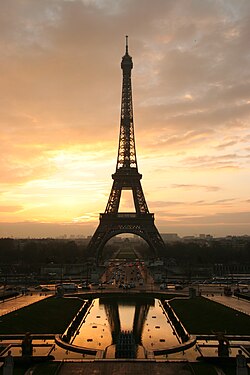
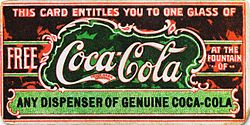




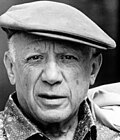








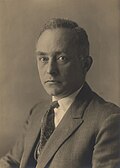

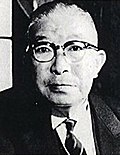




















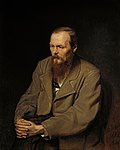


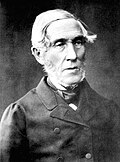













 Cyrus Adler and Judah David Eisenstein (1901–1906). "ASH, ABRAHAM JOSEPH". In Singer, Isidore; et al. (eds.). The Jewish Encyclopedia. New York: Funk & Wagnalls.


