|
Louise Lasser
|
|
|---|---|
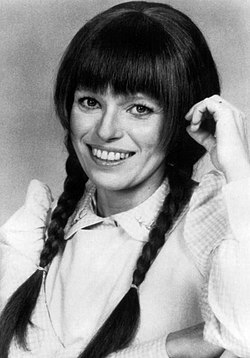
Lasser as Mary Hartman in 1976
|
|
| Born | April 11, 1939
New York City, U.S.
|
| Died | July 6, 2026 (aged 87)
New York City, U.S.
|
| Education | Brandeis University |
| Occupations |
|
| Years active | 1962–2022 |
| Spouse |
Woody Allen
(m. 1966; div. 1970) |
Louise Lasser (April 11, 1939 – July 6, 2026) was an American actress, television writer, and performing arts teacher and director. She is known for her portrayal of the title character on the soap opera satire Mary Hartman, Mary Hartman, for which she was nominated for a Primetime Emmy Award.
Lasser made her Broadway debut in the musical I Can Get It for You Wholesale (1962). She was married to Woody Allen from 1966 until 1970 and acted in several of his early films, including Take the Money and Run (1969) and Bananas (1971).[1] Lasser hosted Saturday Night Live in 1976 and had guest roles on The Bob Newhart Show, The Mary Tyler Moore Show, Taxi, Laverne and Shirley, and St. Elsewhere.
Lasser's later roles included black comedy films such as Todd Solondz's Happiness (1998) and Owen Kline's Funny Pages (2022). She portrayed Beadie in the Lena Dunham-created HBO coming-of-age series Girls from 2013 to 2014.
Lasser was also a life member of The Actors Studio and studied with both Sanford Meisner and Robert X. Modica.
Early life and education
Born in New York City, Lasser was the only child of Paula Lasser (née Cohen) and Sol Jay Lasser. Her father wrote and published the Everyone's Income Tax Guide series in the 1970s and 1980s. Louise did not fully embrace her Jewish heritage until later in life.[2] Her mother's emotional instability led to a 1961 suicide attempt that was thwarted by Louise herself. Her mother vowed never to forgive Lasser for her actions; after divorcing her husband, she committed suicide in 1964.[2] Sol Jay Lasser later also died by suicide.[1]
Lasser studied political science at Brandeis University for three years.[3]
Career
1962–1975: Collaborations with Woody Allen

Lasser began her career acting in Greenwich Village coffee shops and bars and performed in improvisational revues before understudying Barbra Streisand as Miss Marmelstein in the Broadway musical I Can Get It for You Wholesale.[4] She also acted on the soap opera The Doctors and in television commercials. In 1967, Lasser became the first woman to win a Clio Award for Best Actress in a Commercial.[5]
She acted in numerous Woody Allen films, including his early slapstick comedies Take the Money and Run (1969), Bananas (1971), and Everything You Always Wanted to Know About Sex* (*But Were Afraid to Ask) (1972). She also served as a voice actor for Allen's 1966 spoof dubbing of the Japanese comedy spy movie Kokusai himitsu keisatsu: Kagi no kagi (International Secret Police: Key of Keys), retitled What's Up Tiger Lily?
Lasser cited Allen as "a tremendous influence — but it's the influence to make me be me.... I remember the day he said, 'I do jokes ... your comedy is attitude.'"[3] In 2013 when speaking to Interview, she said: "I love his work. That relationship was a very influential relationship, on every level. It's interesting to see that. I'll forever be influenced by his work. A lot of my best work comes from his work. Some meaning and some not even meaning to."[6]
Her other 1970s comedic turns in cinema include Such Good Friends (1971) and Slither (1973). On television, she earned credits on Love, American Style (1971), The Bob Newhart Show (1972), and The Mary Tyler Moore Show (1973). She also appeared in the 1973 TV-movie version of Ingmar Bergman's The Lie and was featured as Elaine in an episode of the NBC romantic anthology series Love Story.
1976–1977: Breakthrough
Mary Hartman, Mary Hartman


|
This section needs more citations. (July 2026)
|
Lasser's breakthrough role came as the unhappy, neurotic titular character in the soap opera satire Mary Hartman, Mary Hartman, which aired five nights a week for two seasons from January 1976 until July 1977. Some markets aired it at different times of the day and night and also in a block format that showcased all the week's episodes in a row.
During the program's run, Lasser became a household name and appeared on the covers of Newsweek, People and Rolling Stone.[7]
In his biography, producer Norman Lear said that the casting of Lasser took less than a minute after Charles H. Joffe told him that there was only one actress to play the part of Mary Hartman. Lasser initially refused the role but later acquiesced. Lear said that "when she read a bit of the script for me, I all but cried for joy ... Louise brought with her the persona that fit Mary Hartman like a corset."[8]
Of her brief yet memorable time on the series, Lasser surmised: "I could go into anyone's kitchen in America and have dinner. It was the best and worst of times."[9]
Exhausted from the grueling schedule demands, Lasser left the series after two seasons and 325 episodes.
The serial was rebranded Forever Fernwood, which centered on the lives of the other Mary Hartman, Mary Hartman characters and lasted for 26 more weeks. In an interview for the bonus features of the Mary Hartman, Mary Hartman DVD box set from Shout! Factory, Lasser revealed that the idea for Mary's nervous breakdown at the end of the first season came after she wrote a 12-page letter suggesting the idea to Norman Lear.[10]
Saturday Night Live host
On July 24, 1976, Lasser hosted the penultimate episode of Saturday Night Live's first season. Her performance is best known for her opening monologue in which she re-created a Mary Hartman-esque nervous breakdown and locked herself in her dressing room. She is then coaxed out by Chevy Chase/Land Shark and the promise of appearing on the cover of Time. Some reports claim that Lasser's erratic behavior on the show led to her being the first person banned from SNL.[11] Chase accused her of "solipsism", and SNL writer Michael O'Donoghue called her "clinically berserk" and allegedly walked off that week's installment in disgust. O'Donoghue did concede that Lasser "was a nice woman going through a few problems, but I wanted to force her to eat her goddamn pigtails at gunpoint".[12]
Lasser denied that she was ever forbidden to come back.[2] According to Lasser, she was initially told she would be able to write her own material, but that promise was later withdrawn, and she also refused to do sketches she deemed "salacious"; one in particular featured Lasser and Gilda Radner as teenagers talking about male genitalia. Ultimately, Jane Curtin appeared in the sketch with Radner instead.[13] Lasser also asserted that her SNL antics, which included stream-of-consciousness rambling (typical of her Mary Hartman character), were "on purpose" and that Lorne Michaels pulled repeats of the broadcast only at her manager's request because her manager was not fond of the whole affair, including the final segment in which the actress sat onstage to discuss her rise to fame and the dollhouse incident.[2] Lasser mostly performed by herself on the program but also appears in a vignette with a dog at a table.
Lasser called Chase "like-a-bully mean" but Radner "a doll",[2] but aside from the intro segment in which Radner and Dan Aykroyd knock on her changing room door, Chase was the only regular player with whom Lasser had any scenes. Lasser and Chase appear as lovers in an Ingmar Bergman parody; plus, the pair filmed a sequence at the 1976 Democratic National Convention (although the footage was never aired). Instead, there is a video short in a diner in which she and her partner, played by Alan Zweibel, try to break up but forget their lines; in the end, Lasser moves to the bar and sits next to Michael Sarrazin. Lorne Michaels also briefly shows up in the clip, which ends with "a film by Louise Lasser" credit.[14] According to Lasser, "For me to threaten to walk off the show, I would never do that for spite. Banned—that's a horrible thing to have said."[2] Mary Hartman, Mary Hartman producer Norman Lear and co-star Mary Kay Place also hosted SNL during the run of Mary Hartman, Mary Hartman.
Later roles: 1978–2022
Following her departure from Mary Hartman, Mary Hartman, Lasser wrote a made-for-TV movie titled Just Me and You (1978) and starred in it with Charles Grodin. Her post-Mary Hartman, Mary Hartman stage credits include A Coupla White Chicks Sitting Around Talking and Marie and Bruce (1980). She had a recurring role as Alex's ex-wife on the hit series Taxi and starred in the 1981–1982 season of It's a Living, in which she played waitress Maggie McBurney.[15]
Lasser had a recurring role on St. Elsewhere in the mid-1980s as Victor Ehrlich's Aunt Charise, a neurotic comic character. Her 1980s film appearances included Stardust Memories (1980), In God We Tru$t (1980), Crimewave (1985), Blood Rage (1987), Surrender (1987), Rude Awakening (1989) and as the mother of the main character in Sing (1989).
Her 1990s films included Frankenhooker (1990), The Night We Never Met (1993), Sudden Manhattan (1996), Layin' Low (1996), and as the mother of the three main female characters in Todd Solondz's film Happiness (1998). Lasser won the National Board of Review Award for Best Acting by an Ensemble for her participation in the film Happiness.[16]
She appeared in Mystery Men (1999) as the mother of Hank Azaria's character. She also had roles in Darren Aronofsky's film Requiem for a Dream (2000), the romantic comedy Fast Food Fast Women (2000), and co-starred with Renée Taylor in National Lampoon's Gold Diggers (2003).
Lasser acted in two episodes of HBO's Girls as a Manhattan artist for the series's third season (2014).[17] Her last televison performance, in 2018, was in the movie Did You Know My Husband?, in which she appeared alongside her longtime partner, Michael Citriniti.[18]
In 2021, she was reunited with her Mary Hartman co-star Greg Mullavey in a 16-minute film short called Bliss.[19][20]
In 2022, she appeared in Funny Pages, her first role in a theatrical feature film in almost 20 years. Chris Feil of The Daily Beast wrote, "Louise Lasser makes for what is surely the most hilariously bizarre, yet downright frightening one-scene-wonder".[21]
Personal life, teaching and directing
In addition to being an actress, Lasser was a faculty member of HB Studio, where she taught acting technique, and she eventually ran her own Louise Lasser Acting Studio on the Upper East Side. In 2014, she directed the Off-Off-Broadway production of Ira Lewis's Chinese Coffee.[22]
Marriage and relationships
Lasser married Woody Allen in 1966. They had no children together. Although the couple divorced in 1970, she appeared in five of his films from 1966 to 1980.[23] She said of working with Allen, "I think he's very talented, and really funny, and really serious".[24]
Lasser never remarried, but her longtime partner was actor and film producer Michael Citriniti.[25]
The dollhouse incident
In the spring of 1976, Lasser was arrested at a Los Angeles charity boutique. Police found $6 worth (or 88 milligrams) of cocaine in her purse. Authorities were called after Lasser's American Express card was denied and she refused to leave without possession of a $150 dollhouse. Lasser was initially apprehended for two unpaid traffic tickets (one for jaywalking), but the officers then found the cocaine in her handbag. She claimed a fan had given her the drug several months earlier.
Lasser was ordered to six months in counseling, which was easily satisfied as she was already seeing an analyst. A fictionalized version of the "dollhouse incident" was also incorporated into Mary Hartman's first season.[26]
Death
Lasser died at her home in Manhattan on July 6, 2026, at the age of 87.[27][28]
Tributes
On social media, Girls creator Lena Dunham called Lasser "a canon, the prototype...one of the best". [29] Claudia Lamb, who played Lasser's daughter on MH2, also wrote online: "I am stunned and grieving. Louise Lasser is no longer with us. Raise a glass to the genius who created Mary Hartman and her waxy yellow build-up."[30]
Legacy and influence
Mary Hartman, Mary Hartman offers "Kitchen Sink Theater of the Absurd" featuring a Candide-esque TV-watching housewife who, in one signature episode, brings a sick neighbor a bowl of chicken soup, only to have him fall asleep and drown in it.[31]
Of this post-Watergate, existential satirical comedy-drama, author Claire Barliant writes: "It’s both ahead of its time and decidedly of it";[32] while Lasser herself said, "People always say it’s way ahead of its time. I never thought it was ahead of its time. I always thought it was of its time."[17]
In 1976, Ted Morgan wrote in The New York Times: "No longer merely a television program, Mary Hartman, Mary Hartman has become a cultural event...to help us explain ourselves." [33] Claire Barliant further writes: "The seventies nervous breakdown coincides with women's lib and a strengthening gay rights movement. MH2 is relevant today because it entertains but still shocks, because the social commentary and satire and bravery of the show are as fresh as ever."[34]
Lasser herself also became a cultural touchstone. As the series' figurehead, she aptly embodied both the insanity and enlightenment of the epoch.[opinion] MSN.com encapsulated her legacy with: "The character of Mary Hartman, with her pigtails, collared blouse, and blue smock dress, became emblematic of 1970s television's experimentation with satire and serialized storytelling. Lasser's performance, balancing humor with a portrayal of entrapment in mundane life, was praised by critics and marked by a memorable first-season breakdown scene. Her distinctive style and ability to navigate both comedic and dramatic material influenced television narratives and inspired later performers." [35][36]
In 2000, Lasser appeared on a panel with her former Mary Hartman, Mary Hartman cast and crew members at the Paley Center for Media in Beverly Hills. The seminar, entitled Mary Hartman, Mary Hartman: Reunion, Reunion, was moderated by Steven A. Bell and taped for the museum archives.[37]
In 2004 and 2007, Mary Hartman, Mary Hartman was ranked No. 21 and No. 26 on TV Guide's Top Cult Shows Ever.[38]
Filmography
Film
| Year | Title | Role | Notes | Ref. |
|---|---|---|---|---|
| 1966 | What's Up, Tiger Lily? | Suki Yaki | Voice; also writing credit | [39] |
| 1969 | Take the Money and Run | Kay Lewis | [39] | |
| 1971 | Bananas | Nancy | [39] | |
| Such Good Friends | Marcy | [39] | ||
| 1972 | Everything You Always Wanted to Know About Sex* (*But Were Afraid to Ask) | Gina | [39] | |
| 1973 | Slither | Mary Fenaka | [39] | |
| 1978 | Just Me and You | Jane Alofsin | Also writer, TV film | [39] |
| 1980 | Simon | Doris | Uncredited, Voice | [39] |
| Stardust Memories | Sandy's Secretary | Uncredited | [39] | |
| In God We Trust (Or Gimme That Prime Time Religion) | Mary | [39] | ||
| 1985 | Crimewave | Helene Trend | [39] | |
| 1987 | Blood Rage (aka Nightmare at Shadow Woods) | Maddy | [39] | |
| Surrender | Joyce | [39] | ||
| 1989 | Sing | Rosie | [39] | |
| Rude Awakening | Ronnie Summers | [39] | ||
| 1996 | Layin' Low | Mrs. Muckler | [39] | |
| Sudden Manhattan | Dominga | [39] | ||
| 1998 | Happiness | Mona Jordan | [39] | |
| 1999 | Mystery Men | Blue Raja's Mother | [39] | |
| 2000 | Requiem for a Dream | Ada | [39] | |
| Fast Food Fast Women | Emily | [39] | ||
| 2001 | Queenie in Love | Martha | [39] | |
| 2002 | Wolves of Wall Street | Landlady | [39] | |
| 2003 | National Lampoon's Gold Diggers | Doris Mundt | [39] | |
| 2008 | Broadway Bound | Dorthy Palmer | Short film | [40] |
| 2010 | Horses Eat Each Other | Irma | Short film | [40] |
| 2012 | Driving Me Crazy: Proof of Concept | Shelly Petterson | [40] | |
| 2021 | Bliss | Short film | [40] | |
| 2022 | Funny Pages | Linda (Pharmacy Lady) | [40] |
Television
| Year | Title | Role | Notes | Ref. |
|---|---|---|---|---|
| 1962 | The Laughmakers | Susan | TV film | [40] |
| 1963–1971 | The Tonight Show Starring Johnny Carson | Herself | 8 episodes | [40] |
| 1965 | The Doctors | Jackie Ricardo | Episode: "#1.546 - May 3, 1965" | [40] |
| 1971–1973 | The Mike Douglas Show | Herself | 3 episodes | [40] |
| 1972 | The Bob Newhart Show | Mrs. Radford | Episode: "P-I-L-O-T" | [40] |
| Class of '55 | Christine | TV film | [40] | |
| 1973 | The Mary Tyler Moore Show | Anne Adams | Episode: "Mary Richards and the Incredible Plant Lady" | [40] |
| Coffee, Tea or Me? | Susan Edmonds | TV film | [40] | |
| Isn't It Shocking? | Blanche | TV film | [40] | |
| Love Story | Elaine Kaplan | Episode: "The Roller Coaster Stops Here" | [40] | |
| 1974 | McCloud | Sgt. Maggie Philbin | Episode: "A Cowboy in Paradise" | [40] |
| Moe and Joe | Mo Lambert | TV film | [40] | |
| 1975 | Medical Center | Esther Kornblum | Episode: "The Price of a Child" | [40] |
| 1976–1977 | Mary Hartman, Mary Hartman | Mary Shumway Hartman | 315 episodes | [40] |
| 1976 | Saturday Night Live | Guest host | Episode: "Louise Lasser / Preservation Hall Jazz Band" | [40] |
| 1980–1982 | Taxi | Phyllis Bornstein Consuelos Phyllis Reiger |
3 Episodes | [40] |
| 1981 | For Ladies Only | Beth Doyle | TV film | [40] |
| 1981–1982 | It's a Living | Maggie McBurney | 14 Episodes | [40] |
| 1983 | Laverne & Shirley | Sister Margaret | Episode: "The Monastery Show" | [40] |
| 1983 | Late Night with David Letterman | Herself | Episode: "Edwin Newman / Louise Lasser" | [40] |
| 1984 | Bedrooms | Betty / Loretta | TV film | [40] |
| 1984 | St. Elsewhere | Aunt Charise | 2 episodes | [40] |
| 1992 | Empty Nest | Louise Polsky | Episode: "Good Neighbor Harry" | [40] |
| 2011 | Woody Allen: A Documentary | Herself | American Masters documentary | [40] |
| 2014–2015 | Girls | Beadie | 3 episodes | [40] |
| 2018 | Did You Know My Husband? | TV film | [40] |
Theatre
| Year | Title | Role | Venue | Ref. |
|---|---|---|---|---|
| 1962 | I Can Get It For You Wholesale | Rosaline (replacement) Miss Marmelstein (u/s & replacement) |
Sam S. Shubert Theatre, Broadway | [41] |
| 1967 | Henry, Sweet Henry | Stella | Palace Theatre, Broadway | [42] |
| 1970 | The Chinese | Gladys Hoffman | Ethel Barrymore Theatre, Broadway | [43] |
| 1974 | Thieves | Nancy (replacement) | Broadhurst Theatre, Broadway | [44] |
Awards and recognition
In 1967, Lasser became the first woman to win a Clio Award for Best Actress in a Commercial.[5] She was nominated for an Emmy Award for her performance in Mary Hartman, Mary Hartman and won the National Board of Review Award for Best Acting by an Ensemble for her participation in the film Happiness.[45]
References
- ^ a b "Louise Lasser". Turner Classic Movies. Archived from the original on February 18, 2012. Retrieved December 9, 2021.
- ^ a b c d e f Barliant, Claire (December 20, 2013). "An Interview With Louise Lasser: TV, Depression, and SNL". The Toast. Retrieved February 20, 2019.
- ^ a b Wilson, John M. (February 22, 1976). "Louise Lasser! Louise Lasser!". The New York Times. ISSN 0362-4331. Retrieved February 20, 2019.
- ^ Madden, Joanne. "Whatever happened to Louise Lasser?". Retrieved February 16, 2021.
- ^ a b Sharpe, Josh (July 7, 2026). "Stage and Screen Veteran Louise Lasser Passes Away at 87". BroadwayWorld.com. Retrieved July 9, 2026.
- ^ "The Real Housewife: Louise Lasser". Interview. December 6, 2013. Retrieved May 9, 2024.
- ^ "Remembering Mary Hartman's Louise Lasser". Television Academy. Retrieved July 10, 2026.
- ^ Lear, Norman (October 14, 2014). Even This I Get to Experience. Penguin. p. 293. ISBN 978-1101635384.
- ^ Alper, Eric (July 7, 2026). "Mary Hartman, Mary Hartman Star Louise Lasser Dies at 87". That Eric Alper. Retrieved July 10, 2026.
- ^ FoundationINTERVIEWS (July 10, 2018). Louise Lasser on Mary Hartman's nervous breakdown - TelevisionAcademy.com/Interviews. Retrieved July 9, 2026 – via YouTube.
- ^ "Maybe they win because of the 'tux'". Los Angeles Times. March 25, 2007. Retrieved February 16, 2021.
- ^ Hill, Doug; Weingrad, Jeff (December 15, 2011). Saturday Night: A Backstage History of Saturday Night Live. Untreed Reads. ISBN 978-1-61187-218-7.
- ^ Lifton, Dave (July 24, 2019). "How Louise Lasser Got Banned From 'Saturday Night Live'". Ultimate Classic Rock. Retrieved February 16, 2021.
- ^ "Saturday Night Live (Classic): "Louise Lasser/Kris Kristofferson"". TV Club. October 27, 2013. Retrieved February 16, 2021.
- ^ Dizon, Bettina (November 1, 2019). "Lives of 'It's a Living' Cast Members Three Decades after the Show Ended". news.amomama.com. Retrieved February 16, 2021.
- ^ "Best Ensemble Cast Archives". National Board of Review. Retrieved July 9, 2026.
- ^ a b "The Real Housewife: Louise Lasser". Interview Magazine. December 6, 2013. Retrieved February 16, 2021.
- ^ Esquibias, Liza. "Louise Lasser, 'Mary Hartman, Mary Hartman' actress, dies at 87". USA TODAY. Retrieved July 7, 2026.
- ^ "Bliss short film". Vampingo Productions. Retrieved October 4, 2022.
- ^ "NEWPORT BEACH FILM FEST". nbff2021.eventive.org. Retrieved October 4, 2022.
- ^ Feil, Chris (August 26, 2022). "'Funny Pages' Has the Wildest Acting of the Summer". The Daily Beast. Retrieved May 9, 2024.
- ^ Zvonkov, Dmitry (September 28, 2014). "Off-Off-Broadway Theater Review: CHINESE COFFEE (Roy Arias Theater; directed by Louise Lasser; starring Austin Pendleton)". Stage and Cinema. Retrieved July 8, 2026.
- ^ Wilson, John M. (February 22, 1976). "Louise Lasser! Louise Lasser!". The New York Times. Retrieved May 9, 2024.
- ^ "Louise Lasser on Woody Allen". Television Academy. Retrieved September 12, 2024.
- ^ Esquibias, Liza. "Louise Lasser, 'Mary Hartman, Mary Hartman' actress, dies at 87". USA TODAY. Retrieved July 9, 2026.
- ^ "Remembering Mary Hartman's Louise Lasser". Television Academy. Retrieved July 9, 2026.
- ^ Barnes, Mike (July 7, 2026). "Louise Lasser, Star of 'Mary Hartman, Mary Hartman,' Dies at 87". The Hollywood Reporter. Retrieved July 7, 2026.
- ^ "MSN". www.msn.com. Retrieved July 7, 2026.
- ^ "Emmy-Nominated SNL & Girls Star Louise Lasser Passes Away". Yahoo Entertainment. July 8, 2026. Retrieved July 9, 2026.
- ^ Schwartz, Ryan (July 7, 2026). "Louise Lasser, Star Of Mary Hartman, Mary Hartman, Dead At 87". TVLine. Retrieved July 9, 2026.
- ^ prowlergrig (December 25, 2023). chicken soup. Retrieved July 10, 2026 – via YouTube.
- ^ "From a Waxy Yellow Buildup to a Nervous Breakdown: The Fleeting Existence of Mary Hartman, Mary Hartman". East of Borneo. Retrieved July 10, 2026.
- ^ "From a Waxy Yellow Buildup to a Nervous Breakdown: The Fleeting Existence of Mary Hartman, Mary Hartman". East of Borneo. Retrieved July 10, 2026.
- ^ "From a Waxy Yellow Buildup to a Nervous Breakdown: The Fleeting Existence of Mary Hartman, Mary Hartman". East of Borneo. Retrieved February 16, 2021.
- ^ "MSN". www.msn.com. Retrieved July 10, 2026.
- ^ "Louise Lasser Star of 'Mary Hartman, Mary Hartman' Passes Away at 87". July 7, 2026. Retrieved July 10, 2026.
- ^ "Museum of Television & Radio Seminar Series: Mary Hartman, Mary Hartman: Reunion, Reunion (Long Version)". paleycenter.org. Retrieved February 16, 2021.
- ^ "TV Guide's 25 Top Cult Shows – TannerWorld Junction". January 4, 2009. Archived from the original on January 4, 2009. Retrieved February 16, 2021.
- ^ a b c d e f g h i j k l m n o p q r s t u v w x "Louise Lasser - Turner Classic Movies". Turner Classic Movies. Archived from the original on February 18, 2012. Retrieved May 9, 2024.
- ^ a b c d e f g h i j k l m n o p q r s t u v w x y z aa ab ac ad ae "Louise Lasser". IMDb. Retrieved May 9, 2024.
- ^ "I Can Get It For You Wholesale (Broadway, 1962)". Playbill. Retrieved May 9, 2024.
- ^ "Henry, Sweet Henry (Broadway, 1967)". Playbill. Retrieved May 9, 2024.
- ^ "The Chinese (Broadway, 1970)". Playbill. Retrieved May 9, 2024.
- ^ "Thieves (Broadway, 1974)". Playbill. Retrieved May 9, 2024.
- ^ "Best Ensemble Cast Archives". National Board of Review. Retrieved July 9, 2026.
External links
- Louise Lasser at IMDb
- Louise Lasser at the TCM Movie Database (archived)
- Louise Lasser at the Internet Broadway Database
- Louise Lasser at the Internet Off-Broadway Database (archived)
- Louise Lasser at The Interviews: An Oral History of Television
- Official website
- Louise Lasser discography at Discogs

|
Woody Allen
|
|||||
|---|---|---|---|---|---|
|
|||||
| Films directed |
|
||||
| Films written only |
|
||||
| Television |
|
||||
| Theatre |
|
||||
| Books |
|
||||
| Albums |
|
||||
| Works about |
|
||||
| Family |
|
||||
| Related |
|
||||
|
|||||

|
Authority control databases
|
|
|---|---|
| International | |
| National | |
| People | |
| Other | |