| Bundesministerium für Arbeit und Soziales | |
 |
|

|
|
| Agency overview | |
|---|---|
| Formed | 1919 (Weimar Republic), 1949 (West Germany) |
| Jurisdiction | Government of Germany |
| Headquarters | Wilhelmstraße 49 10117 Berlin 52°30′45″N 13°23′01″E / 52.51250°N 13.38361°E |
| Annual budget | €164.920 billion (2021)[1] |
| Minister responsible |
|
| Website | www |

The Federal Ministry for Labour and Social Affairs (German: Bundesministerium für Arbeit und Soziales,[a] pronounced [ˈbʊndəsminɪsˌteːʁiʊm fyːɐ̯ ˈʔaʁbaɪt ʔʊnt zoˈtsi̯aːləs] ⓘ; abbreviated BMAS) is a federal ministry of the Federal Republic of Germany headed by the Federal Minister of Labour and Social Affairs as a member of the Cabinet of Germany (Bundesregierung). Its first location is on Wilhelmstrasse in Berlin, the second in Bonn.
History
The Reich Ministry of Labour of the Weimar Republic was established on 13 February 1919 as the successor of the Labour Office (Reichsarbeitsamt) of the German Empire. The Social Democratic politician Gustav Bauer became the first Minister for Labour under Chancellor Philipp Scheidemann, whom he succeeded on 21 June that year. On the day of the Machtergreifung in January 1933, the German National politician and Der Stahlhelm leader Franz Seldte was appointed Minister for Labour in the Cabinet Hitler, a position he officially held until 1945, though the day-to-day affairs of the Ministry were managed largely by the State Secretaries Johannes Krohn (1933–1939) and Friedrich Syrup (1939–1945).
The West German Ministry for Labour was re-established in Bonn on 20 September 1949 with the Cabinet Adenauer I. According to the 1991 Berlin/Bonn Act it moved to its present seat in Berlin-Mitte in 2000, on premises formerly used by Goebbels' Propaganda Ministry and the East German National Front organisation.
During the Cabinet Schröder II from 2002 to 2005, the ministry had been dissolved and its responsibilities allocated to the Federal Ministry for Economics and Labour[2] and the Federal Ministry of Health and Social Security. Responsibilities were re-allocated once again when a new government was formed under Chancellor Angela Merkel following the Bundestag elections of 2005. The German name was changed from Bundesministerium für Arbeit und Sozialordnung to Bundesministerium für Arbeit und Soziales.
Ministers
German Reich (until 1945)

- Reich Ministers
Political Party: Centre SPD NSDAP Independent
| No. | Portrait | Minister of Labour | Took office | Left office | Time in office | Party | Cabinet |
|---|---|---|---|---|---|---|---|
| Weimar Republic (1919–1933) | |||||||
| 1 | Gustav Bauer (1870–1944) |
13 February 1919 | 20 June 1919 | 127 days | SPD | Scheidemann | |
| 2 | Alexander Schlicke (1863–1940) |
21 June 1919 | 21 June 1920 | 1 year, 0 days | SPD | Bauer Müller |
|
| 3 | Heinrich Brauns (1868–1939) |
25 June 1920 | 12 June 1928 | 7 years, 353 days | Centre | Fehrenbach Wirth I–II Cuno Stresemann I–II Marx I–II Luther I–II Marx III–IV |
|
| 4 | Rudolf Wissell (1869–1962) |
28 June 1928 | 27 March 1930 | 1 year, 272 days | SPD | Müller II | |
| 5 | Adam Stegerwald (1874–1945) |
30 March 1930 | 30 May 1932 | 2 years, 61 days | Centre | Brüning I–II | |
| – | Hermann Warmbold (1876–1976) Acting |
1 June 1932 | 6 June 1932 | 5 days | Independent | Papen | |
| 6 | Hugo Schäffer (1875–1945) |
7 June 1932 | 17 November 1932 | 163 days | Independent | Papen | |
| 7 | Friedrich Syrup (1881–1945) |
3 December 1932 | 28 January 1933 | 56 days | Independent | Schleicher | |
| Nazi Germany (1933–1945) | |||||||
| 8 | Franz Seldte (1882–1947) |
30 January 1933 | 30 April 1945 | 12 years, 90 days | NSDAP | Hitler | |
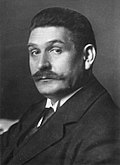
| 9 | Theo Hupfauer (1906–1993) |
30 April 1945 | 5 May 1945 | 5 days | NSDAP | Goebbels | |
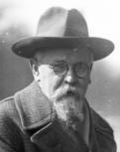
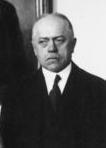
| (8) | Franz Seldte (1882–1947) |
5 May 1945 | 23 May 1945 | 18 days | NSDAP | Flensburg | |





Federal Republic of Germany (1949–present)
- Federal Ministers
Political Party: CDU SPD
| Name (Born-Died) |
Portrait | Party | Term of Office | Chancellor (Cabinet) |
|||||
|---|---|---|---|---|---|---|---|---|---|
| Federal Minister for Labour (1949–1957) Federal Minister for Labour and Social Affairs (1957–2002) |
|||||||||
| 1 | Anton Storch (1892–1975) |
 |
CDU | 20 September 1949 | 29 October 1957 | Adenauer (I • II) |
|||
| 2 | Theodor Blank (1905–1972) |
 |
CDU | 29 October 1957 | 26 October 1965 | Adenauer (III • IV • V) Erhard (I) |
|||
| 3 | Hans Katzer (1919–1996) |
 |
CDU | 26 October 1965 | 21 October 1969 | Erhard (II) Kiesinger (I) |
|||
| 4 | Walter Arendt (1925–2005) |
 |
SPD | 22 October 1969 | 16 December 1976 | Brandt (I • II) Schmidt (I) |
|||
| 5 | Herbert Ehrenberg (1926–2018) |
 |
SPD | 16 December 1976 | 28 April 1982 | Schmidt (II • III) |
|||
| 6 | Heinz Westphal (1924–1998) |
 |
SPD | 28 April 1982 | 1 October 1982 | Schmidt (III) |
|||
| 7 | Norbert Blüm (1935–2020) |
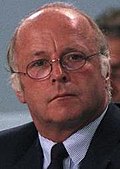 |
CDU | 1 October 1982 | 27 October 1998 | Kohl (I • II • III • IV • V) |
|||
| 8 | Walter Riester (b. 1943) |
 |
SPD | 27 October 1998 | 22 October 2002 | Schröder (I) |
|||
| Federal Minister for Economics and Labour | 22 October 2002 | 22 November 2005 | Schröder (II) |
||||||
| 9a | Wolfgang Clement (1940–2020) |
 |
SPD | ||||||
| Federal Minister for Health and Social Security | |||||||||
| 9b | Ulla Schmidt (b. 1949) |
 |
SPD | ||||||
| Federal Minister for Labour and Social Affairs | |||||||||
| 10 | Franz Müntefering (b. 1940) |
 |
SPD | 22 November 2005 | 21 November 2007 | Merkel (I) |
|||
| 11 | Olaf Scholz (b. 1958) |
 |
SPD | 21 November 2007 | 28 October 2009 | ||||
| 12 | Franz Josef Jung (b. 1949) |
 |
CDU | 28 October 2009 | 27 November 2009 | Merkel (II) |
|||
| 13 | Ursula von der Leyen (b. 1958) |
 |
CDU | 30 November 2009 | 17 December 2013 | ||||
| 14 | Andrea Nahles (b. 1970) |
 |
SPD | 17 December 2013 | 28 September 2017 | Merkel (III) |
|||
| Katarina Barley was acting Federal Minister from 28 September 2017 to 14 March 2018. | |||||||||
| 15 | Hubertus Heil (b. 1972) |
 |
SPD | 14 March 2018 | 6 May 2025 | Merkel (IV) Scholz (I) |
|||
| 16 | Bärbel Bas (b. 1972) |
 |
SPD | 6 May 2025 | Incumbent | Merz (I) | |||
Parliamentary State Sectretaries
- 1969–1974: Helmut Rohde (SPD)
- 1972–1976: Herbert Ehrenberg (SPD)
- 1974–1982: Hermann Buschfort (SPD)
- 1980–1982: Anke Fuchs (SPD)
- 1982: Rudolf Dreßler (SPD)
- 1982: Jürgen Egert (SPD)
- 1982–1991: Wolfgang Vogt (CDU)
- 1982–1984: Heinrich Franke (CDU)
- 1984–1989: Stefan Höpfinger (CSU)
- 1989–1992: Horst Seehofer (CSU)
- 1991–1998: Horst Günther (CDU)
- 1992–1998: Rudolf Kraus (CSU)
- 1998–2008: Gerd Andres (SPD)
- 1998–2002: Ulrike Mascher (SPD)
- 2002–2005: Ditmar Staffelt (SPD)
- 2002–2005: Rezzo Schlauch (Bündnis 90/Die Grünen)
- 2002–2009: Franz Thönnes (SPD)
- 2005–2009: Klaus Brandner (SPD)
- 2009–2013: Ralf Brauksiepe (CDU)
- 2009–2013: Hans-Joachim Fuchtel (CDU)
- 2013–2018: Gabriele Lösekrug-Möller (SPD)
- 2013-2025: Anette Kramme (SPD)
- since 2018: Kerstin Griese (SPD)
- since 2025: Natalie Pawlik (SPD)
- since 2025: Katja Mast (SPD)
State secretaries
As of May 2025,[update] The Secretaries of State are Leonie Gebers, Lilian Tschan and Michael Schäfer.
Building
The ministry is located within the former Reich Ministry of Public Enlightenment and Propaganda. For the building's interior courtyard, artist Daniel Buren was commissioned with his large-scale installation La Grande Fenêtre (2001).[4]
Notes
- ^ Former German name: Bundesministerium für Arbeit und Sozialordnung. The English translation used by the ministry is the same.
References
- ^ "Bundeshaushalt". www.bundeshaushalt.de. Retrieved 10 May 2021.
- ^ German name: Bundesministerium für Wirtschaft und Arbeit
- ^ "BMAS - Ministerin und Hausleitung". Webseite des Bundesministerium für Arbeit und Soziales (in German). Retrieved 2025-11-16.
- ^ Michael Z. Wise (7 June 1998), Where the Past Haunts, Berlin Embraces the New New York Times.
External links
|
Federal ministries of Germany
|
||
|---|---|---|
|

|
|
|
Authority control databases
|
|
|---|---|
| International | |
| National | |
