 |
|||||||||||||||||||||||||||||||||||||||||||||
| Nickname(s) | Los Cafeteros (The Coffee Growers) La Tricolor (The Tricolour) La Sele (The Sele) |
||||||||||||||||||||||||||||||||||||||||||||
|---|---|---|---|---|---|---|---|---|---|---|---|---|---|---|---|---|---|---|---|---|---|---|---|---|---|---|---|---|---|---|---|---|---|---|---|---|---|---|---|---|---|---|---|---|---|
| Association | Federación Colombiana de Fútbol (FCF) | ||||||||||||||||||||||||||||||||||||||||||||
| Confederation | CONMEBOL (South America) | ||||||||||||||||||||||||||||||||||||||||||||
| Head coach | Néstor Lorenzo | ||||||||||||||||||||||||||||||||||||||||||||
| Captain | James Rodríguez | ||||||||||||||||||||||||||||||||||||||||||||
| Most caps | David Ospina (130) | ||||||||||||||||||||||||||||||||||||||||||||
| Top scorer | Radamel Falcao (36) | ||||||||||||||||||||||||||||||||||||||||||||
| Home stadium | Estadio Metropolitano Roberto Meléndez[1] | ||||||||||||||||||||||||||||||||||||||||||||
| FIFA code | COL | ||||||||||||||||||||||||||||||||||||||||||||
|
|||||||||||||||||||||||||||||||||||||||||||||
| FIFA ranking | |||||||||||||||||||||||||||||||||||||||||||||
| Current | 13  (11 June 2026)[2] (11 June 2026)[2] |
||||||||||||||||||||||||||||||||||||||||||||
| Highest | 3 (July–August 2013, September 2014 – March 2015, June–August 2016) | ||||||||||||||||||||||||||||||||||||||||||||
| Lowest | 54 (June 2011) | ||||||||||||||||||||||||||||||||||||||||||||
| First international | |||||||||||||||||||||||||||||||||||||||||||||
 Colombia 4–1 Costa Rica Colombia 4–1 Costa Rica  (Barranquilla, Colombia; 17 February 1926)[3][4] |
|||||||||||||||||||||||||||||||||||||||||||||
| Biggest win | |||||||||||||||||||||||||||||||||||||||||||||
 Bahrain 0–6 Colombia Bahrain 0–6 Colombia (Riffa, Bahrain; 26 March 2015)[5] |
|||||||||||||||||||||||||||||||||||||||||||||
| Biggest defeat | |||||||||||||||||||||||||||||||||||||||||||||
 Brazil 9–0 Colombia Brazil 9–0 Colombia (Lima, Peru; 24 March 1957)[6] |
|||||||||||||||||||||||||||||||||||||||||||||
| World Cup | |||||||||||||||||||||||||||||||||||||||||||||
| Appearances | 7 (first in 1962) | ||||||||||||||||||||||||||||||||||||||||||||
| Best result | Quarter-finals (2014) | ||||||||||||||||||||||||||||||||||||||||||||
| Copa América | |||||||||||||||||||||||||||||||||||||||||||||
| Appearances | 24 (first in 1945) | ||||||||||||||||||||||||||||||||||||||||||||
| Best result | Champions (2001) | ||||||||||||||||||||||||||||||||||||||||||||
| CONCACAF Gold Cup | |||||||||||||||||||||||||||||||||||||||||||||
| Appearances | 3 (first in 2000) | ||||||||||||||||||||||||||||||||||||||||||||
| Best result | Runners-up (2000) | ||||||||||||||||||||||||||||||||||||||||||||
| Confederations Cup | |||||||||||||||||||||||||||||||||||||||||||||
| Appearances | 1 (first in 2003) | ||||||||||||||||||||||||||||||||||||||||||||
| Best result | Fourth place (2003) | ||||||||||||||||||||||||||||||||||||||||||||
|
Medal record
|
|||||||||||||||||||||||||||||||||||||||||||||


The Colombia national football team (Spanish: Selección de fútbol de Colombia), nicknamed Los Cafeteros, represents Colombia in men's international football and is managed by the Federación Colombiana de Fútbol (English: Colombian Football Federation), the governing body for football in Colombia. It has been a member of FIFA and CONMEBOL since 1936. Currently ranked 13th on the FIFA World Ranking as of June 2026, Colombia has participated in seven FIFA World Cups, most recently in the 2026 edition. The team are nicknamed Los Cafeteros due to the country's high coffee production. Colombia is known for having a passionate fanbase, and has been a symbol of nationalism, pride and passion for many Colombians worldwide.[8][9]
In the 2014 FIFA World Cup held in Brazil, Colombia achieved its best World Cup performance yet, reaching the quarter-finals and placing fifth in the final standings.[10] Its greatest international achievement is winning the 2001 Copa América as hosts, during which the team set a record by winning every match without conceding a single goal. Colombia also finished as runners-up in 1975 and 2024 and finished third five times: in 1987, 1993, 1995, 2016, and 2021.
History
Early history (1900–1946)
The origins of football in Colombia are disputed, as no single city or date is universally accepted. Most accounts place the first organised matches in the early 20th century on the Caribbean coast, particularly around Barranquilla and Santa Marta, where British railway workers on the Puerto Colombia line and English sailors introduced association football to local communities.[11][12][13] One documented account places the first match on 6 August 1904, when executives and workers of The Colombia Railways Company played in Barranquilla, following informal games organised by employees since around 1900.[11][14]
The Colombian Football Federation was founded in 1924 as the Liga de Fútbol and joined both FIFA and CONMEBOL in 1936.[11] Colombia's first recorded international match came on 17 February 1926, when a side representing the Atlantic coast and playing as Selección Atlántico defeated Costa Rica 4–1 at the Estadio Moderno Julio Torres in Barranquilla.[3][4]
In 1937, Colombia fielded a representative side at the Juegos del IV Centenario de Cali, a multi-sport event marking the 400th anniversary of Cali's founding, and played four matches against Mexico, Argentina, Ecuador and Cuba at the newly inaugurated Estadio Olímpico Pascual Guerrero.[15] Despite FIFA membership, Colombia withdrew from the 1938 FIFA World Cup and instead entered the 1938 Central American and Caribbean Games. The squad in this period was drawn largely from Club Juventud Bogotana, later Millonarios, whose players formed the backbone of the side in its formative years.[16]
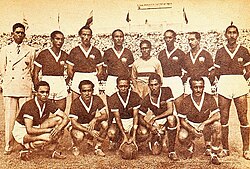
Colombia made their Copa América debut at the 1945 tournament in Chile, their first appearance in an official CONMEBOL competition. With no professional league or national selection system in place, the squad was built almost entirely around Junior de Barranquilla, then one of the strongest amateur sides on the Caribbean coast.[17] Roberto Meléndez acted as player-manager. Drawn against Brazil, Uruguay, Argentina, Chile, Ecuador and Bolivia, Colombia lost their first four matches but finished with a 3–1 win over Ecuador and a 3–3 draw with Bolivia.[18]
Colombia withdrew from the 1946 South American Championship but won their first international title later that year at the football tournament of the 1946 Central American and Caribbean Games in Barranquilla. After Cuba and Mexico withdrew, the competition was played as a single round-robin; Colombia won all six matches, scoring 20 goals and conceding seven, defeating Curaçao, Venezuela, Guatemala, Puerto Rico, Costa Rica and Panama.[19][20] The team was coached by Peruvian manager José Arana Cruz, one of the first foreign coaches in the Colombia setup, whose tenure coincided with the country's first major international success.[21][20]
Post-war reintegration and first World Cup (1947–1962)
Following their debut at the 1945 South American Championship, Colombia's international activity was irregular in the immediate post-war years. Although the federation had been affiliated with FIFA since 1936, the team withdrew from several Copa América tournaments between 1947 and 1957, reflecting administrative instability and the wider social and economic problems affecting Colombian football at the time.[22]

Colombia returned to the continental championship at the 1957 South American Championship in Peru, their first appearance in the tournament since 1945. The squad finished near the bottom of the standings, but the competition marked a return to regular South American international football after more than a decade away.[23]
Colombia's return to the international stage culminated in qualification for the 1962 FIFA World Cup in Chile, their first appearance at the finals.[3] Coached by Argentine Adolfo Pedernera and captained by Efraín Sánchez, they were drawn in Group 1 with Uruguay, the Soviet Union and Yugoslavia. The team finished bottom of the group, but their match against the Soviet Union produced one of the most famous moments in their history: trailing 4–1, midfielder Marcos Coll scored directly from a corner kick — the only direct corner goal in FIFA World Cup history — beating Lev Yashin in the process.[24][25]
First Copa América final and unsuccessful World Cup campaigns (1963–1979)
After the 1962 World Cup, Colombia went through a further difficult spell in international competition. At the 1963 South American Championship in Bolivia, the team finished last with one draw and five defeats, and were eliminated in the first round of qualifying for the 1966 FIFA World Cup, finishing bottom of their group with two points — their only win a 2–0 home victory over Chile.[26][27]
Colombia entered qualification for the 1970 FIFA World Cup, drawn into Group 2 with Brazil, Paraguay and Venezuela, finishing third with one win, one draw and four defeats. Around the same time, Colombia hosted England in a pre-tournament friendly and lost 4–0; the match drew wider attention because of the Bogotá Bracelet incident involving England captain Bobby Moore.[28][29]
Colombia's best result of the period came at the 1975 Copa América. Drawn into Group C with Paraguay and Ecuador, they won all four group matches to reach the semi-finals against Uruguay; a 3–0 home win and a 1–0 away defeat sent them through on aggregate and into the Copa América final for the first time. Colombia faced Peru over three matches, winning 1–0 in Bogotá before losing 2–0 in Lima and 1–0 in the play-off in Caracas.[30]
1980s: dawn of the Golden Generation and World Cup qualification
Prior to the 1980s, Colombia were widely regarded as a struggling side, limited by modest investment from the Colombian Football Federation, inconsistent international participation and the broader social and political instability affecting the country. Periods of national crisis, including La Violencia and the rise of organised crime, hindered the development of football infrastructure and delayed the emergence of a sustained football culture.[31]

In the early 1980s, Colombia attempted to rebuild under Argentine manager Carlos Bilardo. The team entered the 1982 World Cup qualifiers with renewed ambition but failed to reach the finals, and then exited in the first round of the 1983 Copa América.[32][33]
Colombia showed clearer progress in qualification for the 1986 FIFA World Cup. Drawn into Group 1 with Argentina, Peru and Venezuela, the campaign opened with a 1–0 win over Peru through Miguel Prince. Despite home and away defeats to Argentina, Colombia recovered with results against Venezuela to reach the intercontinental play-offs against Paraguay. A 3–0 defeat in Asunción proved decisive; although Colombia won the return leg 2–1, they were eliminated 4–2 on aggregate.[34][26]

At the 1987 Copa América, Colombia were drawn into Group C with Bolivia and Paraguay and advanced to the semi-finals, where they faced Chile. Colombia took the lead in extra time through a 103rd-minute penalty by Bernardo Redín, but Chile responded with two late goals to eliminate them. Colombia then beat Argentina in the third-place match.[35]
South American qualification for the 1990 FIFA World Cup offered Colombia their best route back to the tournament since 1962. With Argentina qualifying automatically as reigning champions, the remaining teams were divided into three groups. Colombia emerged as one of the group winners and then faced Israel in the CONMEBOL–OFC play-off, winning 1–0 on aggregate over two legs to secure their first World Cup berth since 1962.[36][37]
1990s: World Cup return and the first Colombian golden era

At the 1990 FIFA World Cup, Colombia were drawn with Yugoslavia, the United Arab Emirates and West Germany. They opened with a 2–0 win over the United Arab Emirates at the Stadio Renato Dall'Ara in Bologna, with goals from Redín and Freddy Rincón, for their first World Cup finals victory.[38] After a 1–0 defeat to Yugoslavia, Colombia advanced to the round of 16 with a 1–1 draw against West Germany, in which Rincón equalised in the 93rd minute after West Germany had scored five minutes earlier.[39]
Colombia finished third in the group and advanced as one of the best third-placed teams. They were then eliminated by Cameroon in the round of 16, losing 2–1 after extra time following an error by goalkeeper René Higuita.[40][41]

Soon after the tournament, Francisco Maturana left as manager and was replaced by Luis Augusto García, who led the team at the 1991 Copa América and in a series of friendlies. Maturana returned in 1993 to lead Colombia through qualification for the 1994 FIFA World Cup.[42] With Carlos Valderrama as captain, Colombia reached the semi-finals of the 1993 Copa América, losing to Argentina on penalties before defeating Ecuador 2–1 in the third-place match.[43]
Colombia finished first in their 1994 World Cup qualifying group, remaining unbeaten. Their campaign included a 5–0 win over Argentina at the Estadio Monumental in Buenos Aires.[44]
Before the 1994 World Cup, Colombia were drawn in Group A with the United States, Romania and Switzerland. They beat Switzerland, but defeats to Romania and the United States sent them out in the group stage; the loss to the United States included an own goal by Andrés Escobar, who was murdered on his return to his hometown of Medellín five days later.[45][46][47]
Hernán Darío Gómez (El Bolillo) replaced Maturana in 1995. Under his management, Colombia finished third at the 1995 Copa América after defeating the United States 4–1, and reached the quarter-finals of the 1997 Copa América before losing to hosts Bolivia.[48][49][50]
Colombia qualified for the 1998 FIFA World Cup by finishing third in the CONMEBOL qualifiers with 28 points. They were drawn in Group G with Tunisia, England and Romania. After a 1–0 defeat to Romania and a 1–0 win over Tunisia, Colombia were eliminated by England 2–0, with David Beckham scoring his first England goal from a free kick.[51][52] In the 1999 Copa América, Colombia won all three group-stage matches but were eliminated in the quarter-finals after a 3–2 loss to Chile.[53]
2000s: First Copa América title and temporary decline
In 2000, Colombia participated in their first CONCACAF Gold Cup, defeating Jamaica 1–0, losing 2–0 to Honduras, and eliminating hosts the United States 2–1 on penalties.[54] They beat Peru 2–1 in the semi-finals before losing 2–0 to Canada in the final.
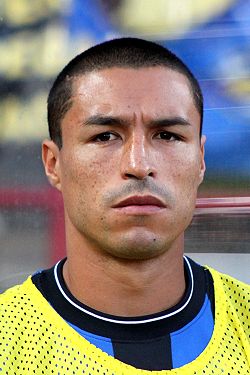
Colombia hosted the 2001 Copa América, which faced last-minute cancellations and withdrawals due to security concerns.[55] They opened with wins over Venezuela (2–0), Ecuador (1–0), and Chile (2–0), then eliminated Peru and Honduras in the quarter-finals and semi-finals respectively, and defeated Mexico 1–0 in the final with a goal from captain Iván Córdoba. The team did not concede a single goal throughout the tournament and earned the fair play award; goalkeeper Óscar Córdoba was named best goalkeeper while Víctor Aristizábal was the top scorer with six goals in six games.[56][57][58][59]
Colombia failed to qualify for the 2002 FIFA World Cup, finishing sixth in the CONMEBOL qualifiers.[60] At the 2003 FIFA Confederations Cup, Colombia lost 1–0 to hosts France, then beat New Zealand and Japan to reach the semi-finals, losing 1–0 to Cameroon and finishing fourth against Turkey. In the 2004 Copa América, Colombia lost to Argentina in the semi-finals, finishing fourth. At the 2005 CONCACAF Gold Cup, they beat Mexico in the quarter-finals but lost to Panama in the semi-finals.[61][62]
Colombia narrowly missed the 2006 FIFA World Cup by one point. At the 2007 Copa América, they finished third in their group with one win, including a 5–0 loss to Paraguay.[63] The decade ended with a troubled 2010 World Cup qualifying campaign; constant formation changes and managerial instability — including the replacement of manager Jorge Luis Pinto by Eduardo Lara after a 4–0 loss to Chile in September 2008 — contributed to Colombia failing to qualify.[64][65]
The Pékerman era: revival and a new Golden Generation (2011–2018)
In the 2011 Copa América, Colombia topped their group but were eliminated 2–0 by Peru in the quarter-finals. The team ended the year ranked 36th in the FIFA World Ranking, up from 54th earlier in the year.[66]
After hiring José Pékerman in January 2012,[67] Colombia achieved a second-place finish in the CONMEBOL qualifiers with 30 points, qualifying for the 2014 FIFA World Cup for the first time since 1998. The team conceded only 12 goals, the second-best defensive record in the region behind Argentina.[68]

Without injured Radamel Falcao, Colombia opened the 2014 World Cup with a 3–0 win over Greece, followed by a 2–1 victory over Ivory Coast to top Group C. They defeated Uruguay 2–0 in the round of 16, reaching the quarter-finals for the first time, before losing 2–1 to hosts Brazil. James Rodríguez won the Golden Boot with six goals and later the Puskás Award for his strike against Uruguay.[69][70]
At the 2015 Copa América, Colombia won only against Brazil in the group stage but still progressed before being eliminated in the quarter-finals by Argentina on penalties. In the 2016 Copa América Centenario, they beat the United States 2–0 and Paraguay 2–1 to reach the quarter-finals, lost to Costa Rica, then advanced to the semi-finals after defeating Peru on penalties, eventually finishing third by beating hosts the United States.[71] Colombia finished fourth in CONMEBOL to qualify for the 2018 FIFA World Cup. They lost 2–1 to Japan, then beat Poland 3–0 and Senegal 1–0 to top Group H. In the round of 16, Colombia drew 1–1 with England and were eliminated 4–3 on penalties.[72]
2022 World Cup cycle and the Néstor Lorenzo era (2019–present)
Following the federation's choice not to renew Pékerman's contract, former Iran manager Carlos Queiroz was hired to coach the national team. Starting their 2019 Copa América campaign, Colombia defeated Argentina 2–0, marking their first victory over La Albiceleste since 2007. They then beat Qatar 1–0 and Paraguay 1–0 to finish the group stage with nine points, four goals scored and none conceded, becoming the only team since the 2001 edition to advance from the group stage with a 100% record. Despite this, Colombia were eliminated by Chile in a penalty shootout in the quarter-finals.[73][74][75]
Colombia opened the 2022 World Cup qualifiers with victories over Venezuela and Chile. However, following the resumption of matches after the COVID-19 pandemic, the team's form deteriorated, culminating in their heaviest home defeat in 82 years against Uruguay and a 6–1 loss to Ecuador. The downturn ended Queiroz's tenure in December 2020, and on 14 January 2021 the Colombian Football Federation announced the return of Reinaldo Rueda as head coach.[76][77]

In the 2021 Copa América, Colombia won their opening match against Ecuador, then drew 0–0 with Venezuela before losing 2–1 to Peru.[78][79] Despite losing to Brazil in the group stage, they progressed to the quarter-finals and then to the semi-finals after defeating Uruguay on penalties following a 0–0 draw.[80] In the semi-finals, Colombia drew 1–1 with Argentina before losing on penalties, then defeated Peru 3–2 in the third-place match, with Luis Díaz scoring twice to finish as joint top scorer alongside Lionel Messi.[81][82]
After the Copa América, Colombia resumed World Cup qualification. The team went seven matches without scoring, but defeated Venezuela 1–0 in their final match. Results elsewhere left Colombia in sixth place, missing out on the World Cup, and Rueda left shortly after.[83] On 2 June 2022, the Colombian Football Federation appointed Néstor Lorenzo as head coach for a four-year term.[84]
On 28 February 2023, the federation launched "Futbol con Futuro" (Football with a Future), a project supported by FIFA covering 2022–2025, aiming to reinforce all national teams' structures and achieve success on the pitch.[85] Under Lorenzo, Colombia compiled a 28-match unbeaten run leading up to the 2024 Copa América final, which they lost to Argentina in extra time on 14 July 2024. This run included victories over Germany, Brazil, and Spain.[86] In September 2025, Colombia qualified for the 2026 FIFA World Cup, their seventh World Cup appearance, after finishing third in CONMEBOL qualifying.[87]
Rivalries
Venezuela
Colombia's main regional football rival has long been neighbouring Venezuela. Although Colombia has historically dominated head-to-head meetings—with more wins, goals and overall victories—the rivalry has seen notable moments that reflect the improving quality of Venezuelan football since the late 1990s, when the sport began to overtake baseball in popularity in Venezuela.[88][89] One of the most significant upsets occurred in the 2006 World Cup qualifiers, when Venezuela defeated Colombia 1–0 in Barranquilla, a result widely regarded as a watershed moment for the Vinotinto.[90]
The rivalry remained relevant through the next decade. In the 2014 World Cup qualifiers, Colombia and Venezuela played out a 1–1 draw in Barranquilla, with Fredy Guarín scoring for Colombia before Frank Feltscher equalized late for Venezuela. The result was another reminder that, even when Colombia remained the stronger side overall, meetings between the two neighbours could still be tense and unpredictable.[91][92]
The rivalry has remained competitive in more recent qualifying campaigns as well. Colombia opened 2026 World Cup qualifying with a 1–0 win over Venezuela in Barranquilla, before later producing a 6–3 victory in Maturín that ended Venezuela's hopes of reaching the intercontinental play-off and underlined the growing intensity of the fixture. The heavy defeat in September 2025 was especially painful for Venezuela because it came in the final round, with their qualification hopes still alive before the match began.[93][94][95][96]
Argentina

The Colombian and Argentinian national teams first played against each other on 7 February 1945 during the South American Championship in Chile.[97] Argentina leads the overall head-to-head record, but Colombia has recorded a number of high-profile victories that have shaped the fixture's modern reputation.[98][99]
The rivalry's defining result came on 5 September 1993, when Colombia beat Argentina 5–0 in Buenos Aires during 1994 World Cup qualifying. Colombia also defeated Argentina 3–0 in the group stage of the 1999 Copa América, a match remembered for Martín Palermo missing three penalties.[100][101]
At the 2021 Copa América, the teams met in the semi-finals in Brasília. After a 1–1 draw, Argentina won the shootout 3–2, and Lionel Messi was caught on camera telling Yerry Mina to "dance now" after the Colombia defender missed his penalty, turning the moment into one of the tournament's most replayed flashpoints.[102][103][104]
The rivalry took on a broader cultural edge at the 2024 Copa América final in Miami. Ryan Castro's tournament song, "El Ritmo Que Nos Une", had become closely associated with Colombia throughout the competition; after Argentina's 1–0 extra-time win, Argentine players were later seen dancing and singing to the track in their celebrations.[105][106][107][108][109]
The next meeting, a 1–1 draw in Buenos Aires during 2026 World Cup qualifying, continued that pattern of high tension. Colombia led through Luis Díaz before Argentina equalized late, and the match included a heated sideline exchange between Lionel Messi and James Rodríguez that revived talk of the teams' rivalry after the Copa América final.[110][111][112]
Home stadium

Colombia play their qualifying matches and friendlies at the Estadio Metropolitano Roberto Meléndez in Barranquilla, which is the home stadium of the local football team Atlético Junior. The stadium is named after former Colombia national team player Roberto Meléndez, who is widely considered to be Colombia's best player during Colombia's amateur era in the 1930s and 1940s. The stadium has been used for all of Colombia's successful World Cup qualifying campaigns since 1990.
The Estadio Nemesio Camacho El Campín in the capital city of Bogotá acts as the national team's alternative stadium. The stadium is the playing ground of local clubs Santa Fe and Millonarios, and hosted Colombia's 2001 Copa América final win against Mexico.
Team image

Traditionally, Colombia's home colours are yellow shirts with a navy trim and navy or white shorts and socks, with their away colours being normally navy shirts. They wore their first ever red kit at the 2014 FIFA World Cup. Colombia used red as their home colours in the 20th century, although in the Copa América Centenario the team played in an all-white kit for the first time in their history, before reverting to their iconic yellow and navy kits thereafter.
Kit sponsorship
| Kit supplier | Period |
|---|---|
 Adidas Adidas |
1980–1987 |
| Puma |
1987 |
| Adidas |
1988–1990 |
 Kelme Kelme |
1991 |
| Comba |
1992 |
 Umbro Umbro |
1992–1998 |
| Reebok |
1998–2002 |
 Lotto Lotto |
2002–2010 |
| Adidas |
2011–present |
Results and fixtures
The following is a list of match results in the last 12 months, as well as any future matches that have been scheduled.
Win Draw Loss Fixture
2025
| 4 September 2026 FIFA World Cup qualification | Colombia |
3–0 |  Bolivia Bolivia |
Barranquilla, Colombia |
| 18:30 UTC−5 |
|
Report | Stadium: Estadio Metropolitano Roberto Meléndez Referee: Darío Herrera (Argentina) |
| 9 September 2026 FIFA World Cup qualification | Venezuela  |
3–6 | Colombia |
Maturín, Venezuela |
| 19:30 UTC−4 |
|
Report |
|
Stadium: Estadio Monumental Referee: Maximiliano Ramírez (Argentina) |
| 11 October Friendly | Mexico  |
0–4 | Colombia |
Arlington, United States |
| 20:00 UTC−5 | Report |
|
Stadium: AT&T Stadium Attendance: 72,438 Referee: Ismail Elfath (United States) |
| 14 October Friendly | Canada  |
0–0 | Colombia |
Harrison, United States |
| 20:30 UTC−4 | Report | Stadium: Sports Illustrated Stadium Referee: Guido Gonzales Jr. (United States) |
| 15 November Friendly | Colombia |
2–1 |  New Zealand New Zealand |
Fort Lauderdale, United States |
| 19:00 UTC−5 |
|
Report |
|
Stadium: Chase Stadium Referee: Cristian Condori (Bolivia) |
| 18 November Friendly | Colombia |
3–0 |  Australia Australia |
New York City, United States |
| 20:30 UTC−4 |
|
Report | Stadium: Citi Field Referee: Tori Penso (United States) |
2026
| 26 March Friendly | Colombia |
1–2 |  Croatia Croatia |
Orlando, United States |
| 19:30 UTC−4 |
|
Report |
|
Stadium: Camping World Stadium Attendance: 50,000 Referee: Rubiel Vazquez (United States) |
| 29 March Friendly | Colombia |
1–3 |  France France |
Landover, United States |
| 15:00 UTC−4 |
|
Report |
|
Stadium: Northwest Stadium Referee: Victor Rivas (United States) |
| 1 June Friendly | Colombia |
3–1 | Costa Rica |
Bogotá, Colombia |
| 18:00 UTC−5 |
|
Report | Soto  33' 33' |
Stadium: Estadio El Campín Attendance: 11,806 Referee: Guillermo Guerrero (Ecuador) |
| 7 June Friendly | Colombia |
2–0 |  Jordan Jordan |
San Diego, United States |
| 16:00 UTC−7 |
|
Report | Stadium: Snapdragon Stadium Attendance: 28,831 Referee: Jesús López Valle (Mexico) |
| 17 June 2026 FIFA World Cup GS | Uzbekistan  |
1–3 | Colombia |
Mexico City, Mexico |
| 20:00 UTC−6 |
|
Report |
|
Stadium: Estadio Azteca Referee: Anthony Taylor (England) |
| 23 June 2026 FIFA World Cup GS | Colombia |
v |  DR Congo DR Congo |
Zapopan, Mexico |
| 20:00 UTC−6 | Report | Stadium: Estadio Akron Referee: Maurizio Mariani (Italy) |
| 27 June 2026 FIFA World Cup GS | Colombia |
v |  Portugal Portugal |
Miami Gardens, United States |
| 19:30 UTC−4 | Report | Stadium: Hard Rock Stadium |
Coaching staff

| Position | Name |
|---|---|
| Head coach |  Néstor Lorenzo Néstor Lorenzo |
| Assistant coaches | Fernando Alloco Luis Amaranto Perea |
| Goalkeeping coach | Alejandro Otamendi |
| Fitness coaches | Leandro Jorge Leandro Clocchiatti |
| Physicians | Gustavo Pineda Mauricio Serrato |
| Physiotherapist | Salomón Vizcarra |
| Match analyst | Francis García Talavera |
| Media consultant | Pablo Vásquez Peñaranda |
Players
Current squad
The following 26 players were called up to the 2026 FIFA World Cup, and for the pre-tournament friendly matches against Costa Rica and Jordan on 29 May and 7 June 2026, respectively.
Caps and goals updated as of 17 June 2026, after the match against Uzbekistan.
| No. | Pos. | Player | Date of birth (age) | Caps | Goals | Club |
|---|---|---|---|---|---|---|
| 1 | GK | David Ospina | 31 August 1988 | 130 | 0 | Atlético Nacional |
| 12 | GK | Camilo Vargas | 9 March 1989 | 43 | 0 | Atlas |
| 24 | GK | Álvaro Montero | 29 March 1995 | 12 | 0 | Vélez Sarsfield |
|
|
||||||
| 2 | DF | Daniel Muñoz | 26 May 1996 | 47 | 4 |  Crystal Palace Crystal Palace |
| 3 | DF | Jhon Lucumí | 26 June 1998 | 38 | 1 | Bologna |
| 4 | DF | Santiago Arias | 13 January 1992 | 68 | 0 | Independiente |
| 13 | DF | Yerry Mina | 23 September 1994 | 54 | 8 | Cagliari |
| 17 | DF | Johan Mojica | 21 August 1992 | 46 | 1 | Mallorca |
| 18 | DF | Willer Ditta | 23 January 1997 | 5 | 0 | Cruz Azul |
| 22 | DF | Deiver Machado | 2 September 1993 | 15 | 0 | Nantes |
| 23 | DF | Davinson Sánchez | 12 June 1996 | 80 | 4 |  Galatasaray Galatasaray |
|
|
||||||
| 5 | MF | Kevin Castaño | 29 September 2000 | 26 | 0 | River Plate |
| 6 | MF | Richard Ríos | 2 June 2000 | 33 | 2 | Benfica |
| 8 | MF | Jorge Carrascal | 25 May 1998 | 24 | 2 |  Flamengo Flamengo |
| 10 | MF | James Rodríguez (captain) | 12 July 1991 | 127 | 31 |  Minnesota United Minnesota United |
| 11 | MF | Jhon Arias | 21 September 1997 | 39 | 6 | Palmeiras |
| 14 | MF | Gustavo Puerta | 26 July 2003 | 7 | 1 | Racing Santander |
| 15 | MF | Juan Portilla | 12 September 1998 | 10 | 0 | Athletico Paranaense |
| 16 | MF | Jefferson Lerma | 25 October 1994 | 66 | 5 | Crystal Palace |
| 20 | MF | Juan Fernando Quintero | 18 January 1993 | 49 | 6 | River Plate |
| 21 | MF | Jaminton Campaz | 24 May 2000 | 11 | 2 | Rosario Central |
|
|
||||||
| 7 | FW | Luis Díaz | 13 January 1997 | 75 | 23 | Bayern Munich |
| 9 | FW | Jhon Córdoba | 11 May 1993 | 21 | 6 |  Krasnodar Krasnodar |
| 19 | FW | Cucho Hernández | 20 April 1999 | 10 | 2 | Betis |
| 25 | FW | Luis Suárez | 2 December 1997 | 13 | 5 | Sporting CP |
| 26 | FW | Andrés Gómez | 12 September 2002 | 9 | 2 | Vasco da Gama |
Recent call-ups
The following players have also been called up in the last twelve months.
| Pos. | Player | Date of birth (age) | Caps | Goals | Club | Latest call-up |
|---|---|---|---|---|---|---|
| GK | Kevin Mier | 18 May 2000 | 3 | 0 | Cruz Azul |
2026 FIFA World Cup PRE |
| GK | Andrés Mosquera Marmolejo | 10 September 1991 | 1 | 0 | Independiente Santa Fe |
2026 FIFA World Cup PRE |
| GK | Aldair Quintana | 11 July 1994 | 0 | 0 |  Independiente del Valle Independiente del Valle |
2026 FIFA World Cup PRE |
|
|
||||||
| DF | Carlos Cuesta | 9 March 1999 | 24 | 0 | Vasco da Gama |
2026 FIFA World Cup PRE |
| DF | Cristian Borja | 18 February 1993 | 8 | 0 | América |
2026 FIFA World Cup PRE |
| DF | Yerson Mosquera | 2 May 2001 | 4 | 1 | Wolverhampton Wanderers |
2026 FIFA World Cup PRE |
| DF | Álvaro Angulo | 6 March 1998 | 4 | 0 | UNAM |
2026 FIFA World Cup PRE |
| DF | Juan Cabal | 8 January 2001 | 3 | 0 | Juventus |
2026 FIFA World Cup PRE |
| DF | Andrés Román | 5 October 1995 | 3 | 0 | Atlético Nacional |
2026 FIFA World Cup PRE |
| DF | Junior Hernández | 5 April 1999 | 0 | 0 | Deportes Tolima |
2026 FIFA World Cup PRE |
| DF | Édier Ocampo | 10 March 2003 | 0 | 0 | Vancouver Whitecaps |
2026 FIFA World Cup PRE |
| DF | Jhohan Romaña | 13 September 1998 | 0 | 0 | San Lorenzo |
2026 FIFA World Cup PRE |
|
|
||||||
| MF | Juan Cuadrado | 26 May 1988 | 116 | 11 | Pisa |
2026 FIFA World Cup PRE |
| MF | Wilmar Barrios | 16 October 1993 | 55 | 1 | Zenit Saint Petersburg |
2026 FIFA World Cup PRE |
| MF | Yáser Asprilla | 19 November 2003 | 11 | 2 | Galatasaray |
2026 FIFA World Cup PRE |
| MF | Sebastián Gómez | 3 June 1996 | 2 | 0 | Coritiba |
2026 FIFA World Cup PRE |
| MF | Jordan Barrera | 11 April 2006 | 0 | 0 | Botafogo |
2026 FIFA World Cup PRE |
| MF | Nelson Deossa | 6 February 2000 | 0 | 0 | Betis |
2026 FIFA World Cup PRE |
| MF | Juan Manuel Rengifo | 2 April 2005 | 0 | 0 | Atlético Nacional |
2026 FIFA World Cup PRE |
| MF | Johan Rojas | 20 September 2002 | 0 | 0 | Vasco da Gama |
2026 FIFA World Cup PRE |
| MF | Jhon Solís | 3 October 2004 | 0 | 0 | Birmingham City |
2026 FIFA World Cup PRE |
| MF | Kevin Serna | 17 December 1997 | 2 | 0 | Fluminense |
v. Canada, 14 October 2025 |
| MF | Marino Hinestroza | 8 June 2002 | 2 | 0 | Vasco da Gama |
v. Venezuela, 9 September 2025 |
|
|
||||||
| FW | Rafael Santos Borré | 15 September 1995 | 44 | 6 | Internacional |
2026 FIFA World Cup PRE |
| FW | Jhon Durán | 13 December 2003 | 17 | 3 | Zenit Saint Petersburg |
2026 FIFA World Cup PRE |
| FW | Sebastián Villa | 19 May 1996 | 4 | 0 | Independiente Rivadavia |
2026 FIFA World Cup PRE |
| FW | Johan Carbonero | 20 July 1999 | 2 | 2 | Internacional |
2026 FIFA World Cup PRE |
| FW | Stiven Mendoza | 27 June 1992 | 2 | 0 | Athletico Paranaense |
2026 FIFA World Cup PRE |
| FW | Edwuin Cetré | 1 January 1998 | 0 | 0 | Estudiantes |
2026 FIFA World Cup PRE |
| FW | Néiser Villarreal | 24 April 2005 | 0 | 0 | Cruzeiro |
2026 FIFA World Cup PRE |
| FW | Kevin Viveros | 26 April 2000 | 0 | 0 | Athletico Paranaense |
2026 FIFA World Cup PRE |
| FW | Dayro Moreno | 16 September 1985 | 32 | 3 | Once Caldas |
v. Venezuela, 9 September 2025 |
|
INJ Withdrew due to injury |
||||||
Individual records
- As of 17 June 2026.
- Players in bold are still active with Colombia.
Most capped players

| Rank | Player | Caps | Goals | Career |
|---|---|---|---|---|
| 1 | David Ospina | 130 | 0 | 2007–present |
| 2 | James Rodríguez | 127 | 31 | 2011–present |
| 3 | Juan Cuadrado | 116 | 11 | 2010–2023 |
| 4 | Carlos Valderrama | 111 | 11 | 1985–1998 |
| 5 | Radamel Falcao | 104 | 36 | 2007–2023 |
| 6 | Mario Yepes | 102 | 6 | 1999–2014 |
| 7 | Leonel Álvarez | 101 | 1 | 1985–1997 |
| 8 | Carlos Sánchez | 88 | 0 | 2007–2018 |
| 9 | Freddy Rincón | 84 | 17 | 1990–2001 |
| 10 | Davinson Sánchez | 80 | 4 | 2016–present |
Top goalscorers

| Rank | Player | Goals | Caps | Average | Career |
|---|---|---|---|---|---|
| 1 | Radamel Falcao (list) | 36 | 104 | 0.35 | 2007–2023 |
| 2 | James Rodríguez | 31 | 127 | 0.24 | 2011–present |
| 3 | Arnoldo Iguarán | 25 | 68 | 0.37 | 1979–1993 |
| 4 | Luis Díaz | 23 | 75 | 0.31 | 2018–present |
| 5 | Faustino Asprilla | 20 | 57 | 0.35 | 1993–2001 |
| 6 | Freddy Rincón | 17 | 84 | 0.2 | 1990–2001 |
| 7 | Carlos Bacca | 16 | 52 | 0.31 | 2010–2018 |
| 8 | Teófilo Gutiérrez | 15 | 51 | 0.29 | 2009–2017 |
| Víctor Aristizábal | 15 | 66 | 0.23 | 1993–2003 | |
| 10 | Adolfo Valencia | 14 | 37 | 0.38 | 1992–1998 |
Competitive record
FIFA World Cup
| FIFA World Cup record | Qualification record | ||||||||||||||||
|---|---|---|---|---|---|---|---|---|---|---|---|---|---|---|---|---|---|
| Year | Round | Position | Pld | W | D | L | GF | GA | Squad | Pos | Pld | W | D | L | GF | GA | |
 1930 1930 |
Not a FIFA member | Not a FIFA member | |||||||||||||||
 1934 1934 |
|||||||||||||||||
 1938 1938 |
Withdrew | Withdrew | |||||||||||||||
| 1950 |
Did not enter | Did not enter | |||||||||||||||
 1954 1954 |
|||||||||||||||||
 1958 1958 |
Did not qualify | 3rd | 4 | 0 | 1 | 3 | 3 | 8 | |||||||||
 1962 1962 |
Group stage | 14th | 3 | 0 | 1 | 2 | 5 | 11 | Squad | 1st | 2 | 1 | 1 | 0 | 2 | 1 | |
| 1966 |
Did not qualify | 3rd | 4 | 1 | 0 | 3 | 4 | 10 | |||||||||
| 1970 |
3rd | 6 | 1 | 1 | 4 | 7 | 12 | ||||||||||
| 1974 |
2nd | 4 | 1 | 3 | 0 | 3 | 2 | ||||||||||
| 1978 |
3rd | 4 | 0 | 2 | 2 | 1 | 8 | ||||||||||
| 1982 |
3rd | 4 | 0 | 2 | 2 | 4 | 7 | ||||||||||
| 1986 |
3rd | 8 | 3 | 2 | 3 | 8 | 10 | ||||||||||
| 1990 |
Round of 16 | 14th | 4 | 1 | 1 | 2 | 4 | 4 | Squad | 1st1 | 6 | 3 | 2 | 1 | 6 | 3 | |
| 1994 |
Group stage | 19th | 3 | 1 | 0 | 2 | 4 | 5 | Squad | 1st | 6 | 4 | 2 | 0 | 13 | 2 | |
 1998 1998 |
21st | 3 | 1 | 0 | 2 | 1 | 3 | Squad | 3rd | 16 | 8 | 4 | 4 | 23 | 15 | ||
  2002 2002 |
Did not qualify | 6th | 18 | 7 | 6 | 5 | 20 | 15 | |||||||||
| 2006 |
6th | 18 | 6 | 6 | 6 | 24 | 16 | ||||||||||
 2010 2010 |
7th | 18 | 6 | 5 | 7 | 14 | 18 | ||||||||||
| 2014 |
Quarter-finals | 5th | 5 | 4 | 0 | 1 | 12 | 4 | Squad | 2nd | 16 | 9 | 3 | 4 | 27 | 13 | |
| 2018 |
Round of 16 | 9th | 4 | 2 | 1 | 1 | 6 | 3 | Squad | 4th | 18 | 7 | 6 | 5 | 21 | 19 | |
 2022 2022 |
Did not qualify | 6th | 18 | 5 | 8 | 5 | 20 | 19 | |||||||||
| 2026 |
in progress | 1 | 1 | 0 | 0 | 3 | 1 | Squad | 3rd | 18 | 7 | 7 | 4 | 28 | 18 | ||
 2030 2030 |
To be determined | To be determined | |||||||||||||||
 2034 2034 |
|||||||||||||||||
| Total | Quarter-finals | 7/23 | 23 | 10 | 3 | 10 | 35 | 31 | — | 5th | 188 | 69 | 61 | 58 | 228 | 196 | |
- 1. ^Played Intercontinental playoffs.
Copa América
Champions Runners-up Third place Fourth place
| South American Championship / Copa América record | |||||||||
|---|---|---|---|---|---|---|---|---|---|
| Year | Round | Position | Pld | W | D | L | GF | GA | Squad |
| 1916 |
No national representative | ||||||||
| 1917 |
|||||||||
| 1919 |
|||||||||
| 1920 |
|||||||||
| 1921 |
|||||||||
| 1922 |
|||||||||
| 1923 |
|||||||||
| 1924 |
|||||||||
| 1925 |
Not a CONMEBOL member | ||||||||
| 1926 |
|||||||||
 1927 1927 |
|||||||||
| 1929 |
|||||||||
| 1935 |
|||||||||
| 1937 |
Withdrew | ||||||||
| 1939 |
|||||||||
| 1941 |
|||||||||
| 1942 |
|||||||||
| 1945 |
Fifth place | 5th | 6 | 1 | 1 | 4 | 7 | 25 | Squad |
| 1946 |
Withdrew | ||||||||
| 1947 |
Eighth place | 8th | 7 | 0 | 2 | 5 | 2 | 19 | Squad |
| 1949 |
8th | 7 | 0 | 2 | 5 | 4 | 23 | Squad | |
 1953 1953 |
Withdrew | ||||||||
| 1955 |
|||||||||
| 1956 |
|||||||||
| 1957 |
Fifth place | 5th | 6 | 2 | 0 | 4 | 10 | 25 | Squad |
| 1959 |
Withdrew | ||||||||
| 1959 |
|||||||||
 1963 1963 |
Seventh place | 7th | 6 | 0 | 1 | 5 | 10 | 19 | Squad |
| 1967 |
Did not qualify | ||||||||
| 1975 | Runners-up | 2nd | 9 | 6 | 0 | 3 | 11 | 5 | Squad |
| 1979 | Group stage | 5th | 4 | 2 | 1 | 1 | 5 | 2 | Squad |
| 1983 | 7th | 4 | 1 | 2 | 1 | 5 | 5 | Squad | |
| 1987 |
Third place | 3rd | 4 | 3 | 0 | 1 | 8 | 3 | Squad |
| 1989 |
Group stage | 6th | 4 | 1 | 2 | 1 | 5 | 4 | Squad |
| 1991 |
Fourth place | 4th | 7 | 2 | 2 | 3 | 5 | 6 | Squad |
| 1993 |
Third place | 3rd | 6 | 3 | 2 | 1 | 6 | 4 | Squad |
| 1995 |
3rd | 6 | 3 | 1 | 2 | 7 | 8 | Squad | |
| 1997 |
Quarter-finals | 8th | 4 | 1 | 0 | 3 | 6 | 7 | Squad |
 1999 1999 |
5th | 4 | 3 | 0 | 1 | 8 | 4 | Squad | |
| 2001 |
Champions | 1st | 6 | 6 | 0 | 0 | 11 | 0 | Squad |
| 2004 |
Fourth place | 4th | 6 | 3 | 1 | 2 | 7 | 7 | Squad |
 2007 2007 |
Group stage | 9th | 3 | 1 | 0 | 2 | 3 | 9 | Squad |
| 2011 |
Quarter-finals | 6th | 4 | 2 | 1 | 1 | 3 | 2 | Squad |
| 2015 |
6th | 4 | 1 | 2 | 1 | 1 | 1 | Squad | |
| 2016 |
Third place | 3rd | 6 | 3 | 1 | 2 | 7 | 6 | Squad |
| 2019 |
Quarter-finals | 5th | 4 | 3 | 1 | 0 | 4 | 0 | Squad |
| 2021 |
Third place | 3rd | 7 | 2 | 3 | 2 | 7 | 7 | Squad |
| 2024 |
Runners-up | 2nd | 6 | 4 | 1 | 1 | 12 | 3 | Squad |
| Total | 1 Title | 24/35 | 130 | 53 | 26 | 51 | 154 | 194 | — |
CONCACAF Gold Cup
| CONCACAF Gold Cup record | |||||||||
|---|---|---|---|---|---|---|---|---|---|
| Year | Round | Position | Pld | W | D | L | GF | GA | Squad |
| 2000 |
Runners-up | 2nd | 5 | 2 | 1 | 2 | 5 | 7 | Squad |
| 2003 |
Quarter-finals | 5th | 3 | 1 | 1 | 1 | 2 | 3 | Squad |
| 2005 |
Semi-finals | 4th | 5 | 2 | 0 | 3 | 7 | 7 | Squad |
| Total | Runners-up | 3/3 | 13 | 5 | 2 | 6 | 14 | 17 | — |
FIFA Confederations Cup
| FIFA Confederations Cup record | |||||||||
|---|---|---|---|---|---|---|---|---|---|
| Year | Round | Position | Pld | W | D | L | GF | GA | Squad |
| 1992 |
Did not qualify | ||||||||
| 1995 |
|||||||||
| 1997 |
|||||||||
| 1999 |
|||||||||
| 2001 |
|||||||||
| 2003 |
Fourth place | 4th | 5 | 2 | 0 | 3 | 5 | 5 | Squad |
| 2005 |
Did not qualify | ||||||||
| 2009 |
|||||||||
| 2013 |
|||||||||
| 2017 |
|||||||||
| Total | Fourth place | 1/10 | 5 | 2 | 0 | 3 | 5 | 5 | — |
Head-to-head record
Below is a result summary of all matches Colombia have played against FIFA recognized teams.[113][114]
- As of 17 June 2026
Positive Record Neutral Record Negative Record
| Opponents | Pld | W | D | L | GF | GA | GD | Win % |
|---|---|---|---|---|---|---|---|---|
 Algeria Algeria |
1 | 0 | 0 | 1 | 0 | 3 | −3 | 0% |
| Argentina |
43 | 10 | 12 | 21 | 42 | 74 | −32 | 23.26% |
| Australia |
5 | 3 | 2 | 0 | 7 | 2 | +5 | 60% |
| Bahrain |
1 | 1 | 0 | 0 | 6 | 0 | +6 | 100% |
 Belgium Belgium |
2 | 1 | 0 | 1 | 2 | 2 | 0 | 50% |
| Bolivia |
34 | 17 | 10 | 7 | 54 | 31 | +23 | 50% |
| Brazil |
38 | 4 | 12 | 22 | 22 | 71 | −49 | 10.53% |
 Cameroon Cameroon |
4 | 2 | 0 | 2 | 8 | 3 | +5 | 50% |
| Canada |
4 | 2 | 1 | 1 | 4 | 2 | +2 | 50% |
| Chile |
44 | 12 | 17 | 15 | 59 | 70 | −11 | 27.27% |
 China China |
2 | 1 | 0 | 1 | 5 | 2 | +3 | 50% |
| Costa Rica |
16 | 13 | 0 | 3 | 40 | 17 | +23 | 80% |
| Croatia |
1 | 0 | 0 | 1 | 1 | 2 | −1 | 0% |
 Curaçao[a] Curaçao[a] |
1 | 1 | 0 | 0 | 4 | 2 | +2 | 100% |
 East Germany East Germany |
1 | 0 | 0 | 1 | 0 | 2 | −2 | 0% |
| Ecuador |
50 | 23 | 13 | 14 | 54 | 45 | +9 | 46% |
 Egypt Egypt |
2 | 0 | 2 | 0 | 1 | 1 | 0 | 0% |
 El Salvador El Salvador |
7 | 5 | 1 | 1 | 16 | 7 | +9 | 71.43% |
| England |
6 | 0 | 3 | 3 | 4 | 11 | −7 | 0% |
 Finland Finland |
1 | 1 | 0 | 0 | 3 | 1 | +2 | 100% |
| France |
5 | 1 | 0 | 4 | 6 | 10 | −4 | 20% |
| Germany[b] |
5 | 1 | 2 | 2 | 7 | 10 | −3 | 20% |
 Greece Greece |
2 | 2 | 0 | 0 | 5 | 0 | +5 | 100% |
 Guatemala Guatemala |
5 | 3 | 2 | 0 | 14 | 6 | +8 | 60% |
 Haiti Haiti |
5 | 4 | 0 | 1 | 12 | 4 | +8 | 80% |
 Honduras Honduras |
12 | 5 | 2 | 5 | 13 | 12 | +1 | 41.67% |
 Hungary Hungary |
1 | 0 | 0 | 1 | 1 | 3 | −2 | 0% |
 Iraq Iraq |
1 | 1 | 0 | 0 | 1 | 0 | +1 | 100% |
 Israel Israel |
2 | 1 | 1 | 0 | 1 | 0 | +1 | 50% |
 Ivory Coast Ivory Coast |
1 | 1 | 0 | 0 | 2 | 1 | +1 | 100% |
 Jamaica Jamaica |
5 | 4 | 0 | 1 | 7 | 1 | +6 | 80% |
| Japan |
6 | 4 | 1 | 1 | 9 | 4 | +5 | 66.67% |
| Jordan |
2 | 2 | 0 | 0 | 5 | 0 | +5 | 100% |
 Kuwait Kuwait |
1 | 1 | 0 | 0 | 3 | 1 | +2 | 100% |
 Liberia Liberia |
1 | 1 | 0 | 0 | 2 | 1 | +1 | 100% |
| Mexico |
29 | 10 | 9 | 10 | 31 | 29 | +2 | 34.48% |
 Montenegro Montenegro |
1 | 1 | 0 | 0 | 1 | 0 | +1 | 100% |
| Morocco |
1 | 1 | 0 | 0 | 2 | 0 | +2 | 100% |
 Netherlands Netherlands |
1 | 0 | 1 | 0 | 0 | 0 | 0 | 0% |
| New Zealand |
2 | 2 | 0 | 0 | 5 | 2 | +3 | 100% |
 Nigeria Nigeria |
4 | 3 | 1 | 0 | 4 | 1 | +3 | 75% |
 Northern Ireland Northern Ireland |
1 | 1 | 0 | 0 | 2 | 0 | +2 | 100% |
 Norway Norway |
1 | 0 | 1 | 0 | 0 | 0 | 0 | 0% |
 Panama Panama |
7 | 5 | 0 | 2 | 20 | 7 | +13 | 71.43% |
 Paraguay Paraguay |
51 | 23 | 10 | 18 | 61 | 55 | +6 | 45.1% |
| Peru |
62 | 21 | 24 | 17 | 72 | 66 | +6 | 33.87% |
 Poland Poland |
8 | 5 | 1 | 2 | 12 | 9 | +3 | 62.5% |
 Puerto Rico Puerto Rico |
1 | 1 | 0 | 0 | 4 | 1 | +3 | 100% |
| Qatar |
1 | 1 | 0 | 0 | 1 | 0 | +1 | 100% |
 Republic of Ireland Republic of Ireland |
1 | 0 | 0 | 1 | 0 | 1 | −1 | 0% |
 Romania Romania |
4 | 1 | 1 | 2 | 4 | 6 | −2 | 25% |
| Russia[c] |
3 | 0 | 2 | 1 | 5 | 7 | −2 | 0% |
| Saudi Arabia |
3 | 2 | 1 | 0 | 3 | 1 | +2 | 66.67% |
 Scotland Scotland |
3 | 1 | 2 | 0 | 3 | 2 | +1 | 33.33% |
 Senegal Senegal |
2 | 1 | 1 | 0 | 3 | 2 | +1 | 50% |
 Serbia[d] Serbia[d] |
5 | 1 | 1 | 3 | 1 | 7 | −6 | 20% |
 Slovakia Slovakia |
3 | 2 | 1 | 0 | 2 | 0 | +2 | 66.67% |
 Slovenia Slovenia |
1 | 1 | 0 | 0 | 1 | 0 | +1 | 100% |
| South Africa |
1 | 0 | 0 | 1 | 1 | 2 | −1 | 0% |
 South Korea South Korea |
8 | 1 | 3 | 4 | 9 | 14 | −5 | 12.50% |
| Spain |
4 | 1 | 2 | 1 | 4 | 4 | 0 | 25% |
| Sweden |
2 | 0 | 2 | 0 | 2 | 2 | 0 | 0% |
| Switzerland |
4 | 2 | 1 | 1 | 9 | 6 | +3 | 50% |
 Trinidad and Tobago Trinidad and Tobago |
3 | 2 | 0 | 1 | 8 | 4 | +4 | 66.67% |
 Tunisia Tunisia |
2 | 1 | 1 | 0 | 2 | 1 | +1 | 50% |
| Turkey |
1 | 0 | 0 | 1 | 1 | 2 | −1 | 0% |
 United Arab Emirates United Arab Emirates |
1 | 1 | 0 | 0 | 2 | 0 | +2 | 100% |
| United States |
22 | 14 | 5 | 3 | 33 | 15 | +18 | 63.64% |
| Uruguay |
47 | 13 | 13 | 21 | 52 | 67 | −14 | 27.66% |
| Uzbekistan |
1 | 1 | 0 | 0 | 3 | 1 | 2 | 100% |
| Venezuela |
44 | 22 | 15 | 7 | 64 | 29 | +35 | 50% |
| Total (71) | 652 | 268 | 179 | 205 | 847 | 744 | +103 | 41% |
Honours
Continental
- Copa América
 Champions (1): 2001
 Runners-up (2): 1975, 2024
 Third place (5): 1987, 1993, 1995, 2016, 2021
- CONCACAF Gold Cup
- Runners-up (1): 2000
Regional
- Central American and Caribbean Games
- Gold medal (1): 1946
- Bronze medal (1): 1938
Friendly
- Copa Centenario de Armenia[115] (1): 1989
- Marlboro Cup (1): 1990
Awards
- FIFA Best Mover of the Year (1): 1993
- FIFA World Cup Fair Play Trophy (1): 2014
- Copa America Fair Play Award (1): 2024
Summary
| Competition |  |
 |
 |
Total |
|---|---|---|---|---|
| CONMEBOL Copa América | 1 | 2 | 5 | 8 |
| CONCACAF Gold Cup | 0 | 1 | 0 | 1 |
| Central American and Caribbean Games | 1 | 0 | 1 | 2 |
| Total | 2 | 3 | 6 | 11 |
See also

- Colombia Olympic football team
- Colombia national under-20 football team
- Colombia national under-17 football team
- Colombia national under-15 football team
- Colombia national futsal team
References
- ^ "Barranquilla será la sede de los dos primeros partidos de las eliminatorias, Deportes". Semana.com. 22 August 2011. Archived from the original on 7 January 2019. Retrieved 30 June 2014.
- ^ "The FIFA/Coca-Cola Men's World Ranking". 11 June 2026. Retrieved 11 June 2026.
- ^ a b c
Jaramillo Racines, Rafael (2018). Fútbol y barras bravas: Análisis de un fenómeno urbano (in Spanish) (1st ed.). Siglo del Hombre – Universidad Nacional de Colombia. p. 189. ISBN 978-958-665-507-1.
{{cite book}}:|access-date=requires|url=(help);|archive-url=requires|url=(help) - ^ a b "La historia del estadio Moderno: Pelé, Junior y cuna del FPC". Diario As (in Spanish). 21 March 2022. Retrieved 31 May 2026.
- ^ "International friendlies: Bahrain 0–6 Colombia". bbc.com. BBC. 26 March 2015. Archived from the original on 14 April 2021. Retrieved 28 March 2021.
- ^ Tabeira, Martín (12 August 2009). "Southamerican Championship 1957". RSSSF. Retrieved 17 August 2021.
- ^ Elo rankings change compared to one year ago. "World Football Elo Ratings". eloratings.net. 18 June 2026. Retrieved 18 June 2026.
- ^ Gutierrez, Teofilo (15 July 2015). "Gutierrez: Colombia are one big family". FIFA. Archived from the original on 28 March 2014. Retrieved 30 November 2015.
- ^ "World Cup Team Profile: COLOMBIA". 4 June 2014. Archived from the original on 22 December 2021. Retrieved 30 June 2014 – via YouTube.
- ^ "Colombia closes its best participation in the World Championships". Sietedias.co (in Spanish). Archived from the original on 14 July 2014. Retrieved 13 July 2014.
- ^ a b c Andrés, Juan Pablo (18 July 2013). "Colombia – List of Champions and Runners-Up". Rec.Sport.Soccer Statistics Foundation. RSSSF. Archived from the original on 7 February 2023. Retrieved 15 November 2013.
- ^ "¿En qué ciudad de Colombia se originó el fútbol profesional?". Pulzo (in Spanish). 25 April 2022. Retrieved 31 May 2026.
- ^ "Fútbol profesional en Colombia". Archivo de Bogotá (in Spanish). Retrieved 31 May 2026.
- ^ "Historia del fútbol colombiano". historiadelfutbolcolombiano (in Spanish). Retrieved 31 May 2026.
- ^ Morrison, Neil; Cruickshank, Mark (2 May 2013). "Juegos del Cuarto Centenario de Cali 1937". RSSSF. Archived from the original on 29 September 2022. Retrieved 2 February 2023.
- ^ Acosta, Andrés (13 June 2013). "International Matches of Millonarios de Bogotá" (in Spanish). RSSSF. Archived from the original on 5 February 2023. Retrieved 2 February 2023.
- ^ "Cuando el Junior de Barranquilla fue la Selección Colombia". Gol Caracol (in Spanish). Archived from the original on 23 June 2015. Retrieved 26 November 2013.
- ^ "Southamerican Championship 1945". RSSSF. Archived from the original on 28 April 2015. Retrieved 31 May 2026.
- ^ "Central American and Caribbean Games 1946". RSSSF. Retrieved 31 May 2026.
- ^ a b Carvajal, Tobías (22 July 2006). "Colombia barrió en los Centroamericanos de 1946". Arco Triunfal (in Spanish). Archived from the original on 23 September 2015.
- ^ "El entrenador peruano que le dio el primer título a la Selección Colombia". Las2Orillas (in Spanish). Retrieved 31 May 2026.
- ^ "La Selección – Historia". Colombia.com. Archived from the original on 13 January 2019. Retrieved 1 December 2022.
- ^ "Southamerican Championship 1957". RSSSF.
- ^ "Olympic goal scorer Marcos Coll dies aged 81". FIFA. 5 June 2017.
- ^ "Colombia vs Soviet Union, 3 June 1962, World Cup". EU-Football.info.
- ^ a b "Colombia – World Cup Qualifiers". RSSSF.
- ^ "Copa America 1963 (Bolivia, March 20–31)". RSSSF.
- ^ Worswick, Carl (28 May 2020). "Bobby Moore and the mystery of the missing Bogotá bracelet". The Guardian.
- ^ Weeks, Jim (20 August 2015). "England Captain Bobby Moore and the Bogota Bracelet Scandal". VICE.
- ^ "Copa America 1975 (July 17–October 28)". RSSSF.
- ^ "'The Only Thing That Unites Us' – Origin Story of Colombian Football: Part 1". Football Paradise. 6 June 2018. Archived from the original on 1 December 2022. Retrieved 1 December 2022.
- ^ "World Cup 1982 Qualifications". RSSSF.
- ^ "Copa America 1983 (August 10–November 4)". RSSSF.
- ^ "World Cup 1986 Qualifying". RSSSF.
- ^ "Copa America 1987 (Argentina, June 27–July 12)". RSSSF.
- ^ "World Cup 1990 Qualifying". RSSSF.
- ^ Gill, Stephen (2 May 2018). "Colombia's 1990 World Cup". Colombia Reports.
- ^ "When Rincon rescued Colombia (93): 100 great World Cup moments". FIFA. Archived from the original on 16 January 2023. Retrieved 11 September 2023.
- ^ "Freddy Rincón y el Colombia vs. Alemania en Italia 1990: "Yo creo que ese día nos graduamos"". El Espectador. 31 May 2020. Archived from the original on 16 January 2023. Retrieved 16 January 2023.
- ^ "When Rene met Roger". FIFA. 10 August 2022. Archived from the original on 15 January 2023. Retrieved 11 September 2023.
- ^ "Higuita using 1990 World Cup blunder to fight coronavirus". ESPN. 22 March 2020. Archived from the original on 15 January 2023. Retrieved 15 January 2023.
- ^ "Colombia's 1990 World Cup". Colombia Reports. 2 May 2018. Archived from the original on 15 January 2023. Retrieved 15 January 2023.
- ^ "Copa America 1993 (Ecuador, June 15–27)". RSSSF.
- ^ "Argentina's night of shame: when Colombia went to a feisty Buenos Aires and won 5–0". These Football Times. 23 January 2019. Archived from the original on 3 April 2022. Retrieved 3 April 2022.
- ^ "Cómo la campaña de Colombia en el Mundial de 1994 provocó el asesinato de Andrés Escobar". VICE. 21 July 2017. Archived from the original on 16 January 2023. Retrieved 16 January 2023.
- ^ Kelly, Cathal (2 July 2014). "Decades after Andres Escobar killing, Colombian soccer finally recovers". The Globe and Mail. Archived from the original on 15 January 2023. Retrieved 15 January 2023.
- ^ Mercer, Pamela (4 July 1994). "WORLD CUP '94; Outrage and Tears at Escobar Funeral". The New York Times. Archived from the original on 17 January 2023. Retrieved 17 January 2023.
- ^ "Conoce cuáles fueron las tres máximas victorias de la Selección Colombia en la historia de Copa América". FCF. Archived from the original on 16 January 2023. Retrieved 16 January 2023.
- ^ "Copa America 1995 (Uruguay, July 5–23)". RSSSF.
- ^ "Copa America 1997 (Bolivia, June 11–29)". RSSSF.
- ^ "Colombia, ¡hora de cambiar la historia! Así le fue contra Inglaterra". El Tiempo. 28 June 2018. Archived from the original on 16 January 2023. Retrieved 16 January 2023.
- ^ "World Cup 2014 countdown: David Beckham scores his first England goal". The Independent. 16 April 2014. Archived from the original on 16 January 2023. Retrieved 16 January 2023.
- ^ "TBT: Bonilla Goleador de Cuna". Dimayor. 3 June 2021. Archived from the original on 16 January 2023. Retrieved 16 January 2023.
- ^ "CONCACAF Gold Cup 2000". ESPN.
- ^ Scragg, Steven (16 February 2015). "Honduras' Legendary Copa América Odyssey". These Football Times. Archived from the original on 10 July 2015. Retrieved 9 July 2015.
- ^ "Así se hizo la Copa América de 2001 en Colombia". El Tiempo (in Spanish). 5 April 2019. Archived from the original on 23 July 2021. Retrieved 23 July 2021.
- ^ "Colombia celebrate double triumph". BBC News. 30 July 2001. Archived from the original on 16 October 2022. Retrieved 16 October 2022.
- ^ "When Iván Córdoba scored the title-winning goal for Colombia in 2001". Copa América. Retrieved 10 September 2025.
- ^ "Colombia lifts the CONMEBOL Copa América™ trophy for the first time in 2001". copaamerica.com. Retrieved 18 June 2026.
- ^ "The dark years of the Colombian National Team 2002–2010". Bolavip. 28 May 2021. Archived from the original on 14 June 2021. Retrieved 14 June 2021.
- ^ "Consideran vergonzosa participación de Colombia en Copa de Oro". Mediotiempo.com (in Mexican Spanish). 25 July 2005. Archived from the original on 3 April 2022. Retrieved 3 April 2022.
- ^ "Panamá 3–2 Colombia: Los Canaleros son finalistas". Mediotiempo.com (in Mexican Spanish). 22 July 2005. Archived from the original on 3 April 2022. Retrieved 3 April 2022.
- ^ "Soccer-Copa-Santa Cruz hits hat-trick as Paraguay rout Colombia". Reuters. 29 June 2007. Archived from the original on 3 April 2022. Retrieved 3 April 2022.
- ^ "Pinto sacked in Colombia". FIFA.com. 16 September 2008. Archived from the original on 18 September 2008.
- ^ Alsema, Adriaan (11 September 2008). "Chile beats Colombia 4-0 in World Cup qualifier". Colombia Reports. Archived from the original on 21 January 2023. Retrieved 21 January 2023.
- ^ "Monthly Changes Colombia FIFA Ranking 2011". FIFA Ranking. 6 October 2022.
- ^ "Jose Pekerman confirmed as new Colombia coach". Goal.com. 6 January 2012. Archived from the original on 24 May 2022. Retrieved 24 May 2022.
- ^ "Colombia's path to qualification". FIFA. 12 October 2013. Archived from the original on 23 October 2013.
- ^ "World Cup 2014: James Rodriguez wins Golden Boot". BBC Sport. 13 July 2014. Retrieved 10 September 2025.
- ^ "FIFA Puskás Award". Puskás Award. Retrieved 10 September 2025.
- ^ "United States vs. Colombia – Football Match Report". ESPN. 25 June 2016. Archived from the original on 16 October 2022. Retrieved 16 October 2022.
- ^ Taylor, Daniel (3 July 2018). "England knock Colombia out of World Cup in last-16 penalty shootout". The Guardian. Archived from the original on 4 July 2018. Retrieved 4 July 2018.
- ^ "Argentina vs. Colombia – Match Report". ESPN. 15 June 2019. Archived from the original on 17 June 2019. Retrieved 18 June 2019.
- ^ "Colombia 1 Qatar 0: Zapata heads in late winner". Fox Sports Asia. 20 June 2019. Archived from the original on 20 June 2019. Retrieved 20 June 2019.
- ^ "Colombia vs. Chile – Match Report". ESPN. 28 June 2019. Archived from the original on 16 October 2022. Retrieved 16 October 2022.
- ^ "Ecuador 6–1 Colombia: goleada inédita de la Tri sobre los cafeteros, que la coloca segunda en el premundial". El Universo (in Spanish). 17 November 2020. Archived from the original on 29 September 2022. Retrieved 25 September 2022.
- ^ "Es oficial: Carlos Queiroz no dirigirá más a la Selección Colombia". W Radio (in Spanish). 1 December 2020. Archived from the original on 16 July 2023. Retrieved 18 September 2021.
- ^ "Colombia vs. Ecuador – Football Match Report – June 13, 2021". ESPN. Archived from the original on 18 September 2021. Retrieved 18 September 2021.
- ^ "Colombia vs. Venezuela – Football Match Report – June 17, 2021". ESPN. Archived from the original on 18 September 2021. Retrieved 18 September 2021.
- ^ "Uruguay vs. Colombia – Football Match Report – July 3, 2021". ESPN. Archived from the original on 18 September 2021. Retrieved 18 September 2021.
- ^ "Argentina vs. Colombia – Football Match Report – July 6, 2021". ESPN. Archived from the original on 22 October 2021. Retrieved 18 September 2021.
- ^ "Colombia vs. Peru – Football Match Report". ESPN. 9 July 2021. Archived from the original on 18 September 2021. Retrieved 18 September 2021.
- ^ "Reinaldo Rueda ya no sería el técnico de la selección de Colombia". El Espectador (in Spanish). 30 March 2022. Archived from the original on 16 October 2022. Retrieved 16 October 2022.
- ^ "Colombia hire Lorenzo as national team coach". ESPN. 3 June 2022. Archived from the original on 23 June 2023. Retrieved 23 June 2023.
- ^ "Football with a Future: Colombia launches ambitious project with FIFA support". FIFA. Archived from the original on 30 June 2023. Retrieved 30 June 2023.
- ^ "Daniel Munoz scores stunning winner as Colombia stun Spain in London friendly". FotMob. 22 March 2024. Retrieved 25 March 2024.
- ^ "Uruguay, Colombia and Paraguay Qualify for 2026 World Cup". Fox Sports. Retrieved 19 September 2025.
- ^ Levinsky, Sergio (28 June 2019). "Edgardo Broner: "En Venezuela, hoy la Vinotinto es más que el béisbol"". Infobae.
- ^ "Colombia national football team: record v Venezuela". 11v11.
- ^ "La Selección de Colombia debe cuidarse de Venezuela" [The Colombian national team must be wary of Venezuela]. ESPN Deportes (in Spanish). 30 August 2016.
- ^ "La Selección de Colombia debe cuidarse de Venezuela" [The Colombian national team must be wary of Venezuela]. ESPN Deportes (in Spanish). 30 August 2016.
- ^ "Colombia 1-1 Venezuela". ESPN.
- ^ "Colombia 1-0 Venezuela". ESPN. 7 September 2023.
- ^ "Colombia 6-3 Venezuela". ESPN Deportes. 8 September 2025.
- ^ "Colombia goleó 6-3 a Venezuela en Maturín y lo eliminó del Mundial 2026". Infobae. 9 September 2025.
- ^ "Venezuela 3-6 Colombia". ESPN. 10 September 2025.
- ^ "Argentina vs. Colombia head to head record, history, results, past games ahead of Copa America 2024 final | Sporting News". www.sportingnews.com. 14 July 2024. Retrieved 18 June 2026.
- ^ "Argentina face Colombia in quest to make Copa America history". Reuters. 12 July 2024.
- ^ "Argentina vs. Colombia: Head-to-head record and past meetings". Sports Mole. 9 June 2025.
- ^ "Se cumplen 30 años del histórico Argentina 0-5 Colombia". ESPN Deportes (in Spanish). 4 September 2023.
- ^ "The imperfect hat-trick: Martin Palermo's three missed penalties – and so much more – 20 years on". FourFourTwo. 4 July 2019.
- ^ "Argentina 1-1 Colombia". ESPN. 6 July 2021.
- ^ "Copa America: Argentina's Lionel Messi tells Yerry Mina to 'Dance now' following shootout win". ESPN. 7 July 2021.
- ^ "Copa America 2021: Messi to Yerry Mina: Dance now ..." Marca. 7 July 2021.
- ^ "Copa America 2024 final: Argentina vs. Colombia live updates, highlights". Fox Sports. 14 July 2024.
- ^ "Argentina federation responds after players sing racist chants post Copa America". Reuters. 16 July 2024.
- ^ "Euphoria no excuse for racism, Lloris says of Argentina players' chant". Reuters. 19 July 2024.
- ^ "Colombia lost Copa América final but won back a nation's hearts". ESPN. 14 July 2024.
- ^ "Ryan Castro rompió récord de reproducciones en un solo día en Spotify Colombia con 'El Ritmo Que Nos Une'". Infobae (in Spanish). 16 July 2024.
- ^ "Argentina 1-1 Colombia". ESPN. 10 June 2025.
- ^ "Colombia stay unbeaten in World Cup qualifying as Argentina pay penalty". The Guardian. 10 September 2024.
- ^ "Lionel Messi confronts James Rodriguez in tense exchange during Argentina vs Colombia". The Independent. 11 June 2025.
- ^ "Colombia − Estadísticas ante..." worldfootball.net. 12 September 2024.
- ^ "World Football Elo Ratings".
- ^ "Copa Centenario de Armenia 1989". RSSSF. Archived from the original on 13 August 2022. Retrieved 10 February 2022.
External links
- Official website
 (in Spanish)
 - Colombia FIFA profile
- Colombia CONMEBOL profile
- Archive of results 1938– at RSSSF
- International matches of Colombia during the Era Bilardo of 1980–1981 at RSSSF

|
South American Championship and Copa América winners
|
|
|---|---|
|


|
Football in Colombia
|
|
|---|---|
|
|
| National teams |
|
| League competitions |
|
| Domestic cups |
|
| Defunct competitions |
|
|
|
|
National sports teams of Colombia
|
|
|---|---|
|
|
|