| Chief of Staff of the Army | |
|---|---|

Army Staff Identification Badge
|
|

Flag of the chief of staff
|
|

|
|
| Department of the Army Army Staff |
|
| Type | United States Army service chief |
| Abbreviation | CSA |
| Member of | Joint Chiefs of Staff |
| Reports to | Secretary of the Army |
| Residence | Quarters 1, Fort Myer |
| Seat | The Pentagon, Arlington County, Virginia |
| Appointer | The president with Senate advice and consent |
| Term length | 4 years Renewable one time, only during war or national emergency |
| Constituting instrument | 10 U.S.C. § 3033 |
| Precursor | Commanding General of the Army |
| Formation | 15 August 1903 |
| First holder | LTG Samuel B. M. Young |
| Deputy | Vice Chief of Staff of the Army |
| Website | www.army.mil |
The chief of staff of the Army (CSA) is a statutory position in the United States Army held by a general officer. As the highest-ranking officer assigned to serve in the Department of the Army, the chief is the principal military advisor and a deputy to the secretary of the Army. In a separate capacity, the CSA is a member of the Joint Chiefs of Staff (10 U.S.C. § 151) and, thereby, a military advisor to the National Security Council, the secretary of defense, and the president of the United States. The CSA is typically the highest-ranking officer on active duty in the U.S. Army unless the chairman or the vice chairman of the Joint Chiefs of Staff are Army officers.
The chief of staff of the Army is an administrative position based in the Pentagon. While the CSA does not have operational command authority over Army forces proper (which is within the purview of the combatant commanders who report to the secretary of defense), the CSA does exercise supervision of army units and organizations as the designee of the secretary of the Army.
The former chief of staff of the Army is General Randy George, who was sworn in on 21 September 2023, having previously served as acting CSA from 4 August. After he was removed on 2 April 2026, General Christopher LaNeve became the acting chief of staff.[1]
Appointment
The chief of staff of the Army is nominated for appointment by the president, for a four-year term of office,[2] and must be confirmed by the Senate.[2] The chief can be reappointed to serve one additional term, but only during times of war or national emergency declared by Congress.[2] By statute, the chief is a four-star general.[2]
The chief has an official residence, Quarters 1 at Joint Base Myer–Henderson Hall, Virginia.
Responsibilities
The senior leadership of the Department of the Army consists of two civilians—the secretary of the Army (head of the department and subordinate to the secretary of defense) and the under secretary of the Army—and two military officers—the chief of staff of the Army and the vice chief of staff of the Army.
The chief reports directly to the secretary of the Army for army matters and assists in the secretary's external affairs functions, including presenting and enforcing army policies, plans, and projections. The chief also directs the inspector general of the Army to perform inspections and investigations as required. In addition, the chief presides over the Army Staff and represents Army capabilities, requirements, policy, plans, and programs in Joint forums.[3] Under delegation of authority made by the secretary of the Army, the chief designates army personnel and army resources to the commanders of the unified combatant commands.[4] The chief performs all other functions enumerated in 10 U.S.C. § 3033 under the authority, direction, and control of the secretary of the Army, or delegates those duties and responsibilities to other officers in his administration in his name. Like the other service counterparts, the chief has no operational command authority over army forces, dating back to the passage of the Department of Defense Reorganization Act of 1958. The chief is served by a number of deputy chiefs of staff of the Army, such as G-1, Personnel. The chief's base pay is $21,147.30 per month and also received a personal money allowance (monthly amount) of $333.33, a basic allowance for subsistence of $253.38, and a basic allowance for housing from $50.70 to $1,923.30.
History
In the 19th century the American land military used the title of "General-in-Chief" beginning with Gen. James Wilkinson (1757-1825), and later for several decades of commanding Gen. Winfield Scott (1786-1866). Later Lt. Gen. Ulysses S. Grant (1822-1885), given the title after being recalled to come east from the Western Theater of the Civil War in 1864. By 1903, the senior military officer in the army was the commanding general of the United States Army, who reported to the U.S. secretary of war. From 1864 to 1865, Major General Henry Halleck (1815-1872), who had previously been Commanding General earlier in the war, served as "Chief of Staff of the Army" under the newly appointed Commanding General, Lieutenant General Ulysses S. Grant, thus serving in a different office and not as the senior officer in the army. Halleck was centered in the old brick War Department building adjacent west of the White House, along with the War Secretary, whereas Gen. Grant was out in the field.
The first chief of staff moved his headquarters to Fort Myer in northern Virginia, near the national capital of Washington, D.C. in 1908.[clarification needed]
List of chiefs of staff of the Army
The rank listed is the rank when serving in the office.
| No. | Portrait | Name | Term | Branch | Secretaries served under: | Ref. | |||
|---|---|---|---|---|---|---|---|---|---|
| Took office | Left office | Duration | War / Army | Defense | |||||
| 1 | Lieutenant General Samuel B. M. Young (1840–1924) |
15 August 1903 | 8 January 1904 | 146 days | Cavalry | Elihu Root | — | [5] | |
| 2 | Lieutenant General Adna R. Chaffee (1842–1914) |
9 January 1904 | 14 January 1906 | 2 years, 5 days | Cavalry | Elihu Root William Howard Taft |
— | [5] | |
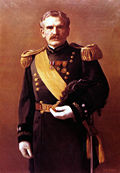
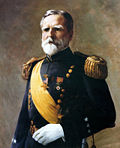
| 3 | Lieutenant General John C. Bates (1842–1919) |
15 January 1906 | 13 April 1906 | 89 days | Infantry | William Howard Taft | — | [5] | |
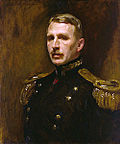
| 4 | Major General J. Franklin Bell (1856–1919) |
14 April 1906 | 21 April 1910 | 4 years, 7 days | Cavalry | William Howard Taft Luke Edward Wright Jacob M. Dickinson |
— | [5] | |
| 5 | Major General Leonard Wood (1860–1927) |
22 April 1910 | 21 April 1914 | 3 years, 364 days | Medical and cavalry | Jacob M. Dickinson Henry L. Stimson Lindley Miller Garrison |
— | [5] | |
| 6 | Major General William W. Wotherspoon (1850–1921) |
22 April 1914 | 16 November 1914 | 208 days | Infantry | Lindley Miller Garrison | — | [5] | |
| 7 | Major General Hugh L. Scott (1853–1934) |
17 November 1914 | 22 September 1917 | 2 years, 309 days | Cavalry | Lindley Miller Garrison Newton D. Baker |
— | [5] | |
| 8 | General Tasker H. Bliss (1853–1930) |
23 September 1917 | 19 May 1918 | 238 days | Field artillery | Newton D. Baker | — | [5] | |
| 9 | General Peyton C. March (1864–1955) |
20 May 1918 | 30 June 1921 | 3 years, 41 days | Field artillery | Newton D. Baker John W. Weeks |
— | [5] | |
| 10 | General of the Armies John J. Pershing (1860–1948) |
1 July 1921 | 13 September 1924 | 3 years, 74 days | Cavalry | John W. Weeks | — | [5] | |
| 11 | Major General John L. Hines (1868–1968) |
14 September 1924 | 20 November 1926 | 2 years, 68 days | Infantry | John W. Weeks Dwight F. Davis |
— | [5] | |
| 12 | General Charles P. Summerall (1867–1955) |
21 November 1926 | 20 November 1930 | 3 years, 364 days | Infantry and artillery | Dwight F. Davis James William Good Patrick J. Hurley |
— | [5] | |
| 13 | General Douglas MacArthur (1880–1964) |
21 November 1930 | 1 October 1935 | 4 years, 315 days | Infantry and engineers | Patrick J. Hurley George Dern |
— | [5] | |
| 14 | General Malin Craig (1875–1945) |
2 October 1935 | 31 August 1939 | 3 years, 333 days | Infantry and cavalry | George Dern Harry Hines Woodring |
— | [5] | |
| 15 | General of the Army George C. Marshall (1880–1959) |
1 September 1939 | 18 November 1945 | 6 years, 78 days | Infantry | Harry Hines Woodring Henry L. Stimson Robert P. Patterson |
— | [5] | |
| 16 | General of the Army Dwight D. Eisenhower (1890–1969) |
19 November 1945 | 6 February 1948 | 2 years, 79 days | Infantry | Robert P. Patterson (of War) Kenneth Claiborne Royall (of War, 1947; of the Army, 1947–1949) |
James Forrestal (from Sep. 1947) |
[5] | |
| 17 | General Omar N. Bradley (1893–1981) |
7 February 1948 | 15 August 1949[a] | 1 year, 189 days | Infantry | Kenneth Claiborne Royall Gordon Gray |
James Forrestal Louis A. Johnson |
[5] | |
| 18 | General J. Lawton Collins (1896–1987) |
16 August 1949[b] | 14 August 1953 | 3 years, 363 days | Infantry | Gordon Gray Frank Pace Robert T. Stevens |
Louis A. Johnson George C. Marshall Robert A. Lovett Charles Erwin Wilson |
[5] | |
| 19 | General Matthew B. Ridgway (1895–1993) |
15 August 1953 | 29 June 1955 | 1 year, 319 days | Infantry | Robert T. Stevens | Charles Erwin Wilson | [5] | |
| 20 | General Maxwell D. Taylor (1901–1987) |
30 June 1955 | 30 June 1959[c] | 4 years, 0 days | Field artillery | Robert T. Stevens Wilber M. Brucker |
Charles Erwin Wilson Neil H. McElroy |
[5] | |
| 21 | General Lyman L. Lemnitzer (1899–1988) |
1 July 1959[b] | 30 September 1960[a] | 1 year, 91 days | Infantry and coast artillery | Wilber M. Brucker | Neil H. McElroy Thomas S. Gates Jr. |
[5] | |
| 22 | General George H. Decker (1902–1980) |
1 October 1960[b] | 30 September 1962 | 1 year, 364 days | Infantry | Wilber M. Brucker Elvis Stahr Jr. Cyrus Vance |
Thomas S. Gates Jr. Robert McNamara |
[5] | |
| 23 | General Earle G. Wheeler (1908–1975) |
1 October 1962 | 2 July 1964[a] | 1 year, 275 days | Infantry and armor | Cyrus Vance Stephen Ailes |
Robert McNamara | [5] | |
| 24 | General Harold K. Johnson (1912–1983) |
3 July 1964 | 2 July 1968 | 3 years, 365 days | Infantry and cavalry | Stephen Ailes Stanley Rogers Resor |
Robert McNamara Clark Clifford |
[5] | |
| 25 | General William C. Westmoreland (1914–2005) |
3 July 1968 | 30 June 1972 | 3 years, 363 days | Field artillery | Stanley Rogers Resor Robert Froehlke |
Clark Clifford Melvin Laird |
[5] | |
| – | General Bruce Palmer Jr. (1913–2000) Acting [d] |
1 July 1972 | 11 October 1972 | 102 days | Infantry and cavalry | Robert Froehlke | Melvin Laird | [5] | |
| 26 | General Creighton W. Abrams Jr. (1914–1974) |
12 October 1972 | 4 September 1974 † | 1 year, 327 days | Armor | Robert Froehlke Bo Callaway |
Melvin Laird Elliot Richardson James R. Schlesinger |
[5] | |
| –[d] | 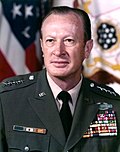 |
General Frederick C. Weyand (1916–2010) |
5 September 1974 | 4 October 1974 | 29 days | Infantry and intelligence | Bo Callaway Martin R. Hoffmann |
James R. Schlesinger Donald Rumsfeld |
[6][7] |
| 27 | 4 October 1974 | 30 September 1976 | 1 year, 362 days | [5] | |||||
| 28 | General Bernard W. Rogers (1921–2008) [e] |
1 October 1976 | 21 June 1979 | 2 years, 263 days | Infantry | Martin R. Hoffmann Clifford Alexander Jr. |
Donald Rumsfeld Harold Brown |
[5] | |
| 29 | General Edward C. Meyer (1928–2020) |
22 June 1979 | 21 June 1983 | 3 years, 364 days | Infantry | Clifford Alexander Jr. John O. Marsh Jr. |
Harold Brown Caspar Weinberger |
[5] | |
| 30 | General John A. Wickham Jr. (1928–2024) |
23 June 1983[b] | 23 June 1987 | 4 years, 0 days | Infantry and cavalry | John O. Marsh Jr. | Caspar Weinberger | [5] | |
| 31 | General Carl E. Vuono (born 1934) |
23 June 1987 | 21 June 1991 | 3 years, 363 days | Field artillery | John O. Marsh Jr. Michael P. W. Stone |
Caspar Weinberger Frank Carlucci Dick Cheney |
[5] | |
| 32 | General Gordon R. Sullivan (1937–2024) |
21 June 1991[b] | 20 June 1995 | 3 years, 364 days | Armor and mechanized infantry | Michael P. W. Stone Togo D. West Jr. |
Dick Cheney Les Aspin William J. Perry |
[5] | |
| 33 | General Dennis J. Reimer (born 1939) |
20 June 1995 | 21 June 1999 | 4 years, 1 day | Artillery and mechanized infantry | Togo D. West Jr. Louis Caldera |
William J. Perry William Cohen |
[5] | |
| 34 | General Eric K. Shinseki (born 1942) [f] |
21 June 1999[b] | 11 June 2003 | 3 years, 355 days | Cavalry | Louis Caldera Thomas E. White |
William Cohen Donald Rumsfeld |
[5] | |
| – | General John M. Keane (born 1943) Acting [d] |
11 June 2003 | 1 August 2003 | 51 days | Infantry | None[g] | Donald Rumsfeld | [8] | |
| 35 | General Peter J. Schoomaker (born 1946) [h] |
1 August 2003 | 10 April 2007 | 3 years, 252 days | Cavalry and Special Forces | Francis J. Harvey Pete Geren |
Donald Rumsfeld Robert Gates |
[5] | |
| 36 | General George W. Casey Jr. (born 1948) |
10 April 2007 | 11 April 2011 | 4 years, 1 day | Armor and mechanized infantry | Pete Geren John M. McHugh |
Robert Gates | [9] | |
| 37 | General Martin E. Dempsey (born 1952) |
11 April 2011 | 7 September 2011[a] | 149 days | Armor and armored cavalry |
John M. McHugh | Robert Gates Leon Panetta |
[10] | |
| 38 | General Raymond T. Odierno (1954–2021) |
7 September 2011 | 14 August 2015 | 3 years, 341 days | Field artillery | John M. McHugh | Leon Panetta Chuck Hagel Ash Carter |
[11] | |
| 39 | General Mark A. Milley (born 1958) |
14 August 2015 | 9 August 2019[a] | 3 years, 360 days | Armor and light infantry | John M. McHugh Eric Fanning Mark Esper Ryan D. McCarthy |
Ash Carter Jim Mattis Mark Esper |
[12] | |
| 40 | General James C. McConville (born 1959) |
9 August 2019[b] | 4 August 2023 | 3 years, 360 days | Aviation and cavalry | Ryan D. McCarthy Christine Wormuth |
Mark Esper Lloyd Austin |
[13] | |
| –[d] |  |
General Randy A. George (born 1964) |
4 August 2023 | 21 September 2023 | 48 days | Infantry | Christine Wormuth Daniel P. Driscoll |
Lloyd Austin Pete Hegseth |
[14] |
| 41 | 21 September 2023 | 2 April 2026 | 2 years, 193 days | [15] | |||||
| –[d] | General Christopher C. LaNeve Acting |
2 April 2026 | Incumbent | 4 days | Infantry | Daniel P. Driscoll | Pete Hegseth | [16] | |












Timeline

See also
- Sergeant Major of the Army
- Army Staff Senior Warrant Officer
- Chief Warrant Officer of the Army
- Vice Chief of Staff of the United States Army
- Deputy Chief of Staff of the United States Army
References
Notes
- ^ a b c d e Appointed as Chairman of the Joint Chiefs of Staff.
- ^ a b c d e f g Served prior as Vice Chief of Staff of the Army.
- ^ Appointed Military Representative of the President from 1959 to 1962; Chairman of the Joint Chiefs of Staff from 1962 to 1964.
- ^ a b c d e In capacity as Vice Chief of Staff of the Army.
- ^ Last World War II veteran to serve as Chief of Staff.
- ^ Last Vietnam War veteran to serve as Chief of Staff.
- ^ Les Brownlee served as acting Secretary of the Army during this period.
- ^ Recalled to active duty to serve as Chief of Staff. Schoomaker previously served as Commander in Chief, United States Special Operations Command from 1997 to 2000.
Citations
- ^ a b
Jennifer Jacobs, Eleanor Watson, James LaPorta (2 April 2026). "Hegseth ousts Army Chief of Staff Gen. Randy George". CBS News. Retrieved 3 April 2026.
{{cite web}}: CS1 maint: multiple names: authors list (link) - ^ a b c d Law.cornell.edu, 10 USC 3033. Chief of Staff
- ^ "General George Casey - Chief of Staff Army". Archived from the original on 11 September 2007. Retrieved 22 September 2007.
- ^ Law.cornell.edu, 10 USC 165. Combatant commands: administration and support
- ^ a b c d e f g h i j k l m n o p q r s t u v w x y z aa ab ac ad ae af ag ah ai aj Bell 2005, p. 186-187.
- ^ "Acting chief of staff held Vietnam posts". Ventura County Star-Free Press. Camarillo, CA. United Press International. 5 September 1974. p. B-7 – via Newspapers.com.
- ^ "Weyand OKd". The Honolulu Advertiser. Honolulu, HI. United Press International. 4 October 1974. p. C-1 – via Newspapers.com.
- ^ "The Surge – Collective Memory Project" (PDF). Southern Methodist University. 18 August 2015. Retrieved 16 January 2024.
- ^
Leopold, J.D. (10 April 2007). "Gen. George W. Casey Jr. Becomes Army Chief of Staff". U.S. Army. Army News Service. Archived from the original on 4 October 2022. Retrieved 4 October 2022.
 This article incorporates text from this source, which is in the public domain.
 - ^
Garamone, Jim (12 April 2011). "Dempsey lays out themes for tenure as Army chief". U.S. Army. American Forces Press Service. Archived from the original on 4 October 2022. Retrieved 4 October 2022. This article incorporates text from this source, which is in the public domain.
- ^
Smith, Derek (9 September 2011). "Familiar face accepts new role: Gen. Odierno becomes Army Chief of Staff". U.S. Army. 362nd Mobile Public Affairs Detachment. Archived from the original on 4 October 2022. Retrieved 4 October 2022. This article incorporates text from this source, which is in the public domain.
- ^
Callahan, Guv (20 August 2015). "The new boss: Army welcomes Milley on JBM-HH and says goodbye to a 'moral giant'". U.S. Army. Joint Base Myer-Henderson Hall Public Affairs. Archived from the original on 3 October 2022. Retrieved 3 October 2022. This article incorporates text from this source, which is in the public domain.
- ^ Dickstein, Corey (9 August 2019). "McConville, Grinston sworn in as Army's top uniformed soldiers". Stars & Stripes. Archived from the original on 3 October 2022. Retrieved 3 October 2022.
- ^
"Webcast: Relinquishment of Responsibility for GEN James McConville / Change of Responsibility SMA Michael Grinston". DVIDS. Retrieved 28 July 2023. This article incorporates text from this source, which is in the public domain.
- ^ Sword, Michael (21 September 2023). "Army Gen. Randy George sworn in as 41st Army Chief of Staff". DVIDS. Alaska: 11th Airborne Division. Retrieved 22 September 2023.
- ^ Jaffe, Greg; Cooper, Helene; Schmitt, Eric (2 April 2026). "Hegseth Fires Army Chief Amid Battle With Its Leaders". The New York Times. Retrieved 2 April 2026.

Sources
- Bell, William Gardner (2005) [1983]. "Appendix B: Chronological List of Senior Officers of the United States Army". Commanding Generals and Chiefs of Staff 1775-2005: Portraits & Biographical Sketches of the United States Army's Senior Officer. United States Army Center of Military History. ISBN 0-16-072376-0. CMH Pub 70-14.
Further reading
- Hewes Jr., James E. From Root to McNamara: Army Organization and Administration, 1900–1963 (1975) .
- Semsch, Philip L. "Elihu Root and the General Staff." Military Affairs (1963): 16–27.
- Skowronek, Stephen. Building a New American State: The Expansion of National Administrative Capacities, 1877–1920 (Cambridge University Press, 1982) pp 212–247.
- Watson, Mark Skinner. Chief of Staff: Prewar Plans and Preparations. United States Army in World War II. Washington D.C.: United States Army Center of Military History. Archived from the original on 13 December 2012. Retrieved 14 June 2010. - full text
- White, Richard D. "Civilian management of the military: Elihu Root and the 1903 reorganization of the army general staff." Journal of Management History (1998) 4#1 (1998), pp. 43–59.
External links
- The short film Big Picture: Top Soldier is available for free viewing and download at the Internet Archive.
|
Leaders of the United States Army
|
||
|---|---|---|
| Senior officers / commanding generals |
|

|
| Chiefs of staff |
|
|
| Vice chiefs of staff |
|
|
|
United States Army
|
|||||||||||
|---|---|---|---|---|---|---|---|---|---|---|---|
| Leadership |
|

|
|||||||||
| Components and commands |
|
||||||||||
| Installations |
|
||||||||||
| Training |
|
||||||||||
| Uniforms and insignia |
|
||||||||||
| Equipment |
|
||||||||||
| Premier ensembles |
|
||||||||||
| History and traditions |
|
||||||||||
| Historical |
|
||||||||||
|
|||||||||||

|
Senior officials in the United States Department of Defense
|
||
|---|---|---|
|

|
|
|
a - Acting
|
||
|
United States Armed Forces
|
|||||||||||||
|---|---|---|---|---|---|---|---|---|---|---|---|---|---|
|
|||||||||||||
| Leadership |
|
||||||||||||
| Components |
|
||||||||||||
| Structure |
|
||||||||||||
| Operations and history |
|
||||||||||||
| Personnel |
|
||||||||||||
| Equipment |
|
||||||||||||
|
|||||||||||||

|
United States Joint Chiefs of Staff
|
||
|---|---|---|
|

|
|
| Authority control databases |
|---|
