| Chief Minister of Karnataka | |
|---|---|
| Karnāṭakada Mukhyamantri | |
Emblem of Karnataka
|
|
Flag of India
|
|

Incumbent
since 03 June 2026
D. K. Shivakumar (Designate) |
|
|
|
| Style | The Honourable |
| Type | Leader of the Executive |
| Status | Head of government |
| Member of |
|
| Reports to |
|
| Residence | Anugraha, Bangalore |
| Seat | Vidhana Soudha, Bengaluru |
| Nominator | MLAs of the majority party of alliance |
| Appointer | Governor of Karnataka by convention based on appointees ability to command confidence in the Karnataka Legislative Assembly |
| Term length | At the confidence of the assembly Chief minister's term is for 5 years and is subject to no term limits.[1] |
| Precursor | Dewan of Mysore |
| Inaugural holder |
|
| Formation | 1 November 1956 |
| Deputy | Deputy Chief Minister of Karnataka |
| Salary |
|
| Website | cm |
The Chief Minister of Karnataka is the head of government of the Indian state of Karnataka. As per the Constitution of India, the governor of Karnataka is the state's de jure head, but de facto executive authority rests with the chief minister, a template applicable to all other Indian states. Following elections to the Karnataka Legislative Assembly, the governor usually invites the political party (or a coalition of political parties) with a majority of assembly seats to form the government in the state. The governor appoints the chief minister, whose council of ministers is collectively responsible to the assembly. Given that he/she has the confidence of the assembly, the chief minister's term is for five years, renewable, and is subject to no term limits.[1] Usually, the chief minister also serves as leader of the house in the legislative assembly.[2]
Historically, this office replaced that of the dewan of Mysore of the erstwhile Kingdom of Mysore with India's constitution into a republic. Since 1947, there have been a total of twenty-three chief ministers of Mysore (as the state was known before 1 November 1973) and Karnataka. A majority of them belonged to the Indian National Congress (INC) party, including the inaugural officeholder K. Chengalaraya Reddy. The current and the longest-serving chief minister is Siddaramaiah, who has held the office for over eight years. INC's Veerendra Patil had the largest gap between two terms (over eighteen years). B. D. Jatti, served as the country's fifth vice president, while H. D. Deve Gowda, went on to become the eleventh prime minister of India. B. S. Yediyurappa who was the first chief minister from the Bharatiya Janata Party (BJP), served as the chief minister of the state for four terms in 2007, 2008, 2018 and 2019, the only one to do so. S. R. Bommai served as the chief minister representing the Janata Parivar, whose son Basavaraj Bommai became chief minister representing the BJP in 2021 becoming the second father-son duo to serve office after Deve Gowda and HD Kumaraswamy. There have been six instances of president's rule in Karnataka, most recently from 2007 to 2008.
Predecessors
Prime ministers of Mysore State
The princely state of Kingdom of Mysore, which existed during the British Raj, was organised into Mysore state after the Indian Independence in 1947.[3]
| # | Portrait | Name | Constituency | Home District | Term[4]
(tenure length) |
Assembly[5]
(election) |
Party[a] | |||
|---|---|---|---|---|---|---|---|---|---|---|
| 1 | 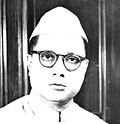 |
Kyasamballi Chengaluraya Reddy | N/A | N/A | 25 October 1947 | 26 January 1950 | 2 years, 93 days | Not established yet | Indian National Congress | |
Chief ministers of Mysore State
Following the adoption of the Constitution of India, the executive of the Mysore State was led by a chief minister.
| # | Portrait | Name | Constituency | Home District | Term[4]
(tenure length) |
Assembly[5]
(election) |
Party[a] | |||
|---|---|---|---|---|---|---|---|---|---|---|
| 1 | |
Kyasamballi Chengaluraya Reddy | N/A | N/A | 26 January 1950 | 30 March 1952 | 2 years, 64 days | Not established yet | Indian National Congress | |
| 2 |  |
Kengal Hanumanthaiah | Ramanagara | Bengaluru South
(then part of Undivided Bengaluru) |
30 March 1952 | 19 August 1956 | 4 years, 142 days | 1st (1952 election) |
||
| 3 | Kadidal Manjappa | Tirthahalli | Shivamogga | 19 August 1956 | 31 October 1956 | 73 days | ||||
Chief Minister of Coorg State
Chief ministers of Karnataka
On 1 November 1956, as per the States Reorganisation Act, which organised states along the linguistic lines, Mysore State was expanded with the inclusion of the Kannada-speaking districts of Bombay, Hyderabad and Madras States, and the entirety of Coorg.[6] On 1 November 1973, Mysore State was renamed as Karnataka via the Mysore State (Alteration of Name) Act.[7]
| # | Portrait | Name | Constituency | Home District | Term[4] | Assembly[5]
(election) |
Party[a] | |||
|---|---|---|---|---|---|---|---|---|---|---|
| Chief Minister of Mysore[b] | ||||||||||
| 1 |  |
Siddavanahalli Nijalingappa | Molakalmuru | Chitradurga | 31 October 1956 | 16 May 1958 | 1 year, 197 days | ...continued
1st (1952) |
Indian National Congress | |
| 2nd
(1957) |
||||||||||
| 2 |  |
Basappa Danappa Jatti | Jamkhandi | Bagalkote (then part of undivided Vijayapura) | 16 May 1958 | 14 March 1962 | 3 years, 302 days | |||
| 3 | Shivalingappa Rudrappa Kanthi | Hungund | Bagalkote (then part of undivided Vijayapura) | 14 March 1962 | 21 June 1962 | 99 days | 3rd (1962) |
|||
| (1) | |
Siddavanahalli Nijalingappa | Shiggaon | Haveri (then part of undivided Dharwad) | 21 June 1962 | 29 May 1968 | 5 years, 343 days | |||
| Bagalkot | Bagalkote (then part of undivided Vijayapura) | 4th (1967) |
||||||||
| 4 |  |
Veerendra Basappa Patil | Chincholi | Kalaburagi | 29 May 1968 | 18 March 1971 | 2 years, 293 days | Indian National Congress (O) | ||
| – |  |
Vacant[c]
(President's rule) |
N/A | N/A | 18 March 1971 | 20 March 1972 | 1 year, 2 days | Dissolved | N/A | |
| 5 |  |
Devaraj Devaraj Arasu[d] | Hunsur | Mysuru | 20 March 1972 | 31 October 1973 | 1 year, 225 days | 5th (1972) |
Indian National Congress (R) | |
| Chief Minister of Karnataka[d] | ||||||||||
| 1 | |
Devaraj Devaraj Arasu | Hunsur | Mysuru | 1 November 1973 | 31 December 1977 | 4 years, 60 days | ...continued
5th (1972) |
Indian National Congress (R) | |
| – | |
Vacant[c]
(President's rule) |
N/A | N/A | 31 December 1977 | 28 February 1978 | 59 days | Dissolved | N/A | |
| (1) | |
Devaraj Devaraj Arasu | Hunsur | Mysuru | 28 February 1978 | 12 January 1980 | 1 year, 318 days | 6th (1978) |
Indian National Congress | |
| 2 | Rama Gundu Rao | Somwarpet | Kodagu | 12 January 1980 | 10 January 1983 | 2 years, 363 days | ||||
| 3 |  |
Ramakrishna Mahabaleshwar Hegde | Kanakapura | Bengaluru South
(then part of Undivided Bengaluru) |
10 January 1983 | 7 March 1985[e] | 5 years, 216 days | 7th (1983) |
Janata Party | |
| Basavanagudi | Bengaluru Urban
(then part of Undivided Bengaluru) |
8 March 1985 | 13 August 1988[f] | 8th (1985) |
||||||
| 4 |  |
Somappa Rayappa Bommai | Hubli Rural | Dharwad | 13 August 1988 | 21 April 1989 | 251 days | |||
| – | |
Vacant[c]
(President's rule) |
N/A | N/A | 21 April 1989 | 30 November 1989 | 223 days | Dissolved | N/A | |
| 5 | |
Veerendra Basappa Patil | Chincholi | Kalaburagi | 30 November 1989 | 10 October 1990 | 314 days | 9th (1989) |
Indian National Congress | |
| – | |
Vacant[c]
(President's rule) |
N/A | N/A | 10 October 1990 | 17 October 1990 | 7 days | N/A | ||
| 6 | Sarekoppa Bangarappa | Soraba | Shivamogga | 17 October 1990 | 19 November 1992 | 2 years, 33 days | Indian National Congress | |||
| 7 |  |
Marpadi Veerappa Moily | Karkala | Udupi
(then part of undivided Dakshina Kannada) |
19 November 1992 | 11 December 1994 | 2 years, 22 days | |||
| 8 |  |
Haradanahalli Doddegowda Deve Gowda | Ramanagara | Bengaluru South
(then part of Undivided Bengaluru Rural) |
11 December 1994 | 31 May 1996 | 1 year, 172 days | 10th (1994) |
Janata Dal | |
| 9 | Jayadevappa Halappa Patel | Channagiri | Davanagere
(then part of Undivided Shivamogga) |
31 May 1996 | 11 October 1999 | 3 years, 133 days | ||||
| 10 |  |
Somanahalli Mallaiah Krishna | Maddur | Mandya | 11 October 1999 | 28 May 2004 | 4 years, 230 days | 11th (1999) |
Indian National Congress | |
| 11 |  |
Dharam Narayan Singh | Jevargi | Kalaburagi | 28 May 2004 | 3 February 2006 | 1 year, 251 days | 12th (2004) |
||
| 12 |  |
Haradanahalli Devegowda Kumaraswamy | Ramanagara | Ramanagara (then part of Undivided Bengaluru Rural) |
3 February 2006 | 8 October 2007 | 1 year, 247 days | Janata Dal (Secular) | ||
| – | |
Vacant[c]
(President's rule) |
N/A | N/A | 8 October 2007 | 12 November 2007 | 35 days | N/A | ||
| 13 |  |
Bookanakere Siddalingappa Yediyurappa | Shikaripura | Shivamogga | 12 November 2007 | 19 November 2007 | 7 days | Bharatiya Janata Party | ||
| – | |
Vacant[c]
(President's rule) |
N/A | N/A | 19 November 2007 | 29 May 2008 | 193 days | Dissolved | N/A | |
| (13) | |
Bookanakere Siddalingappa Yediyurappa | Shikaripura | Shivamogga | 30 May 2008 | 5 August 2011 | 3 years, 67 days | 13th (2008) |
Bharatiya Janata Party | |
| 14 |  |
Devaragunda Venkappa Sadananda Gowda | Legislative Assembly (MLC) | N/A | 5 August 2011 | 12 July 2012 | 342 days | |||
| 15 |  |
Jagadish Shivappa Shettar | Hubli-Dharwad Central | Dharwad | 12 July 2012 | 13 May 2013 | 305 days | |||
| 16 | 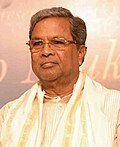 |
Siddaramaiah Siddarame Gowda | Varuna | Mysuru | 13 May 2013 | 17 May 2018 | 5 years, 4 days | 14th (2013) |
Indian National Congress | |
| (13) | |
Bookanakere Siddalingappa Yediyurappa | Shikaripura | Shivamogga | 17 May 2018 | 23 May 2018 | 6 days | 15th (2018) |
Bharatiya Janata Party | |
| (12) |  |
Haradanahalli Devegowda Kumaraswamy | Channapatna | Ramanagara | 23 May 2018 | 26 July 2019 | 1 year, 64 days | Janata Dal (Secular) | ||
| (13) | |
Bookanakere Siddalingappa Yediyurappa | Shikaripura | Shivamogga | 26 July 2019 | 28 July 2021 | 2 years, 2 days | Bharatiya Janata Party | ||
| 17 |  |
Basavaraj Somappa Bommai | Shiggaon | Haveri | 28 July 2021 | 20 May 2023 | 1 year, 296 days | |||
| (16) | |
Siddaramaiah Siddarame Gowda | Varuna | Mysuru | 20 May 2023 | 3 June 2026 | 3 years, 14 days | 16th (2023) |
Indian National Congress | |
| 18 |  |
Doddalahalli Kempegowda Shivakumar | Kanakapura | Ramanagara | 3 June 2026 | Incumbent | −3 days | |||
Statistics
- Indian National Congress (65.8%)
- Bharatiya Janata Party (13.2%)
- Janata Dal (7.24%)
- Janata Party (9.53%)
- Janata Party (Secular) (4.27%)
| # | Name | Party | Length of term | ||
|---|---|---|---|---|---|
| Longest tenure | Total tenure | ||||
| 1 | Siddaramaiah | INC | 5 years, 4 days | 8 years, 18 days | |
| 2 | D. Devaraj Urs | INC / INC(R) | 5 years, 286 days | 7 years, 239 days | |
| 3 | S. Nijalingappa | INC | 5 years, 343 days | 7 years, 175 days | |
| 4 | Ramakrishna Hegde | JP | 5 years, 216 days | 5 years, 216 days | |
| 5 | B. S. Yediyurappa | BJP | 3 years, 67 days | 5 years, 82 days | |
| 6 | S. M. Krishna | INC | 4 years, 230 days | 4 years, 230 days | |
| 7 | B. D. Jatti | INC | 3 years, 302 days | 3 years, 302 days | |
| 8 | Veerendra Patil | INC / INC(O) | 2 years, 293 days | 3 years, 242 days | |
| 9 | J. H. Patel | JD | 3 years, 133 days | 3 years, 133 days | |
| 10 | R. Gundu Rao | INC | 2 years, 363 days | 2 years, 363 days | |
| 11 | H. D. Kumaraswamy | JD(S) | 1 year, 247 days | 2 years, 311 days | |
| 12 | Sarekoppa Bangarappa | INC | 2 years, 33 days | 2 years, 33 days | |
| 13 | Veerappa Moily | INC | 2 years, 22 days | 2 years, 22 days | |
| 14 | Basavaraj Bommai | BJP | 1 year, 296 days | 1 year, 296 days | |
| 15 | Dharam Singh | INC | 1 year, 251 days | 1 year, 251 days | |
| 16 | H. D. Deve Gowda | JD | 1 year, 172 days | 1 year, 172 days | |
| 17 | Sadananda Gowda | BJP | 342 days | 342 days | |
| 18 | Jagadish Shettar | BJP | 305 days | 305 days | |
| 19 | S. R. Bommai | JP | 251 days | 251 days | |
| 20 | S. R. Kanthi | INC | 99 days | 99 days | |
| 21 | D. K. Shivakumar | INC | |||
| — | President's Rule | — | 1 year, 1 day | 2 years, 121 days | |
- By political party
| Political party | Number of chief ministers | Total years of holding CMO |
|---|---|---|
| Indian National Congress including INC(I) / INC(O) / INC(R) |
11 | 46 years, 251 days |
| Bharatiya Janata Party | 4 | 8 years, 295 days |
| Janata Dal | 2 | 4 years, 305 days |
| Janata Party | 2 | 6 years, 132 days |
| Janata Dal (Secular) | 1 | 2 years, 311 days |
== Oath == Swearing in the name of God: "____ emba hesarina naanu, Ishwarana hesarinalli pramana maaduttane endare, ____ raajyada mukhyamantriyaagi nanna aalochanege taralaaguva athava nanage tiliyabaruva yaavude vishayavannu, raajyada mukhyamantriyaagi nanna kartavyagalannu yogyavaagi nirvahisalu dharshisabahudadaagi dharshisuvudannu bittu, bere yaavude vyakthi athava vyakthigalige pratyakshavaagi athava aparatyakshavaagi tiliyapadisuvudilla athava bahiranga golisuvudilla." Solemn Affirmation (Non-religious): "____ emba hesarina naanu, gambheeravaagi pratijne maaduttane endare, ____ raajyada mukhyamantriyaagi nanna aalochanege taralaaguva athava nanage tiliyabaruva yaavude vishayavannu, raajyada mukhyamantriyaagi nanna kartavyagalannu yogyavaagi nirvahisalu dharshisabahudadaagi dharshisuvudannu bittu, bere yaavude vyakthi athava vyakthigalige pratyakshavaagi athava aparatyakshavaagi tiliyapadisuvudilla athava bahiranga golisuvudilla." 2. Chief Minister (CM) - Oath of Office (Adhikaara Sweekara Pramana Vachana) Since the CM always takes this right before the secrecy oath, it's helpful to have it handy: Swearing in the name of God: "____ emba hesarina naanu, Ishwarana hesarinalli pramana maaduttane endare, kaanunina moolaka sthapitavada bhaarata samvidhaanada bagege nija vaada shraddhe mattu nishthaiyannu hondiruttane endare, bhaarata sarvabhoumatva mattu akhandatethaiyannu samarthisuttane endare, mattu ____ raajyada mukhyamantriyaagi nanna kartavyagalannu nishthaiyinda mattu anta:karanadi nirvahisuttane endare, yaavude bhaya athava pakshapaata, raga athava dwesha illade, samvidhaana mattu kaanunige anusaaravaagi ella bageya janarige nyaayavannu odagisuttane."Oath of Secrecy "I, [Name], do swear in the name of God / solemnly affirm that I will not directly or indirectly communicate or reveal to any person or persons any matter which shall be brought under my consideration or shall become known to me as a Minister for the State of [Name of State] except as may be required for the due discharge of my duties as such Minister."
Parties by total duration (in years) of holding Chief Minister's Office
- INC
- BJP
- JD
- JP
- JD(S)
See also
- Dewan of Mysore
- List of Diwans of Mysore
- List of deputy chief ministers of Karnataka
Notes
- ^ a b c This column only names the chief minister's party. The state government he headed may have been a complex coalition of several parties and independents; these are not listed here.
- ^ On 1 November 1956, the Indian states were reorganised along linguistic lines. The Mysore State was expanded with the addition of the Kannada-speaking districts of Bombay, Hyderabad, and Madras states, and the entirety of Coorg.[7]
- ^ a b c d e f President's rule may be imposed when the "government in a state is not able to function as per the Constitution", which often happens because no party or coalition has a majority in the assembly. When President's_rule#Karnataka
- ^ a b On 1 November 1973, Mysore State was renamed as Karnataka.[7] Devaraj Urs, who was the chief minister of Mysore state since 20 March 1972, continued as chief minister of Karnataka post the renaming.
- ^ According to Frontline, following the poor performance of the Janata Party in the 1984 Indian general election (it won only four out of the 28 seats), Hegde resigned because his party had lost its popular mandate. He headed a caretaker government till the next elections. In the 1985 Karnataka assembly election, the Janata Party came to power with a comfortable majority."[8]
- ^ According to Frontline, Hegde resigned in February 1986 when the Karnataka High Court censured his government for the way it handled arrack bottling contracts.[8] He withdrew his resignation after a couple of days, "following pressure from his party legislators".[9]
References
- ^ a b
Durga Das Basu (1960). Introduction to the Constitution of India (20 ed.). LexisNexis Butterworths Wadhwa. pp. 241–245. ISBN 978-81-8038-559-9.
Although the text talks about Indian state governments in general, it applies for the specific case of Karnataka as well.
{{cite book}}: ISBN / Date incompatibility (help) - ^ "Leader of the House". Andhra Pradesh Legislative Assembly. Retrieved 1 June 2025.
- ^ Sadasivan, S. N. (2005). Political and administrative integration of princely states By S. N. Sadasivan. Mittal Publications. p. 26. ISBN 978-8-17099-968-3.
- ^ a b c Chief Ministers of Karnataka since 1947. Karnataka Legislative Assembly. Archived on 6 December 2016.
- ^ a b c Assemblies from 1952. Karnataka Legislative Assembly. Archived on 6 December 2016.
- ^ Ramaswamy, Harish (1 June 2007). Karnataka Government and Politics. Concept Publishing Company. p. 383. ISBN 978-8-18069-397-7.
- ^ a b c M. S. Prabhakara (24 July 2007). "New names for old". The Hindu. Retrieved 1 June 2009.
- ^ a b Parvathi Menon (31 January 2004). "A politician with elan: Ramakrishna Hegde, 1926–2004". Frontline. Vol. 21, no. 3.
- ^ A. Jayaram. (13 January 2004). "Pillar of anti-Congress movement". The Hindu.
