|
Brad Cooper
|
|
|---|---|

Official portrait, 2025
|
|
| Born |
Charles Bradford Cooper II
1967 (age 58–59)
Winston-Salem, North Carolina, U.S.
|
| Allegiance | United States |
| Branch | United States Navy |
| Service years | 1989–present |
| Rank | Admiral |
| Commands |
|
| Conflicts |
|
| Awards |
|
| Alma mater |
|
| Spouse | Susan Cooper |
Charles Bradford Cooper II (born 1967) is an American admiral who has served as the commander of the United States Central Command since 2025 and has led U.S. forces during the 2026 Iran war.
Cooper was born in North Carolina and raised in Alabama. He graduated from the United States Naval Academy in 1989 and became a career surface warfare officer. His commands included a destroyer, a cruiser, U.S. Naval Forces Korea, and Expeditionary Strike Group 7. Cooper has been deployed during combat operations in the Gulf War and the lead-up to the Iraq War; the Yugoslav Wars; and the war in Afghanistan. In the latter, Cooper served in the Combined Security Transition Command, Afghanistan, while an advisor to the Afghan government. He also served in the White House, the Office of the Secretary of Defense, the U.S. Africa Command, and the U.S. Pacific Fleet. His senior posts included as Chief of Legislative Affairs of the United States Navy from 2019 to 2020 and as Commander, Naval Surface Force Atlantic, from 2020 to 2021.
He served as the commander of the U.S. Naval Forces Central Command, U.S. Fifth Fleet, and Combined Maritime Forces from 2021 to 2024. After that, he was the deputy commander of Central Command from 2024. Cooper helped oversee the response to the attacks against U.S. forces in the region during the Gaza war, following the October 7 attacks in Israel. He also led forces in the naval and air operations during the Red Sea crisis, and expanded partnerships with regional navies, particularly to counter the Houthi attacks on commercial vessels. In June 2025, Secretary of Defense Pete Hegseth announced that Cooper was President Donald Trump's nominee for commander of the United States Central Command. When Cooper took over the role on 8 August 2025, he became the first Navy admiral to hold the post since William J. Fallon in 2008.
As the commander of Central Command, Cooper prepared for and commanded operations during the war against Iran that began on 28 February 2026, in coordination with the Israel Defense Forces. He also expanded cooperation with the Syrian transitional government in the war against the Islamic State.
Early life and education

Charles Bradford Cooper II[1] was born in Winston-Salem, North Carolina,[2] in 1967,[3] and is the son of a United States Army officer.[4] He grew up in a military family; his father and grandfather both served in the Army.[5] He attended Sidney Lanier High School in Montgomery, Alabama, and is a 1989 graduate of the United States Naval Academy,[1] where he obtained a bachelor of science degree in economics.[6] Cooper later earned a master's degree in strategic intelligence from the National Intelligence University,[7] and also studied National Security Policy and International Relations at Harvard and Tufts universities.[4] He is also a graduate of the United States Army Command and General Staff College.[6]
Early naval career
After receiving his commission at the Naval Academy in 1989, he became a career surface warfare officer in the United States Navy, serving on guided-missile cruisers, guided-missile destroyers, aircraft carriers, and amphibious assault ships.[4] Cooper's assignments included as the CIC officer on USS Thomas S. Gates (CG 51), operations officer of the USS Fitzgerald (DDG 62) and USS Anzio (CG 68), and executive officer of the USS Vicksburg (CG 69).[6] He was also the flag aide to the commander of the USS Dwight D. Eisenhower Carrier Strike Group.[6] His ship commands were the destroyer USS Russell (DDG 59) and the cruiser USS Gettysburg (CG 64).[4] During his tenure as commanding officer of Gettysburg, the ship and its crew won the 2013 Battenberg Cup, recognizing it as the best vessel in the United States Fleet Forces Command, the Navy's Atlantic fleet. Cooper was awarded the Legion of Merit for his accomplishments as Gettysburg's captain.[8]
Cooper took part in at least 13 named operations. His deployments included the Gulf War; three counter-narcotics operations off the coast of South America; Haitian migrant operations; the enforcement of the no-fly zone over Bosnia and Herzegovina and operations in the buildup to the Kosovo War; three maritime interdiction operations in the Persian Gulf against Saddam Hussein's Iraq; a deployment to the Arabian Sea after the 9/11 attacks; a deployment in the Western Pacific; and the war in Afghanistan.[6] During the latter, Cooper was division chief for strategic reform of the Afghan Police and Border Guards while assigned to Combined Security Transition Command, Afghanistan. He also served as principal U.S. Advisor to the Interior Minister of Afghanistan.[4]
Ashore, he served in a variety of executive, military assistant, and special assistant roles in the White House, the Office of the Secretary of Defense, U.S. Africa Command, and U.S. Pacific Fleet headquarters.[4] Cooper was the senior military assistant to the Under Secretary of Defense for Personnel and Readiness; special assistant to the commander of the U.S. Africa Command; and flag aide to the commander of the U.S. Pacific Fleet.[6] While at the White House, as of 2011 he was the executive director of the "Joining Forces" campaign, which was launched by Second Lady Jill Biden and promoted by First Lady Michelle Obama to raise support in the private sector for assisting military families and veterans.[5] He also served as both Deputy Director[6] and Director, Surface Warfare Officer assignments,[4] at Navy Personnel Command.[6] Cooper was in the latter post when he was nominated for promotion to rear admiral in July 2016.[1]
Senior naval career

As a rear admiral, Cooper became commander of United States Naval Forces Korea in September 2016.[9] During this tour, his sailors were honored with the Republic of Korea Presidential Unit Citation, the first such recognition of a Navy unit since the Korean War,[4] and he was bestowed the Korean name Goo Tae-il[a][b] by the ROK-US Alliance Friendship Association in honor of his service to the Korean peninsula.[10] He relinquished command in January 2018,[9] and became commander of Expeditionary Strike Group 7 in Okinawa, Japan, where he led the U.S. military's first F-35 deployment.[4] He also led the Navy response to typhoon damage in Guam and the Northern Mariana Islands, and the joint task force that supported the 2018 APEC summit. Cooper then served as the chief of legislative affairs, leading the Navy's engagement with the U.S. Congress to work on budget issues.[11][4][12] Cooper's next assignment was as commander of Naval Surface Force Atlantic from June 2020, in which he launched new initiatives to expand mental healthcare access for sailors and improve fleet-wide readiness; and oversaw the response to the COVID-19 pandemic. Cooper relinquished command in March 2021.[4][13]
In April 2021, he was nominated for promotion to vice admiral and the position in Bahrain of commander of U.S. Naval Forces Central Command; commander of U.S. Fifth Fleet; and commander of Combined Maritime Forces.[14][15] Cooper took command on 5 May 2021.[16] During the violent period following the October 7 attacks and the start of the Gaza war in 2023, Cooper worked closely with General Michael Kurilla, the head of United States Central Command, for the response to attacks on U.S. forces in Iraq, Syria, Jordan, and the Red Sea.[12] Cooper also frequently visited Israel while serving as the Fifth Fleet commander, and became acquainted with every general and many colonels in the Israel Defense Forces. Cooper established "unprecedented" cooperation between the U.S. Fifth Fleet and the Israeli Navy, and expanded partnerships with other regional navies.[12] He was in command when the U.S. Navy began Operation Prosperity Guardian in December 2023 to defend merchant ships from attacks by the Houthis in Yemen,[17] and played a central role in the operation.[18]
During that tour, he significantly expanded multi-national maritime partnerships, established the Navy's first unmanned and artificial intelligence Task Force, and led multiple operations countering Iranian and Houthi activity throughout the Middle East, including operations Prosperity Guardian and Poseidon Archer in the southern Red Sea.[7] In April 2023, Cooper was nominated for reappointment as vice admiral and assignment as the deputy commander of United States Central Command.[19][14] He assumed command in February 2024.[20] That same month, he told the media that the actions against the Houthis represent the largest and most intense operation of the U.S. Navy since World War II.[21] Cooper organized the U.S. military's maritime corridor that briefly increased the delivery of humanitarian aid to Gaza in 2024,[18] and that summer he visited the Strait of Mandeb to personally examine the Houthi attacks on shipping.[12]
CENTCOM commander

In June 2025, Secretary of Defense Pete Hegseth announced that Cooper was President Donald Trump's nominee for commander of the U.S. Central Command, with the grade of admiral.[22] Cooper was selected by the Trump administration over Army general James Mingus, who had been expected to receive the position,[20] in what was interpreted as a prioritization of naval operations ahead of a potential confrontation with Iran and the ongoing mission against the Houthis. Cooper is a critic of Iran and a supporter of Israel, like his predecessor Michael Kurilla.[18] Kurilla recommended him to Trump, who took that into consideration and chose Cooper over several other candidates.[12] On 8 August 2025, he succeeded Kurilla as commander of Central Command,[23] becoming the first naval officer to hold the post since William J. Fallon in 2008, as it was traditionally held by Army or Marine generals.[18]
At his nomination hearing, Cooper said that the U.S. should maintain its military presence in Syria as part of the war against the Islamic State, and should work with the Syrian transitional government against ISIS.[24] In September 2025, Cooper visited Damascus, where he met with Syrian President Ahmed al-Sharaa and U.S. special envoy Tom Barrack to discuss cooperation on counter-Islamic State operations and future U.S.–Syrian engagement.[25] On 21 January 2026, Cooper spoke by phone with al-Sharaa regarding the ceasefire with the Syrian Democratic Forces (SDF) amid the northeastern Syria offensive and coordination on the transfer of Islamic State detainees from Syria to Iraq.[26] The next day, Cooper met with SDF commander-in-chief Mazloum Abdi, along with Tom Barrack, in Erbil to discuss implementation, integration, and ongoing U.S. support for the ceasefire.[27]

Cooper also continued developing the partnerships in regional air defense that Kurilla had started, and conducted his own debriefing of Israeli–U.S. actions during the Twelve-Day War. He began preparations for a possible second conflict.[12] On 24 January, he visited Tel Aviv, holding meetings with Israel Defense Forces Chief of Staff Lt. Gen. Eyal Zamir and other senior officials to reinforce close strategic military cooperation amid a broader U.S. military buildup in the Middle East.[28] Zamir was critical in convincing Cooper that a war with Iran would be viable, and Cooper gave his support to the first two steps of the proposed Israeli plan: the assassination of Ali Khamenei and strikes against Iran's ballistic missile and drone programs. In his talks with Trump, Cooper focused on the military aspects of such an operation rather than on whether or not it would be a good decision to go to war. He did not emphasize to Trump the risk from the potential closure of the Strait of Hormuz.[29]
On 6 February 2026, Cooper took part in the indirect negotiations between Iran and the United States that were held in Muscat, Oman, along with Steve Witkoff and Jared Kushner.[30] The following day, Witkoff and Kushner visited Cooper aboard USS Abraham Lincoln at his invitation.[12] On 26 February, Cooper and chairman of the Joint Chiefs of Staff Dan Caine briefed Donald Trump on military options with regard to Iran.[31] Cooper began the U.S. airstrikes on Iran on 28 February on the order of Trump.[12][32] On the first day, he stated that the goal of CENTCOM's operation was to dismantle the Islamic Revolutionary Guard Corps.[33] Cooper also wrote a letter addressed to U.S. troops in the Middle East, telling them that they will "change the course of human history."[34]
Cooper was the main American architect of the campaign.[29] He and his team spent the weeks before the war identifying targets in Iran that enabled it to project power beyond its borders.[35] Since the war began, Cooper has been in almost daily contact with Lt. Gen. Eyal Zamir,[12] coordinating with the Israeli military,[36] and also coordinating with almost a dozen Arab countries.[29] Cooper made Iran's military capabilities the focus of the U.S. campaign, including their missile launch sites and their navy, while leaving targets related to the goal of regime change to Israel.[29] He issued an update on the operation on 3 March, claiming to have eliminated the Iranian Navy.[37] On 5 March he said that the next phase of the war would be targeting Iran's missile production capacity.[38] Cooper confirmed on 11 March that the military is using artificial intelligence tools in the war, but said that "humans will always make final decisions" on targeting.[39] On 9 April, after the ceasefire went into effect, he claimed that U.S. and Israel inflicted a "generational military defeat" on Iran, and that its conventional military "has been eliminated."[40]
Cooper and Fifth Fleet commander Curt Renshaw met King Hamad bin Isa Al Khalifa of Bahrain and his prime minister, Salman bin Hamad Al Khalifa, on 13 April in Manama.[41] On 15 April, Cooper announced that the naval blockade of Iran has been "fully implemented" and all maritime traffic to and from Iran has been "completely halted."[42]
Awards and decorations
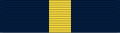
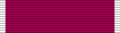
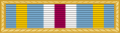
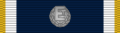
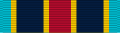
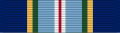
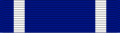
Cooper has been described as one of the most decorated officers in the U.S. military.[43]
 |
||


|

|

|
|
 |
 |

|
 |
 |
 |
 |
|
 |


|


|
 |
 |
 |

|
 |
 |
 |
 |

|

|
 |

|
|
 |
 |
 |
 |
 |
 |
 |
 |
 |
||
 |
||
 |
||
 |
||
| Surface Warfare Officer Pin | |||||
| Defense Distinguished Service Medal with one bronze oak leaf cluster | Navy Distinguished Service Medal with one gold award star | Defense Superior Service Medal with one bronze oak leaf cluster | |||
| Legion of Merit with four gold award stars | Bronze Star Medal | Defense Meritorious Service Medal | |||
| Meritorious Service Medal with four award stars | Joint Service Commendation Medal | Navy and Marine Corps Commendation Medal with four award stars | |||
| Joint Service Achievement Medal | Navy and Marine Corps Achievement Medal | Joint Meritorious Unit Award with two oak leaf clusters | |||
| Navy Unit Commendation | Navy Meritorious Unit Commendation with one silver service star | Meritorious Team Commendation with Operational Distinguishing Device | |||
| Navy "E" Ribbon with wreathed Battle E device | National Defense Service Medal with service star | Armed Forces Expeditionary Medal | |||
| Southwest Asia Service Medal with two service stars | Afghanistan Campaign Medal with service star | Global War on Terrorism Expeditionary Medal | |||
| Global War on Terrorism Service Medal | Korea Defense Service Medal | Armed Forces Service Medal with service star | |||
| Humanitarian Service Medal with two service stars | Military Outstanding Volunteer Service Medal | Navy Sea Service Deployment Ribbon with silver service star | |||
| Navy and Marine Corps Overseas Service Ribbon with three service stars | Special Operations Service Ribbon | Defence Cooperation Medal (Japan) | |||
| Order of National Security Merit, Cheonsu Medal (Republic of Korea) | NATO Medal for the former Yugoslavia | Kuwait Liberation Medal (Saudi Arabia) | |||
| Kuwait Liberation Medal (Kuwait) | Navy Expert Rifleman Medal | Navy Expert Pistol Shot Medal | |||
| Command at Sea insignia | |||||
| Office of the Secretary of Defense Identification Badge | |||||
| Presidential Service Badge | |||||
| United States Central Command Badge | |||||
Dates of promotion
| Rank | Branch | Date |
|---|---|---|
 Ensign Ensign |
Navy | 1989[6] |
 Lieutenant junior grade Lieutenant junior grade |
||
 Lieutenant Lieutenant |
||
 Lieutenant commander Lieutenant commander |
11 August 1997[44] | |
 Commander Commander |
31 July 2003[45] | |
 Captain Captain |
19 June 2009[46] | |
 Rear admiral (lower half) Rear admiral (lower half) |
13 July 2016[47] | |
 Rear admiral Rear admiral |
28 March 2019[48] | |
 Vice admiral Vice admiral |
29 April 2021[49] | |
 Admiral Admiral |
29 June 2025[50] |
Personal life
He is married to Susan, who is a speech-language pathologist, and they have two children.[6]
Cooper was briefly a fellow of the Asia Pacific Center for Security Studies.[6]
Notes
References
 This article incorporates public domain material from websites or documents of the United States government.
- ^ a b c Burylo, Rebecca (23 January 2017). "Lanier grad promoted to rear admiral". Montgomery Advertiser. Retrieved 3 May 2021.
- ^ Crown, Kayode (1 April 2026). "Commander of the U.S. campaign against Iran calls Alabama 'home'". al.com. Retrieved 12 April 2026.
- ^ Register of Commissioned and Warrant Officers of the United States Navy on Active Duty. Bureau of Naval Personnel. 1 October 1990. p. 180. Retrieved 5 June 2021.
- ^ a b c d e f g h i j k
"Vice Admiral Brad Cooper". Archived from the original on 11 January 2024. Retrieved 3 May 2025.
 This article incorporates text from this source, which is in the public domain.
 - ^ a b Sanchez, Elaine (29 August 2011). "Navy Captain Leads 'Joining Forces' Campaign". DVIDS. Retrieved 12 April 2026.
- ^ a b c d e f g h i j k "White House Author – Brad Cooper". Obama White House. 18 November 2011. Retrieved 3 May 2025.
- ^ a b
"Vice Admiral Brad Cooper". www.navy.mil. 19 March 2025. Retrieved 6 May 2025. This article incorporates text from this source, which is in the public domain.
- ^ "Change of Command in USS Gettysburg". www.navy.mil. 6 April 2015. Retrieved 4 March 2026.
- ^ Lee Chi-dong (19 July 2017). "U.S. naval commander to get Korean name". Yonhap News Agency. Retrieved 30 June 2021.
- ^ Crouch, Jordan (17 May 2019). "Amphibious Force 7th Fleet holds Change of Command". www.amphib7flt.navy.mil. Retrieved 13 April 2026.
- ^ a b c d e f g h i Herb, Jeremy; Britzky, Haley; Liebermann, Oren; Shalev, Tal; Lyngaas, Sean (15 March 2026). "The admiral navigating the battlefield — and the politics of Trump's Iran war". CNN. Archived from the original on 15 March 2026. Retrieved 12 April 2026.
- ^ "Naval Surface Force Atlantic Holds Change of Command Ceremony". cnrma.cnic.navy.mil. 5 March 2021. Retrieved 12 April 2026.
- ^ a b "Flag Officer Announcements". U.S. Department of Defense. 24 April 2023. Archived from the original on 24 April 2023. Retrieved 25 April 2023.
- ^ "Flag Officer Announcements". U.S. DEPARTMENT OF DEFENSE. Archived from the original on 15 April 2021.
- ^ "NAVCENT, U.S. Fifth Fleet, CMF Change of Command". U.S. Naval Forces Central Command. 6 May 2021.
- ^ "NAVCENT Commander Vice Admiral Brad Cooper Holds an Off-Camera, On-The-Record Press Briefing via Teleconference on Operation Prosperity Guardian". United States Department of Defense. U.S. Department of Defense. 4 January 2024.
- ^ a b c d El-Fekki, Amira (6 June 2025). "Trump Changes Top Middle East General For Strong Iran Hawk". Newsweek. Retrieved 6 March 2026.
- ^ "PN545 — Vice Adm. Charles B. Cooper II — Navy". U.S. Congress. 20 April 2023. Retrieved 20 April 2023.
- ^ a b Lamothe, Dan; Ryan, Missy (29 April 2025). "Hegseth backs admiral for Middle East post, passing over Army general". The Washington Post.
- ^ O'Donnell, Norah; Chasan, Aliza; Sharman, Keith; Feitel, Roxanne (18 February 2024). "U.S. Navy three-star admiral discusses the mission to stop Houthi Red Sea attacks". CBS News.
- ^ Ismay, John (4 June 2025). "Defense Secretary Pete Hegseth announced President Trump's pick for the next leader of U.S. Central Command, which directs U.S. military operations throughout the Middle East, and of U.S. Africa Command, which covers operations across the African continent". The New York Times. Retrieved 4 June 2025.
- ^ "U.S. Central Command Bids Farewell to Gen. Kurilla, Welcomes New Leadership". United States Central Command. 8 August 2025. Archived from the original on 9 August 2025. Retrieved 9 August 2025.
- ^ "CENTCOM nominee underscores need for US military presence in Syria". The Arab Weekly. 26 June 2025. Retrieved 26 June 2025.
- ^ "U.S., Syrian Leaders Meet in Damascus". CENTCOM. 12 September 2025.
- ^ "US to transfer Islamic State prisoners from Syria to Iraq". BBC News. 21 January 2026.
- ^ "Mazloum Abdi Welcomes US Support for Ceasefire, Integration Talks". Kurdistan 24. 22 January 2026.
- ^ "Visiting CENTCOM chief meets top IDF generals amid US military buildup in Mideast". The Times of Israel. 24 January 2026.
- ^ a b c d Bob, Yonah Jeremy (23 April 2026). "Critical roles of Eyal Zamir, Caine, Cooper in shaping Iran war". Jerusalem Post. Retrieved 26 April 2026.
- ^ Finley, Ben; Toropin, Konstantin (7 February 2026). "Trump's military leaders help with diplomacy on Iran and Ukraine". Associated Press. Retrieved 7 February 2026.
- ^ Flaherty, Anne; Scott, Rachel (26 February 2026). "Top Mideast commander briefs Trump on military options on Iran". ABC News. Retrieved 1 March 2026.
- ^ "Secretary of War Pete Hegseth and Chairman of the Joint Chiefs of Staff Gen. Dan Caine Hold a Press Briefing". www.war.gov. U.S. Department of Defense. 2 March 2026. Retrieved 2 March 2026.
- ^ LaFranchi, Howard (1 March 2026). "In Iran, Trump is trying something untested: Outsourcing regime change". Christian Science Monitor. Retrieved 1 March 2026.
- ^ Nieberg, Patty (3 March 2026). "US commander tells troops Iran strikes 'will change human history'". Task & Purpose. Retrieved 3 March 2026.
- ^ "Secretary of War Pete Hegseth and Chairman of the Joint Chiefs of Staff Gen. Dan Caine Hold a Press Briefing". www.war.gov. U.S. Department of Defense. 4 March 2026. Retrieved 4 March 2026.
- ^ "Secretary of War Pete Hegseth and Chairman of the Joint Chiefs of Staff Gen. Dan Caine Hold a Press Briefing". www.war.gov. U.S. Department of Defense. 16 April 2026. Retrieved 16 April 2026.
- ^ "ICYMI: Update from CENTCOM Commander on Operation Epic Fury". www.whitehouse.gov. The White House. 4 March 2026. Retrieved 4 March 2026.
- ^ Watson, Eleanor; Walsh, Joe (5 March 2026). "U.S. military now seeking to "raze or level" Iran's ballistic missile industry, Adm. Cooper says". CBS News. Retrieved 5 March 2026.
- ^ Burke, Jason (11 March 2026). "Iran escalates attacks on infrastructure and transport networks across the Gulf". The Guardian. Retrieved 11 March 2026.
- ^ Mitchell, Ellen (9 April 2026). "US Central Command: Troops remain in Middle East amid Iran truce". The Hill. Retrieved 12 April 2026.
- ^ "Bahrain's king meets U.S. Central Command Adm. Brad Cooper in Manama". Bahrain News Agency and Reuters via Honolulu Star-Advertiser. 13 April 2026. Retrieved 16 April 2026.
- ^ "US military says blockade of Iran ports 'completely' halts economic trade". Al Jazeera. 15 April 2026. Retrieved 15 April 2026.
- ^ Holliday, Shelby; Seligman, Lara (11 March 2026). "Admiral Cooper, the Warrior Diplomat Running Trump's Fight in Iran". The Wall Street Journal. Retrieved 12 April 2026.
- ^ "PN789 — Navy". www.congress.gov. 105th U.S. Congress. 1997. Retrieved 2 April 2026.
- ^ "PN777 — Navy". www.congress.gov. 108th U.S. Congress. 2003. Retrieved 2 April 2026.
- ^ "PN445 — Navy". www.congress.gov. 111th U.S. Congress. 2009. Retrieved 2 April 2026.
- ^ "PN1604 — Navy". www.congress.gov. 114th U.S. Congress. 2016. Retrieved 2 April 2026.
- ^ "PN349 — Navy". www.congress.gov. 116th U.S. Congress. 2019. Retrieved 2 April 2026.
- ^ "PN339 — Rear Adm. Charles B. Cooper II — Navy". www.congress.gov. 117th U.S. Congress. 2021. Retrieved 2 April 2026.
- ^ "PN272 — Vice Adm. Charles B. Cooper II — Navy". www.congress.gov. 119th U.S. Congress. 2025. Retrieved 2 April 2026.
External links
-
 Media related to Charles B. Cooper II at Wikimedia Commons
 - Appearances on C-SPAN

|
Senior officials in the United States Department of Defense
|
||
|---|---|---|
|

|
|
|
a - Acting
|
||
|
United States Regional Commanders
|
|||||||||
|---|---|---|---|---|---|---|---|---|---|
|
|
||||||||