| Years |
|---|
| Millennium |
| 2nd millennium |
| Centuries |
|
| Decades |
|
| Years |
|

| 1557 by topic |
|---|
| Arts and science |
|
| Leaders |
|
| Birth and death categories |
| Births – Deaths |
| Establishments and disestablishments categories |
| Establishments – Disestablishments |
| Works category |
|
| Gregorian calendar | 1557 MDLVII |
| Ab urbe condita | 2310 |
| Armenian calendar | 1006 ԹՎ ՌԶ |
| Assyrian calendar | 6307 |
| Balinese saka calendar | 1478–1479 |
| Bengali calendar | 963–964 |
| Berber calendar | 2507 |
| English Regnal year | 3 Ph. & M. – 4 Ph. & M. |
| Buddhist calendar | 2101 |
| Burmese calendar | 919 |
| Byzantine calendar | 7065–7066 |
| Chinese calendar | 丙辰年 (Fire Dragon) 4254 or 4047 — to — 丁巳年 (Fire Snake) 4255 or 4048 |
| Coptic calendar | 1273–1274 |
| Discordian calendar | 2723 |
| Ethiopian calendar | 1549–1550 |
| Hebrew calendar | 5317–5318 |
| Hindu calendars | |
| - Vikram Samvat | 1613–1614 |
| - Shaka Samvat | 1478–1479 |
| - Kali Yuga | 4657–4658 |
| Holocene calendar | 11557 |
| Igbo calendar | 557–558 |
| Iranian calendar | 935–936 |
| Islamic calendar | 964–965 |
| Japanese calendar | Kōji 3 (弘治3年) |
| Javanese calendar | 1476–1477 |
| Julian calendar | 1557 MDLVII |
| Korean calendar | 3890 |
| Minguo calendar | 355 before ROC 民前355年 |
| Nanakshahi calendar | 89 |
| Thai solar calendar | 2099–2100 |
| Tibetan calendar | མེ་ཕོ་འབྲུག་ལོ་ (male Fire-Dragon) 1683 or 1302 or 530 — to — མེ་མོ་སྦྲུལ་ལོ་ (female Fire-Snake) 1684 or 1303 or 531 |
Year 1557 (MDLVII) was a common year starting on Friday of the Julian calendar.
Events

January–March
- January 4 – Pietro Giovanni Chiavica Cibo becomes the new Doge of the Republic of Genoa for a term of 2 years as the term of the Doge Agostino Pinelli Ardimenti comes to an end.[1]
- January 6 – Italian War of 1551–1559: Gaspard II de Coligny, the French governor of Picardy (in northern France), launches surprise attacks on Douai and Lens in the Spanish Netherlands and captures both cities for France.[2]
- January 13 – Sigismund II Augustus, King of Poland and Grand Duke of Lithuania, issues an edict against Protestants, at the urging of the Archbishop Mikołaj Dzierzgowski, Primate of Poland.
- January 28 – Bayinnaung, King of Burma and head of the Toungoo dynasty, conquers two the Shan States, Möng Mit and Hsipaw in what is now northern Myanmar.[3] The event is later commemorated with an inscription on the Shwezigon Pagoda Bell.[4]
- February 4 – Pope Paul IV creates the metropolitan archdiocese of Portuguese India (based in Goa) separating the Goan diocese from the ecclesiastical province of Lisbon.
- February 24 – Delegates from Sweden, Finland and Russia arrive at Novgorod to negotiate a treaty to end the war between the two empires.[5]
- March 11 – The Burmese conquest of the Shan States continues as the capital of the Mongkawng state, Mong Kawng, falls to the Toungoo dynasty invaders, five days after the March 6 surrender of the town of Mong Yang. The event is later commemorated on the Shwezigon Pagoda Bell.
- March – The Takeda clan besiege Katsurayama Castle in eastern Japan.[6] The siege ends with the last stand of the castle garrison, and the complete destruction of Katsurayama, allowing the Takeda to further expand in Shinano Province.
April–June
- April 2 – The Treaty of Novgorod between Sweden and Russia is put into effect as delegates kiss the cross, as demanded by the Tsar Ivan IV.[5]
- April 12 – The Spanish settlement of Cuenca, Ecuador, is founded.[7]
- April 25 – English aristocrat Thomas Stafford attempts a rebellion against Queen Mary, landing at Scarborough, North Yorkshire with two ships and 32 followers after crossing the English Channel from Dieppe in France. Upon landing, he captures Scarborough Castle and proclaims himself "Protector of the Realm".[8]
- April 28 – Henry Neville, 5th Earl of Westmorland, arrives in Scarborough and ends the Stafford rebellion, arresting Stafford and the small rebel force.[8]
- April 30 – Arauco War – Battle of Mataquito: Spanish forces of Governor Francisco de Villagra launch a dawn surprise attack against the Mapuche (headed by their toqui Lautaro), in present-day Chile.
- May 4 – The Stationers' Company, officially the Worshipful Company of Stationers and Newspaper Makers, is granted a royal charter and a monopoly on the English publishing industry.[9] For the next 150 years, the Stationers will regulate and censor the printing industry until the passage of the Copyright Act 1710 on April 10, 1710.
- May 23 – The Shwezigon Pagoda Bell, weighing 7,560 pounds (3,430 kg), is dedicated. The Bell, commissioned by King Bayinnaung and located in the Myanmar city of Bagan, bears a detailed inscription of the 16th century Burmese conquest of the Shan States.
- May 28 – English rebel Thomas Stafford and 32 of his followers are beheaded at the Tower of London after being convicted of treason.[8]
- May 29 – King Philip II of Spain signs a treaty in London with Iacopo VI being restored to rule of the Principality of Piombino a bargain with Cosimo I de' Medici.[10][11]
- June 7 – Mary I of England joins her husband Philip II of Spain, in his war against France.[12]
- June 10 – The New Testament of the Geneva Bible, a Protestant Bible translation into English (produced under the supervision of William Whittingham, and printed in Roman type), is published in Geneva.[13]
- June 16 Sebastião I is crowned as the new King of Portugal, five days after the death of his father, King João III.
- June 18 – Mass executions by burning at the stake resume in England for Protestants convicted of heresy under the law of England's Catholic ruler, Queen Mary. On the first day, four women and three men are put to death at Maidstone at Kent. The next day, at Canterbury, another seven prisoners are burned. On June 22, ten more people (six men and four women) burn at the stake at Lewes at Sussex. In all, 24 people (12 men and 12 women) are killed in a five-day period[14]
- By June – The 1557 influenza pandemic, probably originating in China, spreads to Europe.[15]
July–September
- July 3 – The small Stato dei Presidi, a 300 square kilometres (120 sq mi) section of Spanish territory on the Tuscan coast of Italy, is created by a treaty between Cosimo I de' Medici (Duke of the Florentine Republic and the future Grand Duke of Tuscany) and King Felipe II of Spain. In return, Cosimo receives the rest of the former Republic of Siena.[16]
- July 24 – The Edict of Compiègne is issued by King Henri II of France, providing for the death penalty to be applied to Protestants for a variety of crimes, including a relapse after having renounced Protestantism; unauthorized travel to Geneva; publication of Protestant books; possessing graven images; and unauthorized participation in Protestant religious gatherings, whether public or private.[17]
- July 25 – In India, Sikandar Shah Suri, Sultan of the Sur Empire in Punjab, surrenders the fortress at Mau in the Nurpur kingdom (now in Uttar Pradesh) after a six month siege by the Mughal Empire. Mughal General Bairam Khan allows Sikandar to live in exile in Bihar, while Bakht Mal, Raja of Nurpur is imprisoned at Lahore and later beheaded.[18]
- August 27 – Battle of St. Quentin: French forces under Marshal Anne de Montmorency are decisively defeated by the Spanish and English under Emmanuel Philibert, Duke of Savoy, after a 17-day battle. Montmorency himself is captured, but Philip II refuses to press his advantage, and withdraws to the Netherlands.[19]
- September 11– The Colloquy of Worms convenes in Germany as a dialog on religious issues between clerics of the German Catholic Church and the Lutheran Church.[20][21]
- September 12– The Spanish occupation of the Papal States is confirmed as Pope Paul IV signs a separate peace treaty, the Peace of Cave-Palestrina, with Spain's Duke of Alba, who has massed troops outside of Rome in preparationfor an attack.[22][23]
October–December
- October 8 – The Colloquy of Worms is adjourned with no resolution on reconciling the differences between Catholicism and Protestantism, after the parties are unable to agree on the concepts of original sin and theological justification.[20]
- October 23 – Mohammed al-Shaykh, Sultan of Morocco since 1549, is assassinated by Ottoman soldiers who had infiltrated the Moroccan army. The assassination comes on orders of the Ottoman sultan after Mohammed makes plans for an alliance with Spain against the Ottoman Empire.[24] Mohammed is succeeded by his son, Abdallah al-Ghalib.
- November 17 (27th day of the 10th month of Kōji 3) – Prince Michihito of Japan becomes the Emperor Ōgimachi almost two months after the September 27 death of his father, the Emperor Go-Nara.
- December 24 – In Bucharest, Mircea the Shepherd becomes the Prince of Wallachia for the third time, succeeding Pătrașcu the Good, who has died suddenly.[25]
- December 30 – Italian War of 1551–1559: King Henri II of France, through his ambassador Jean Cavenac de la Vigne sends a letter to Suleiman the Magnificent, Sultan of the Ottoman Empire for the dispatch of 150 Ottoman Navy ships to protect the French coast.[26]
Date unknown
- Özdemir Pasha conquers the Red Sea port of Massawa for the Ottoman Empire.[27][28]
- With the permission of the Ming dynasty government of China, and for the benefit of both Western and Eastern merchants, the Portuguese settle in Macau (retroceded in 1999).[29] Direct Sino-Portuguese trade has existed since 1513, but this is the first official legal treaty port on traditional Chinese soil, that will form a long-term Western settlement.
- Spain becomes bankrupt, throwing the German banking houses into chaos.[30]
- Gonville and Caius College, Cambridge, is refounded by John Caius.[31]
- The following schools are founded in England:
- Welsh-born mathematician Robert Recorde publishes The Whetstone of Witte in London, containing the first recorded use of the equals sign, and the first use in English of plus and minus signs.[36]
- German adventurer Hans Staden publishes a widely translated account of his detention by the Tupí people of Brazil, Warhaftige Historia und beschreibung eyner Landtschafft der Wilden Nacketen, Grimmigen Menschfresser-Leuthen in der Newenwelt America gelegen ("True Story and Description of a Country of Wild, Naked, Grim, Man-eating People in the New World, America").[37]
Births

- January 1 – Stephen Bocskay, Prince of Transylvania (d. 1606)[38]
- February 11 – Johannes Wtenbogaert, Leader of the Remonstrants (d. 1644)[39]
- February 15
- February 24 – Mathias, Holy Roman Emperor (d. 1619)[42]
- March 1 – Anne Howard, Countess of Arundel, English countess and poet (d. 1630)[43]
- March 22 – Casimir VI, Duke of Pomerania and Lutheran Administrator of Cammin Prince-Bishopric (d. 1605)[44]
- March 25 – Maddalena Aceiaiuoli, Tuscan noblewoman and poet (d. 1610)[45]
- April 4 – Lew Sapieha, Polish-Lithuanian noble (d. 1633)[46]
- April 11 – Frederick, Count Palatine of Zweibrücken-Vohenstrauss-Parkstein (d. 1597)[47]
- May 5 – Emanuel Philibert de Lalaing, Belgian noble and army commander (d. 1590)[48]
- May 31 – Tsar Feodor I of Russia (d. 1598)[49]
- June 28 – Philip Howard, 20th Earl of Arundel, English nobleman (d. 1595)[50]
- August 2 – At Colchester in England, 10 convicted Protestant heretics are burned at the stake.[14]
- August 16 – Agostino Carracci, Italian painter and graphical artist (d. 1602)[51]
- August 19 – Frederick I, Duke of Württemberg (d. 1608)[52]
- August 26 – Sibylle of Jülich-Cleves-Berg, Duchess of Jülich-Cleves-Berg by birth and by marriage Margravine of Burgau (d. 1628)[53]
- September 4 – Sophie of Mecklenburg-Güstrow, Danish-Norwegian royal consort (d. 1631)[54]
- September 11 – Joseph Calasanz, Spanish priest and founder of Piarists (d. 1648)[55]
- September 16 – Jacques Mauduit, French composer (d. 1627)[56]
- October 5 – Antoine Favre, Savoisian lawyer, first President of the Sovereign Senate of Savoy (d. 1624)[57]
- date unknown
- probable – Giovanni Gabrieli, Italian composer and organist (d. 1612)[63]
Deaths


- January 2 – Pontormo, Italian painter (b. 1494)[64][65]
- January 4 – Philip, Duke of Mecklenburg, (b. 1514)[66]
- January 8 – Albert Alcibiades, Margrave of Brandenburg-Kulmbach ("Albert the Warlike"), Prince of Bayreuth (b. 1522)[67]
- March 13 – Louis de Bourbon de Vendôme, French cardinal (b. 1493)[68]
- April 9 – Mikael Agricola, Finnish scholar (b. c. 1510)[69]
- April 24 – Georg Rörer, German theologian (b. 1492)[70]
- April 29 – Lautaro, Mapuche warrior (b. 1534)[71]
- May 18 – John II, Count Palatine of Simmern, Count Palatine of Simmern (1509-1557) (b. 1492)[72]
- June 10 – Leandro Bassano, Italian painter (d. 1622)[73]
- June 11 – King John III of Portugal (b. 1502)[74]
- July 10 – Giovanni Battista Ramusio, Italian geographer (b. 1485)[75]
- July 16 – Anne of Cleves, fourth queen of Henry VIII of England (b. 1515)[76]
- August 1 – Olaus Magnus, Swedish ecclesiastic and writer (b. 1490)[77]
- August 18 – Claude de la Sengle, 48th Grandmaster of the Knights Hospitaller (b. 1494)[78]
- September 1 – Jacques Cartier, French explorer (b. 1491)[79]
- September 13 – John Cheke, English classical scholar and statesman (b. 1514)[80]
- September 15 – Juan Álvarez de Toledo, Spanish Catholic cardinal (b. 1488)[81]
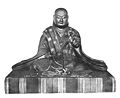
- September 27 – Emperor Go-Nara of Japan (b. 1495)
- October 5 or October 6 – Kamran Mirza, Mughal prince (b. 1509)[82]
- October 20 – Jean Salmon Macrin, French poet (b. 1490)[83]
- October 25 – William Cavendish, English courtier (b. 1505)[84]
- November 19
- December 6 – Elisabeth of Hesse, Hereditary Princess of Saxony (b. 1502)[87]
- December 13 – Niccolò Fontana Tartaglia, Italian mathematician (b. 1499)[88][89]
- December 27 – Queen Dangyeong, Korean royal consort (b. 1487)
- date unknown
- probable
References
- ^ Levati, Luigi Maria. Dogi biennali di Genova dal 1528 al 1699 (in Italian). Tip. Marchese & Campora.
- ^ Haan, Bertrand (2010). Une paix pour l'éternité: La négociation du traité du Cateau-Cambrésis. Madrid: Casa de Velázquez. pp. 37–60.
- ^ U Thaw Kaung. "Accounts of King Bayinnaung's Life and Hanthawady Hsinbyu-myashin Ayedawbon, a Record of his Campaigns". Chulalongkorn University. Retrieved February 25, 2009.
- ^ U Thaw Kaung, Aspects of Myanmar History and Culture (Gangaw Myaing, 2010) pp.106-110
- ^ a b Heininen, Simo; Heikkilä, Markku (2002). Kirchengeschichte Finnlands (in German). Vandenhoeck & Ruprecht. p. 70. ISBN 3-525-55444-3.
- ^ Turnbull, Stephen R. (2005). Kawanakajima 1553-64: Samurai Power Struggle. Praeger Publishers. pp. 47–48. ISBN 978-0-275-98868-5. Retrieved October 15, 2023.
- ^ Revista católica de la Diócesis de Cuenca (Ecuador) (in Spanish). Imprenta del Clero. 1920. p. 472. Retrieved October 15, 2023.
- ^ a b c Thomas Stafford, Oxford Dictionary of National Biography, accessed 17 January 2010
- ^ Knight, Charles, ed. (1844), "Stationers' Company", London, vol. 6, London: C. Knight & Co.
- ^ Carrara, Mauro (1996). Signori e Principi di Piombino (in Italian). Bandecchi & Vivaldi. pp. 22–23.
- ^ Tratado de Londres (1557)
- ^ Garrisson, Janine (June 14, 1995). A History of Sixteenth Century France, 1483-1598: Renaissance, Reformation and Rebellion. Bloomsbury Publishing. p. 167. ISBN 978-1-349-24020-3. Retrieved October 15, 2023.
- ^ The Dictionary of National Biography. H. Milford. 1922. p. 151. Retrieved October 15, 2023.
- ^ a b "Foxe’s Marian Martyrs", by Thomas S. Freeman, JohnFoxe.org
- ^ Morens, David M.; Taubenberger, Jeffery K. (June 2011). "Pandemic influenza: certain uncertainties". Reviews in Medical Virology. 21 (5): 262–284. doi:10.1002/rmv.689. PMC 3246071. PMID 21706672.
- ^ Mallett, Michael; Shaw, Christine (2012). The Italian Wars, 1494–1559. Pearson Education. p. 280.
- ^ Robert Jean Knecht, The Rise and Fall of Renaissance France: 1483-1610 (Blackwell, 2001) p.241
- ^ R. C. Majumdar, ed., The Mughul Empire (Bharatiya Vidya Bhavan, 2007) pp.106-107
- ^ Fontane, Theodor (1872). Aus den Tagen der Occupation: eine Osterreise durch Nordfrankreich und Elsass-Lothringen 1871 (in German). Decker. pp. 31–32. Retrieved October 16, 2023.
- ^ a b "Wormer Religionsgespräch". apothekenmuseum (in German). Retrieved October 16, 2023.
- ^ Müller, Gerhard; Krause, Gerhard (1996). Theologische Realenzyklopädie (in German). De Gruyter. p. 452. ISBN 978-3-11-015155-8. Retrieved October 16, 2023.
- ^ Pattenden, Miles (2013). Pius IV and the Fall of The Carafa: Nepotism and Papal Authority in Counter-Reformation Rome. OUP Oxford. pp. 21–22. ISBN 978-0191649615.
- ^ Haan, Bertrand (2010). Une paix pour l'éternité: La négociation du traité du Cateau-Cambrésis. Madrid: Casa de Velázquez. pp. 37–60.
- ^ Weiner, Jerome Bruce (1976). Fitna, Corsairs, and Diplomacy: Morocco and the Maritime States of Western Europe, 1603-1672. Columbia University. p. 30. Retrieved October 16, 2023.
- ^ Tiberiu Ciobanu (2006). Voievozi și domnitori români. Excelsior Art. p. 118. ISBN 978-973-592-162-0.
- ^ Kenneth M. Setton, The Papacy and the Levant (1204–1571) (Philadelphia: American Philosophical Society, 1984), p. 698
- ^ Ogot, Bethwell A. (1992). Africa from the Sixteenth to the Eighteenth Century. University of California Press. p. 145. ISBN 978-0-435-94811-5. Retrieved October 16, 2023.
- ^ Miran, Jonathan (July 6, 2009). Red Sea Citizens: Cosmopolitan Society and Cultural Change in Massawa. Indiana University Press. p. 38. ISBN 978-0-253-22079-0. Retrieved October 16, 2023.
- ^ Tagliacozzo, Eric; Siu, Helen F.; Perdue, Peter C. (January 5, 2015). Asia Inside Out. Harvard University Press. p. 90. ISBN 978-0-674-59850-8. Retrieved October 16, 2023.
- ^ Archer, Christon; et al. (2002). World History of Warfare. Lincoln: University of Nebraska Press. p. 251. ISBN 978-0-8032-4423-8.
- ^ "History – Gonville & Caius". Gonville & Caius College. October 15, 2012. Retrieved September 13, 2014.
- ^ Beavan, Charles (1851). Reports of Cases in Chancery. William Benning and Co. p. 35. Retrieved October 16, 2023.
- ^ "Brentwood History". www.brentwoodschool.co.uk. Retrieved October 16, 2023.
- ^ Cockburn, J. S.; King, H. P. F.; McDonnell, K. G. T. (1969). A History of the County of Middlesex: without special title. Institute of Historical Research. p. 298. Retrieved October 16, 2023.
- ^ The Book of the Repton Tercentenary. 1857. Repton School. 1857. p. 41. Retrieved October 17, 2023.
- ^ H. S. Bennett (1989). English Books and Readers 1475 to 1557: Being a Study in the History of the Book Trade from Caxton to the Incorporation of the Stationers' Company. Cambridge University Press. p. 114. ISBN 978-0-521-37988-5.
- ^ Sá, Lúcia (2004). Rain Forest Literatures: Amazonian Texts and Latin American Culture. U of Minnesota Press. p. 93. ISBN 978-1-4529-0677-5. Retrieved October 17, 2023.
- ^ Nóra, G. Etényi; Szabó, Péter; Horn, Ildikó (2006). Koronás fejedelem: Bocskai István és kora (in Hungarian). General Press. p. 27. ISBN 978-963-9648-27-2. Retrieved October 17, 2023.
- ^ Reitsma, Johannes (1899). Geschiedenis van de Hervorming en de Hervormde Kerk der Nederlanden (in Dutch). Wolters. p. 157. Retrieved October 17, 2023.
- ^ Galilei, Galileo (1909). Le opere di Galileo Galilei (in Italian). Tip. di G. Barbèra. p. 443. Retrieved October 17, 2023.
- ^ Gnoli, Domenico (1870). Vittoria Accoramboni (in Italian). Successori Le Monnier. p. 18. Retrieved October 17, 2023.
- ^ Daniels, Alexander von (1862). Handbuch der deutschen Reichs und Staatenrechsgeschichte (in German). Laupp & Siebeck. p. 505. Retrieved October 17, 2023.
- ^ "Howard [Dacre], Anne, countess of Arundel". Oxford Dictionary of National Biography (online ed.). Oxford University Press. 2004. Retrieved October 17, 2023. (Subscription, Wikipedia Library access or UK public library membership required.)
- ^ WUTSTRACK, Christian Friedrich (1793). Kurze historisch-geographisch-statische Beschreibung von dem königlichpreussischen Herzogthume Vor- und Hinter-Pommern, etc (in German). Johann Samuel Leich. p. 134. Retrieved October 17, 2023.
- ^ "SALVETTI, Maddalena - Enciclopedia". Treccani (in Italian). Retrieved October 8, 2025.
- ^ Spórna, Marcin (2006). Słownik najsłynniejszych wodzów i dowódców polskich (in Polish). Zielona Sowa. p. 395. ISBN 978-83-7435-094-5. Retrieved October 17, 2023.
- ^ Beitelrock, Johann Michael (1863). Geschichte des Herzogthums Neuburg oder der jungen Pfalz (in German). Wailandt. p. 15. Retrieved October 17, 2023.
- ^ Mémoires couronnés et autres mémoires: Collection in-8°. ... (in Dutch). Hayez. 1882. p. 156. Retrieved October 17, 2023.
- ^ Морозова, Л. Е. (2001). Два царя: Федор и Борис (in Russian). Русское слово. p. 15. ISBN 978-5-8253-0160-0. Retrieved October 17, 2023.
- ^ Jr, James D. Taylor (May 1, 2019). Complete State Trials of the Tudor Era. Algora Publishing. p. 397. ISBN 978-1-62894-377-1. Retrieved October 18, 2023.
- ^ Il Seicento europeo: Realismo, classicismo, barocco (in Italian). De Luca. 1968. p. 87. Retrieved October 18, 2023.
- ^ Landtag, Württemberg (1910). Württemberg Landtagsakten (in German). Kolhammer. p. 1. Retrieved October 18, 2023.
- ^ Kleinschmidt, Arthur (1881). Augsburg, Nürnberg und ihre Handelsfürsten im fünfzehnten und sechzehnten Jahrhunderte (in German). Kay. p. 170. Retrieved October 18, 2023.
- ^ Stuth, Steffen (2001). Höfe und Residenzen: Untersuchungen zu den Höfen der Herzöge von Mecklenburg im 16. und 17. Jahrhundert (in German). Edition Temmen. p. 120. ISBN 978-3-86108-778-6. Retrieved October 18, 2023.
- ^ Escolapios insignes por su piedad religiosa desde el origen (in Spanish). San Francisco de Sales. 1899. p. 11. Retrieved October 18, 2023.
- ^ Allgemeine musikalische Zeitung (in German). Breitkopf und Härtel. 1842. p. 74. Retrieved October 18, 2023.
- ^ Dufayard, Charles (1914). Histoire de Savoie (in French). Boivin. p. 186. Retrieved October 18, 2023.
- ^ Drennan, Jonathan R. J. (September 2023). Requiems by Giovanni Croce and Giovanni Rovetta: The Requiem Mass at St. Mark's, Venice, in the Seventeenth Century. A-R Editions, Inc. p. xi. ISBN 978-1-9872-0865-8. Retrieved October 18, 2023.
- ^ Correspondance de Guillaume le taciturne, prince d'Orange, publiée pour la première fois, suivie de pièces inédits sur l'assassinat de ce prince et sur les récompenses accordées par Philippe 2. à la famille de Balthazar Gérard par m. Gachard: Tome 6 (in French). C. Muquard. 1857. p. xc. Retrieved October 18, 2023.
- ^ Fnat, Johan Erik (1842). Upsala Arkestifts Herdaminne. Hft. 1-7 (in Swedish). Wahlstrom & Lastbom. p. 19. Retrieved October 18, 2023.
- ^ Murray, Tessa (2014). Thomas Morley: Elizabethan Music Publisher. Boydell & Brewer Ltd. p. 4. ISBN 978-1-84383-960-6. Retrieved October 18, 2023.
- ^ O-umajirushi: A 17th-Century Compendium of Samurai Heraldry. The Academy of the Four Directions. February 2, 2015. p. 114. ISBN 978-0-692-37740-6. Retrieved October 18, 2023.
- ^ Apel, Willi (1990). Italian Violin Music of the Seventeenth Century. Indiana University Press. p. 15. ISBN 978-0-253-30683-8. Retrieved October 18, 2023.
- ^ Tazartes, Maurizia (2008). Il "ghiribizzoso" Pontormo (in Italian). M. Pagliai. p. 188. ISBN 978-88-564-0036-6. Retrieved October 19, 2023.
- ^ "CARUCCI, Iacopo, detto il Pontormo". www.treccani.it (in Italian). Retrieved October 19, 2023.
- ^ Spengler, Ludwig (1863). Die Geisteskrankheit des Herzogs Philipp von Mecklenburg (in German). Heuser. p. 24. Retrieved October 19, 2023.
- ^ "Albert II Alcibiades | margrave of Brandenburg-Kulmbach | Britannica". www.britannica.com. Retrieved March 16, 2022.
- ^ "The Cardinals of the Holy Roman Church - Biographical Dictionary - Consistory of July 1, 1517". cardinals.fiu.edu. Retrieved October 19, 2023.
- ^ Häkkinen, Kaisa (October 30, 2015). Spreading the Written Word: Mikael Agricola and the Birth of Literary Finnish. Suomalaisen Kirjallisuuden Seura. p. 139. ISBN 978-952-222-755-3. Retrieved October 19, 2023.
- ^ Speer, Christian; Michel, Stefan (March 13, 2012). Georg Rörer (1492–1557): Der Chronist der Wittenberger Reformation (in German). Evangelische Verlagsanstalt. p. 30. ISBN 978-3-374-03659-2. Retrieved October 19, 2023.
- ^ Parish, Graeme (1972). Image of Chile. C. Knight. p. 51. ISBN 978-0-85314-147-1. Retrieved October 19, 2023.
- ^ "Johann II". www.deutsche-biographie.de (in German). Retrieved October 19, 2023.
- ^ Sesso, Livia Alberton Vinco Da (1992). Dal Ponte : a dynasty of painters (in Italian). Ghedina & Tassotti. p. 81. ISBN 978-88-7691-101-9. Retrieved October 17, 2023.
- ^ Livermore, H. V. (January 2, 1966). A New History of Portugal. CUP Archive. p. 151. Retrieved October 19, 2023.
- ^ Enciclopedia italiana di scienze, lettere ed arti (in Italian). Istituto Giovanni Treccani. 1929. p. 820. Retrieved October 19, 2023.
- ^ "Anne of Cleves | Biography & Facts". Encyclopedia Britannica. Retrieved September 21, 2020.
- ^ Nordisk tidskrift för bok- och biblioteksväsen (in Swedish). Almqvist and Wiksells boktryckeri-a.-b. 1986. p. 10. Retrieved October 19, 2023.
- ^ "The Grand Masters of Malta" (PDF). um.edu.mt. Retrieved October 19, 2023.
- ^ International Hydrographic Review. International Hydrographic Bureau. 1984. p. 10.
- ^ Copsey, Tony (2000). Suffolk Writers from the Beginning Until 1800: A Catalogue of Suffolk Authors with Some Account of Their Lives and a List of Their Writings. Book Company. p. 103. ISBN 978-0-9522970-1-7. Retrieved October 19, 2023.
- ^ "The Cardinals of the Holy Roman Church - Biographical Dictionary - Consistory of December 20, 1538". cardinals.fiu.edu. Retrieved October 19, 2023.
- ^ Lari, Suhail Zaheer (1994). A History of Sindh. Oxford University Press. p. 114. ISBN 978-0-19-577501-3. Retrieved October 19, 2023.
- ^ Mémoires de la Société des antiquaires de l'Ouest (in French). Société des antiquaires de l'Ouest. 1908. p. 373. Retrieved October 19, 2023.
- ^ Chambers, Edmund Kerchever (1923). The Elizabethan Stage. Clarendon Press. p. 62. Retrieved October 19, 2023.
- ^ Welti, Manfred Edwin (1976). Giovanni Bernardino Bonifacio, marchese d'Oria, im Exil, 1557-1597 (in German). Librairie Droz. p. 58. ISBN 978-2-600-03063-2. Retrieved October 19, 2023.
- ^ Murphy, Caroline (2008). Isabella De' Medici: The Glorious Life and Tragic End of a Renaissance Princess. Faber & Faber. p. 63. ISBN 978-0-571-23030-3. Retrieved October 19, 2023.
- ^ Hessisches Jahrbuch für Landesgeschichte (in German). Historische Kommission für Hessen. 1965. p. 23. Retrieved October 20, 2023.
- ^ Gliozzi, Mario (March 2, 2022). A History of Physics from Antiquity to the Enlightenment. Cambridge Scholars Publishing. p. 75. ISBN 978-1-5275-8077-0. Retrieved October 20, 2023.
- ^ "Tartaglia - Biography". Maths History. Retrieved October 20, 2023.
- ^ McGlynn, Margaret; Bartlett, Kenneth R. (October 23, 2014). The Renaissance and Reformation in Northern Europe. University of Toronto Press. p. 191. ISBN 978-1-4426-0716-3. Retrieved October 20, 2023.
- ^ Beech, Beatrice (October 1983). "Charlotte Guillard: A Sixteenth-Century Business Woman*". Renaissance Quarterly. 36 (3): 345–367. doi:10.2307/2862159. ISSN 0034-4338. JSTOR 2862159. S2CID 163711144. Retrieved October 20, 2023.
- ^ Academi Gymreig (2008). The Welsh Academy Encyclopaedia of Wales. University of Wales Press. p. 321. ISBN 978-0-7083-1953-6.
- ^ "Cabot, Sebastian". Oxford Dictionary of National Biography (online ed.). Oxford University Press. 2004. Retrieved October 20, 2023. (Subscription, Wikipedia Library access or UK public library membership required.)
- ^ Randel, Don Michael (1996). The Harvard Biographical Dictionary of Music. Harvard University Press. p. 185. ISBN 978-0-674-37299-3. Retrieved October 20, 2023.