
|
This article needs additional citations for verification. (July 2017)
|
| Years |
|---|
| Millennium |
| 2nd millennium |
| Centuries |
|
| Decades |
|
| Years |
|
| 1336 by topic |
|---|
| Leaders |
|
| Birth and death categories |
| Births – Deaths |
| Establishments and disestablishments categories |
| Establishments – Disestablishments |
| Art and literature |
| 1336 in poetry |
| Gregorian calendar | 1336 MCCCXXXVI |
| Ab urbe condita | 2089 |
| Armenian calendar | 785 ԹՎ ՉՁԵ |
| Assyrian calendar | 6086 |
| Balinese saka calendar | 1257–1258 |
| Bengali calendar | 742–743 |
| Berber calendar | 2286 |
| English Regnal year | 9 Edw. 3 – 10 Edw. 3 |
| Buddhist calendar | 1880 |
| Burmese calendar | 698 |
| Byzantine calendar | 6844–6845 |
| Chinese calendar | 乙亥年 (Wood Pig) 4033 or 3826 — to — 丙子年 (Fire Rat) 4034 or 3827 |
| Coptic calendar | 1052–1053 |
| Discordian calendar | 2502 |
| Ethiopian calendar | 1328–1329 |
| Hebrew calendar | 5096–5097 |
| Hindu calendars | |
| - Vikram Samvat | 1392–1393 |
| - Shaka Samvat | 1257–1258 |
| - Kali Yuga | 4436–4437 |
| Holocene calendar | 11336 |
| Igbo calendar | 336–337 |
| Iranian calendar | 714–715 |
| Islamic calendar | 736–737 |
| Japanese calendar | Shōkei 5 (正慶5年) |
| Javanese calendar | 1248–1249 |
| Julian calendar | 1336 MCCCXXXVI |
| Korean calendar | 3669 |
| Minguo calendar | 576 before ROC 民前576年 |
| Nanakshahi calendar | −132 |
| Thai solar calendar | 1878–1879 |
| Tibetan calendar | ཤིང་མོ་ཕག་ལོ་ (female Wood-Boar) 1462 or 1081 or 309 — to — མེ་ཕོ་བྱི་བ་ལོ་ (male Fire-Rat) 1463 or 1082 or 310 |
Year 1336 (MCCCXXXVI) was a leap year starting on Monday of the Julian calendar.
Events
- February 25
- Rather than be taken captive by the Teutonic Knights, 4,000 defenders of Pilėnai, Lithuania commit mass suicide.
- The Kenmu Restoration ends and the Muromachi period begins in Japan; start of the Nanboku-chō period.
- April 18 (unconfirmed) – Brothers Harihara and Bukka Raya found the Vijayanagara Empire on the southern part of the Deccan Plateau in South India.[1]
- April 26 – The Ascent of Mount Ventoux is made by the Italian poet Petrarch: he claims to be the first since classical antiquity to climb a mountain for the view.[2]
- May 19 – The governor of Baghdad, Oirat 'Ali Padsah, defeats Arpa Ke'un near Maraga, contributing to the disintegration of the Ilkhanate.
- July 4 – Battle of Minatogawa: Ashikaga Takauji defeats Japanese Imperial forces, under Kusunoki Masashige and Nitta Yoshisada.
- July 21–22 – Second War of Scottish Independence: Aberdeen, Scotland is burned by the English.[3]
- September 20 – The reign of Emperor Kōmyō, second of the Ashikaga Pretenders to the Northern Court of Japan, begins.
Births
- April 9 – Timur, founder of the Timurid Empire (d. 1405)
- July 25 – Albert I, Duke of Bavaria (d. 1404)
- date unknown
- Gao Qi, Chinese poet (d. 1374)
- Cyprian, Metropolitan of Kiev (died 1406)
- probable
- Stefan Uroš V, Emperor of the Serbs (d. 1371)
Deaths
- January 20 – John de Bohun, 5th Earl of Hereford (b. 1306)
- February 25 – Margiris, Duke of Samogitia
- March 20 – Maurice Csák, Hungarian Dominican friar (b. c. 1270)[4]
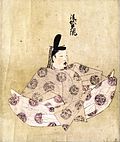
- May 17 – Emperor Go-Fushimi of Japan (b. 1288)
- July 4 – Elizabeth of Portugal, queen consort and saint (b. 1271)
- September 5 – Charles d'Évreux (b. 1305)
- date unknown
- Bernard VIII, Count of Comminges (b. c. 1285)
- Arpa Ke'un, Ilkhanid ruler
- Guillaume Pierre Godin, French Dominican philosopher (b. c. 1260)
- Hugh II of Arborea
- Ramon Muntaner, Catalan soldier and writer (b. 1270)
- Cino da Pistoia, Italian poet (b. 1270)
- Richard of Wallingford, English monk and mathematician (b. 1292)
- Ghiyas al-Din ibn Rashid al-Din, Ilkhanate politician
- Turgut Alp, Kayı and Ottoman soldier and commander in-chief (b. 1200) at the age of 136.
References
- ^ "Vijayanagar | historical city and empire, India | Britannica". www.britannica.com. Retrieved January 1, 2022.
- ^ Epistolae familiares IV(1) (c.1350).
- ^ "Battles in Aberdeenshire". The Doric Columns. Retrieved March 20, 2020.
- ^ Madas, Edit (2001). "Boldog Csáki Móric élete [Life of Blessed Maurice Csák]". In Madas, Edit; Klaniczay, Gábor (eds.). Legendák és csodák (13–16. század). Szentek a magyar középkorból II (in Hungarian). Osiris Kiadó. pp. 331–341.